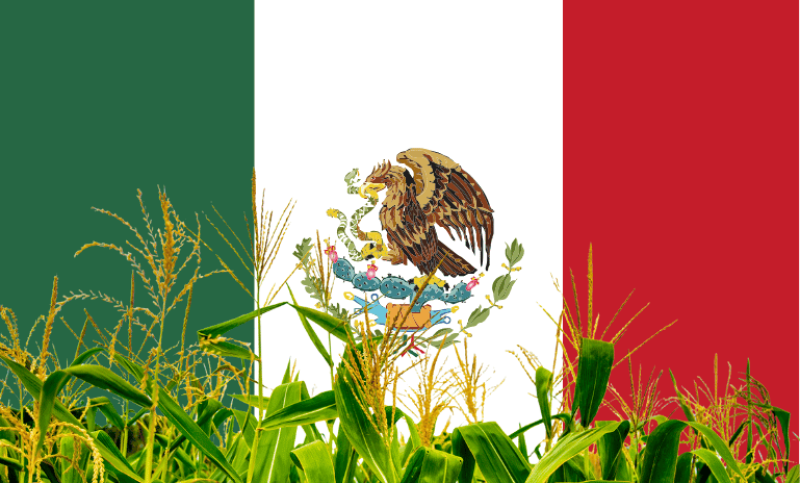

Researchers in Mexico are urging the government to develop clear regulations that distinguish gene-editing technologies, such as CRISPR, from genetically modified organisms (GMOs) — a distinction already made in most Latin American countries.
Mexico, along with Bolivia, Venezuela, and Peru, remains one of the few countries in the region without a legal framework for gene editing in agriculture. By contrast, Argentina and Chile introduced pioneering regulations in 2015 and 2017, respectively.
To address this gap, 28 researchers from various Mexican institutions have issued a public statement and a petition on Change.org, calling for evidence-based regulation to enable the use of gene editing to improve crop traits such as nutritional value and drought tolerance.
Their call comes after Mexican President Claudia Sheinbaum signed a decree in March banning the cultivation of genetically modified maize, or corn.





…
Although the decree specifically targets maize, researchers fear it could be interpreted to cover other crops and techniques, including gene editing tools such as CRISPR-Cas, which allow precise modifications to an organism’s DNA without necessarily introducing foreign genes.