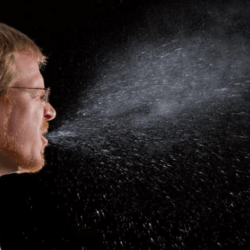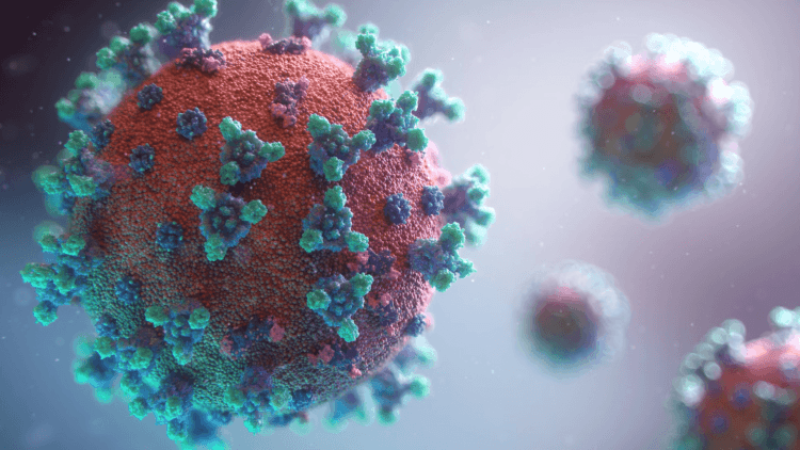
Surprising scientists five years after the pandemic, coronavirus has not disappeared but continues to mutate and spread

Are Chinese scientists going rogue on latest COVID research? Experimental strain found to be 100% lethal in ‘humanized’ mice’
Credit: Unsplash/ Fusion Medical Animation

“We thought SARS-CoV-2 would follow the same pattern as influenza, with a clear winter peak. But the virus has been present more or less all year round,” [says Gunnveig Grødeland, a professor of immunology at the University of Oslo and head of the Centre for Pandemics and One-Health Research (P1H).]

According to the Norwegian Institute of Public Health (NIPH), test results show an increase in Covid-19 cases in Norway after the summer holidays.

That the virus still circulates year-round is surprising to researchers.

For a virus to keep spreading year-round, it needs to find people still vulnerable to infection – those who haven’t developed neutralising antibodies.

A possible explanation could have been that the coronavirus mutates faster than other viruses.

But that’s not the case, according to Grødeland.
“In fact, influenza, which has a strong seasonal pattern, changes far more rapidly than SARS-CoV-2,” she says.

Mis- and disinformation are distorting science and public policy. Subscribe to our Daily and Weekly Digests for incisive coverage of ‘disruptive’ innovations in AI, agricultural biotechnology, food, chemicals, nuclear energy, vaccines, and other disruptive innovations.

The size of future infection waves depends on how susceptible the population is, and how long immunity lasts after vaccination or infection.

The virus’ ability to mutate and produce new variants is also a factor.

This is an excerpt. Read the original post here

Related Articles

Infographic: Global regulatory and health research agencies on whether glyphosate causes cancer

Infographic: Global regulatory and health research agencies on whether glyphosate causes cancer

Does glyphosate—the world's most heavily-used herbicide—pose serious harm to humans? Is it carcinogenic? Those issues are of both legal and ...

Most Popular

ChatGPT-Image-Sep-17-2026-12_28_43-PM
Vitamin D, omega-3 fish oil and glucosamine supplements could cause brain damage 
ChatGPT-Image-Mar-10-2026-01_39_01-PM
Viewpoint—“Miracle molecule” debunked: Why acemannan supplements don’t work
ChatGPT-Image-Sep-17-2026-10_17_15-AM
Viewpoint: Why are the less intelligent more likely to be conservative—and smarter people more socially liberal?
Screenshot-2026-08-12-at-11.31.46-AM
AI is helping develop new vaccines
Screenshot-2026-09-10-at-12.20.19-PM
'Jet fuel didn't melt the steel': 9/11 conspiracy theories debunked
Screenshot-2026-09-17-at-10.24.54-AM
Viewpoint: Dubious environmental fears: Why the AI buildout is critical to America’s ecological future
Screenshot 2026-09-11 at 12.39
Child-monitoring apps: When the cure is worse than the harm—and how the technology could be tweaked
Screenshot-2026-09-16-at-12.07.47-PM
The heated debate over trans athletes in the WNBA
ChatGPT-Image-Sep-9-2026-02_48_24-PM
Viewpoint: Trump-RFK Jr. report on “Gender Ideology & Left-wing Ideology’ targets LGBTQ community—and science
ChatGPT-Image-Sep-15-2026-12_15_00-PM
Viewpoint: Women, depression and empathy: Explaining the gender gap in views about child-murderer Lindsay Clancy
glp menu logo outlined

Get news on human & agricultural genetics and biotechnology delivered to your inbox.