How big health brands are funding online medical misinformation 

ChatGPT Image May 12, 2026, 01_21_30 PM

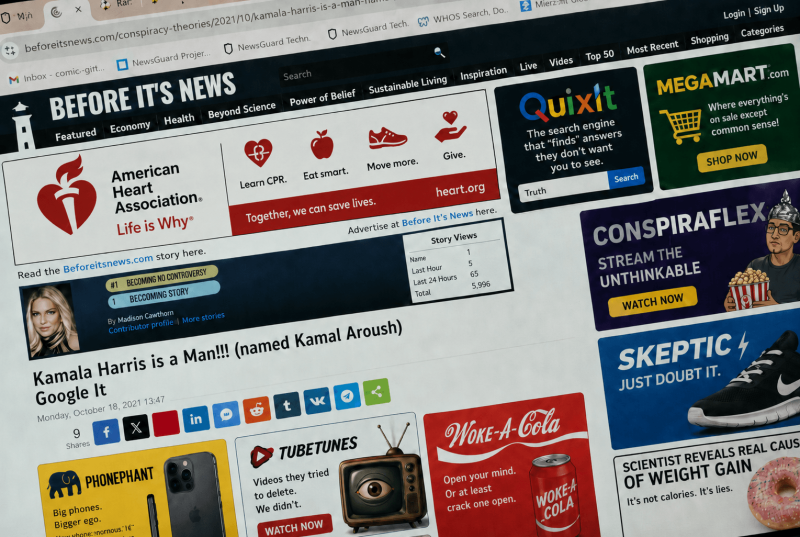
study published in the medical journal JAMA Network Open, which is published by the American Medical Association, found that health care-related institutions … spent tens of millions in advertising dollars on news websites flagged by NewsGuard for spreading health misinformation.

… For the study, researchers from the Yale School of Medicine analyzed 11 news websites that were found by NewsGuard to publish false or egregiously misleading health information. The researchers tallied how much advertising was purchased on those sites between 2021 and 2024.

Advertising expenditures on the 11 sites totaled $336 million over the four-year period, the study found. Of this, 10.6 percent — $35.7 million — came from health care-related companies including major pharmaceutical and insurance firms, government health agencies, and nonprofit groups ….

Follow the latest news and policy debates on sustainable agriculture, biomedicine, and other ‘disruptive’ innovations. Subscribe to our newsletter.

In the past year alone, NewsGuard has identified advertisements for 355 major brands — such as Google, Walmart, and Disney — that appeared on 46 websites flagged for repeatedly publishing false or egregiously misleading content.

According to a 2021 analysis by NewsGuard and Comscore, advertisers spend an estimated $2.6 billion a year on programmatic advertising on misinformation sites.


This is an excerpt. Read the original post here

{{ reviewsTotal }}{{ options.labels.singularReviewCountLabel }}
{{ reviewsTotal }}{{ options.labels.pluralReviewCountLabel }}
{{ options.labels.newReviewButton }}
{{ userData.canReview.message }}

Related Articles

Infographic: Global regulatory and health research agencies on whether glyphosate causes cancer

Infographic: Global regulatory and health research agencies on whether glyphosate causes cancer

Does glyphosate—the world's most heavily-used herbicide—pose serious harm to humans? Is it carcinogenic? Those issues are of both legal and ...

Most Popular

Screenshot 2026-05-26 at 10.15
Viewpoint: Double standard—Why does the wellness industry get a free pass while Big Healthcare is treated as morally suspect?
ChatGPT-Image-Jun-4-2026-01_27_58-PM
Viewpoint—N.A.D.+: Why Gwenyth Paltrow’s heralded anti-aging supplement doesn’t work
ChatGPT-Image-Jun-4-2026-11_49_36-AM-2
‘You don’t understand Tolkien’: Skeptic Pope trolls tech giants about the exaggerated, risk-less benefits of AI
Screenshot 2025-07-30 at 10.48
Can gene editing eliminate Down syndrome? Scientists have done it in lab-grown cells
tick-DNA
GLP podcast: Spread meat allergy with gene-edited ticks? Bioethicists pose vile ‘thought experiment’
downsyndrome_compilation_MID_1
CRISPR breakthrough that can remove the chromosome responsible for Down syndrome raises ethical questions
ChatGPT-Image-Mar-10-2026-01_39_01-PM
Viewpoint—“Miracle molecule” debunked: Why acemannan supplements don’t work
Screenshot-2026-06-03-at-1.24.46-PM
Challenging anti-GMO disinformation: Why genetically-tweaked crops offer bushels of benefits
Screenshot-2026-06-04-at-12.05.08-PM
Cases of brain inflammation surge as U.S. measles pandemic approaches 2000
ChatGPT Image May 26, 2026, 08_42_17 AM (1)
Viewpoint: Greenpeace and poison: How environmental advocacy groups rely on compliant (and often ignorant) journalists to spread disinformation and spark litigation
ChatGPT-Image-May-26-2026-07_51_21-AM-2
Viewpoint: There are more than 1,000 chemicals in a cup of coffee—including many substances that can cause cancer. Why isn’t it banned?

Sorry. No data so far.

glp menu logo outlined

Get news on human & agricultural genetics and biotechnology delivered to your inbox.