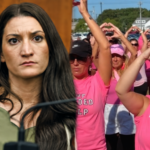
During the American heat dome or Europe’s summer swelter and the hottest June days on record, we no longer have to endure the media hyperbole or the activist misanthropy, blaming man (industry, capitalism, consumers…) for the planetary destruction. Now we are sometimes reminded, in a deadpan tone, that these warm days are in keeping with climate models, but it is often greeted with a reaction similar to when my doctor tells me my excess weight gain is related to my eating habits.
After two decades of well-choreographed campaigns and narrative control that merged all environmental health issues into a centralized campaign against consumption, trade, capitalism and industry, with billions in foundation funding flowing in to enrich the activist movements, within a year, the tap was literally turned off. Everything just stopped. Why?
- The activist groups did not run out of money (foundation donations often stretch from three to five years).
- They did not run out of issues (none of the policies they demanded was actually delivered).
- These forever campaigners simply ran out of legitimacy.
The elections of 2024-25 across Europe and North America delivered a blow to the environmental left with economic, social and border issues taking priority in the political shift to the right. Over the last two years, policies, procedures and funding have migrated towards more economic, industrial and jobs development and away from the intangible feel-good fluff that the activists had pushed to the center of the policy arena. Buzzwords like simplification, deregulation, rationalization quickly replaced the environmental totems of circularity, decarbonization and degrowth. The electorate’s clear message was received in the policy halls of Brussels, Berlin and Washington.
Turning the Crisis Inward
The NGOs reacted as they have always done, not by reflecting and seeking a good compromise, but by declaring an imminent crisis. But the fabricated crisis was no longer a catastrophic climate collapse or a mass ecological extinction, but rather the threat to their own existence. Ever polarizing, the activists ran a campaign claiming the far-right was on a mission to silence NGOs (and free speech). Maybe it was the perpetual polarizing and lack of reflection or compromise that had turned so many off of their issues. The Firebreak published an article how their portrayal of the good activist fighting the “bad guys” was not setting the right tone and was not even singing the right hymn to their choir.
More recently, the activists have resorted to triage to try to make it through the lean years. Two weeks ago, the smarmy Good Lobby published their recent sales pitch called: “An Advocacy Survival Guide for Civil Society” claiming that the nature of the game had changed. Correction: the audience decided to watch other more important games. Of course, Alberto has been getting too fat living high off the foundation funding hog as the hypocrite blindly attacks other forms of advocacy (lobbying) funding so maybe he should follow his own advice.
Last week, a group of 60 activist NGOs, including the ever-opportunistic Good Lobby, published an Open Letter to the European Commission. The letter was quite remarkable in that their demands for better regulation were what these same groups had been condemning only three years earlier. The NGOs were demanding to be allowed to engage in dialogue while it was not too long ago that they were gleefully kicking their industry enemies out of the European Parliament and Commission. They demanded transparency, but the NGOs are the ones who do not reveal the billionaires and other interest groups behind their foundation funding. They demanded impact assessments. Good, so does that mean Europe will revise regulations like the Sustainable Use of Pesticides Directive where the NGOs got their way by rejecting the need for any impact assessments?
The NGO activist groups do face a crisis situation, but the crisis is coming from within.




Looking to the Post-NGO World
This is not the first decline in NGO influence, and they will be back, probably stronger and even more vengeful. What is dangerous is for other stakeholders to consider the recent shifting sands as the end of the uncomfortable decades of activist interference and use it as a chance to go back to business as usual. Rather, this is an opportunity to reshape the post-NGO world to redefine how stakeholders engage in the policy process. Here are four key changes to ensure a rational policy process in future.
- Clarify the role of foundations. With the professionalization of philanthropy (consultants creating networks of fiscal sponsorships and dark donor-advised funds), foundations have become billionaire-led activist NGOs. These groups pose as campaign organizations but as they don’t legally exist, they don’t have to declare their funding or be held accountable. The rules need to change so these groups follow the same rules of transparency and accountability as every other stakeholder group.
- Differentiate NGOs from activist lobby groups (APEs). The Firebreak has argued that most policy activist groups abuse their status as NGOs, pretending to be in the same league as humanitarian organizations or aid charities, claiming tax-free status while spending hundreds of millions on salaries, political donations and lobbying campaigns. They should be classified as Alternative Policy Enterprises (APEs), lobby groups whose millions in funding from special interests should not be tax deductible or classed differently from industry lobbyists. Meanwhile, those genuine NGOs trying to run food banks, shelters and development aid programs have to compete with these non-transparent lobbyists trying to impose their elitist dogma on society.
- Set stricter conditions for evidence in policy processes. For the last 20 years, NGO groups have done a good job discrediting industry research and excluding their evidence from the policy process. But the activist science they put forward is lower quality and designed to generate fear and doubt rather than facts and evidence. Since NGOs are no longer dictating the narrative at the present time, a clear, objective standard of scientific research and data should be established that would encompass the best available research and lab practices, regardless of its source.
- Consider environmental activist campaigns as marketing and PR activities rather than policy actions. The NGOs are communications organizations trying to shape the public narrative to enhance business opportunities (donations, funding, alternative products…). Their evidence is neither scientific nor economic but designed to persuade via the emotional triggers of fear and outrage. Some examples:
– The anti-pesticide campaigns intend to push frightened consumers into buying organic food. Organic is nothing more than a high-priced marketing concept for the affluent elite to impose on struggling consumers.
– The catastrophic climate agenda is woven into the promotion of renewables and promoting a post-capitalist neo-Marxist ideology.
– The plastics fear campaigns (microplastics, waste, endocrine disruption…) work in tandem with alternative industries like copper, steel, glass and paper manufacturers.
– The litigation industry is profiting nicely from the activist PR work in all of these fear business centers.
We need to consider the activist APEs campaigns and lobbying, not as policy engagement, but as marketing and PR for other interest groups.
The big problem for the environmental NGOs is that their marketing campaigns continue as usual, but not many people are buying them. It is time to change the business model.
David Zaruk is the Firebreak editor, and also writes under the pen-name The Risk Monger. David is a retired professor, environmental-health risk analyst, science communicator, promoter of evidence-based policy and philosophical theorist on activists and the media. Find David on X @Zaruk
A version of this article was originally posted at Firebreak and has been reposted here with permission. Any reposting should credit the original author and provide links to both the GLP and the original article. Find Firebreak on X @the_firebreak