“Our job here at Psy Ops is to panic the enemy, to blunt his will to fight. A Psy Operator must know the customs and habits of the enemy, the current dissensions, anxieties, and fears to determine vulnerability. To engage the enemy, you must know the enemy inside out. You must fill him with fear, and not just fear of dying.”
—Quote from: The General’s Daughter (Movie, 1999)
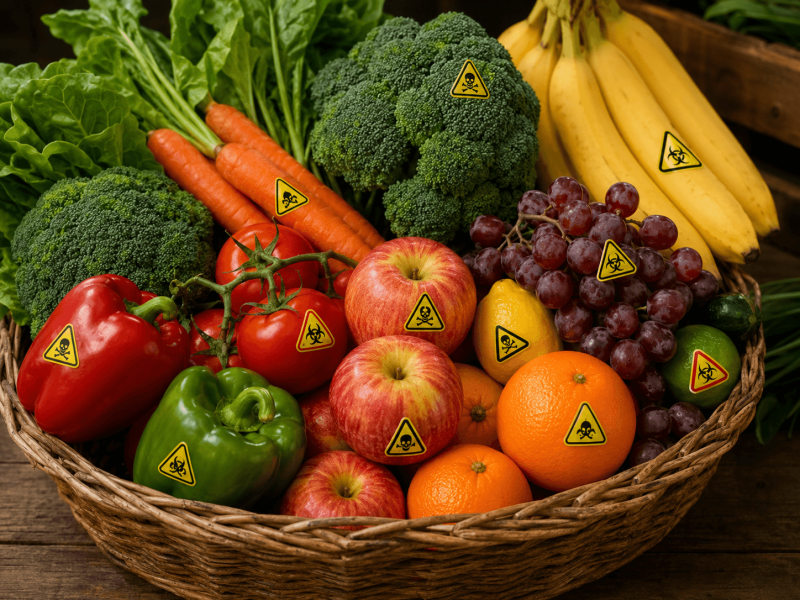
Influencers use the same tactics as the Army’s Psyops. They learn people’s anxieties and fears to know consumer’s vulnerability. One thing most people (75%) fear is losing control. Components of packaged food, such as pesticide residues, that people aren’t in control of fits this definition. In fact, a Reuters poll this year found that 78% of people are concerned. You’re in large company if you feel that pesticides—killers of insects, weeds, fungus, rodents, worms, and bacteria—are unsafe.
The “cide” in pesticide is a suffix that means “to kill” and it’s used in suicide, homicide, and genocide. It’s just common sense that people are concerned about the use of pesticides on food they consume every day.
But are pesticides safe?
Why would any scientist say they are safe? It’s certainly true that they kill weeds and bugs—so why would they be safe for us to consume? First, the amount of pesticide we consume is extremely tiny, just residues. Second, the pesticides we spray aren’t the only pesticides that are killing bugs. Plants wouldn’t be with us today if they hadn’t evolved to be able to repel or kill bugs themselves. Over millions of years of natural selection, plants developed chemicals that either taste horrible or actually kill insects, emit odors that attract bodyguards like wasps to kill the insects, or produce toxic glue. Some plants even eat the bugs that try to eat them—like Venus flytraps.
But evolution is a competitive process and insects, like caterpillars and aphids, have been evolving right alongside plants to defeat their defenses.
They’ve done a pretty good job: without the pesticides we spray to help plants out, insects would claim about 30% of crops. One estimate puts potential losses at 78% for fruit, 54% for vegetables, and 32% for cereal. For example, pesticides kill spider mites, which lay shiny, round, white or pale-yellow eggs—too small to see—attached by a sticky substance on plants, then spin fine webbing around them.
The Food Quality Protection Act requires the EPA to ensure that each pesticide used on food is safe for children, with a ten-fold safety factor (meaning the amount used is ten times less than the amount considered safe for children). Children are like the canary in the coal mine— they’re more sensitive than adults.
But still, they are poisons, and four out of five people are concerned about that. There is an option: organic produce. After all, Pew Research has found that nearly one in two (45%) Americans think that eating organic produce is healthier. Of course, some people believe all kinds of things—like eating eggs raises your cholesterol (it won’t, dietary cholesterol isn’t the same thing as blood cholesterol).
Most research has shown that organic produce (fruits and vegetables) isn’t healthier than conventional produce. Conventional and organic foods have the same amount of nutrients—fats, carbohydrates, and fiber. In fact, some organic foods may contain more heavy metals than their conventional counterparts. And organic is not pesticide-free. Even in the famously cautious EU, 134 active pesticides, such as pyrethrins, are allowed on organic produce.
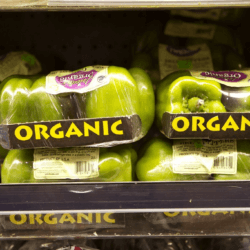




A systematic review found that the belief in organic food’s superiority over conventional food is largely subjective, based mainly on fear. Playing on those fears is the same thing the Army does with enemies: psychological operations.
But still, are pesticides in fact unsafe?
If, by “safe”, you mean that no one ever will ever be harmed in any way by pesticides, the answer is no. The U.S. EPA has estimated that 10,000 to 20,000 farmworkers are poisoned annually from exposure, leading to nausea, seizures, and even chronic conditions—largely due to misuse of personal protective equipment and lack of training on how to use it.
As for consumers, most issues arise from people misusing pesticides in their own gardens. What about the rest of us?
Just like pesticides, you can find articles linking water, vegetables, fruits, meat, poultry, and highly processed foods to chronic disease. “Linked” means that there is a possibility of harm, but actual causation has not been proven. Even so, just like pesticides, we can’t say any food is safe for everyone, all of the time, and under all conditions.
It’s not just the military and their psyops. Marketers know what you are afraid of—and how to keep it aroused.
Richard Williams is a Senior Affiliated Scholar, the former Director of the Regulatory Studies Program, and the former Vice President of Policy Research at the Mercatus Center at George Mason University. He is also the author of Fixing Food: An FDA Insider Unravels the Myths and the Solutions. Follow Richard on Substack
A version of this article was originally posted at the Public Health Without Politics Blog and has been reposted here with permission. Any reposting should credit the original author and provide links to both the GLP and the original article.