Viewpoint: CRISPR licensing for gene-edited agriculture is booming — just not where you’d expect

Pairwise, the CRISPR gene-editing company built on row crops like corn and soybeans, is now finding its fastest growth elsewhere. As AgFunderNews’ Elaine Watson reports, the company has quietly built a licensing business spanning 25 companies and more than 30 species, from cherries and cacao to livestock and insects.

One License, Many Crops

Pairwise’s Fulcrum platform bundles DNA targeting, gene deletion, and base editing into one agreement, sparing licensees from stacking separate patents. “You don’t have to get multiple licenses. We’re offering one-stop shopping,” said Ian Miller, Pairwise’s chief operating officer.

Mis- and disinformation are distorting science and public policy. Subscribe to our Daily and Weekly Digests for incisive coverage of ‘disruptive’ innovations in AI, agricultural biotechnology, food, chemicals, nuclear energy, vaccines, and other disruptive innovations.

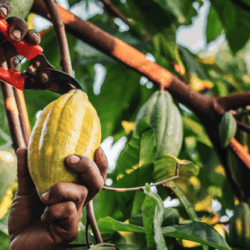
Recent partners include Mars (cacao), Sun World International (pitless cherries, a project the SLP has followed), CSIRO (livestock and aquaculture), and IITA (yam breeding in Africa). Miller also credits friendlier rules abroad, including Europe’s simplified framework for gene-edited plants: “I think there’s an understanding that in many cases, what comes out from gene editing is equivalent to conventional breeding.”
With roughly as many prospects still in talks, Pairwise is betting CRISPR’s next big payoff comes from crops the ag biotech industry has long overlooked.

Fresh cherries, representing Pairwise and Sun World's CRISPR pitless cherry project
Related on the SLP
CRISPR pitless cherries are on the horizon

Read the original article here

Related Articles

Infographic: Global regulatory and health research agencies on whether glyphosate causes cancer

Infographic: Global regulatory and health research agencies on whether glyphosate causes cancer

Does glyphosate—the world's most heavily-used herbicide—pose serious harm to humans? Is it carcinogenic? Those issues are of both legal and ...

Most Popular

ChatGPT-Image-Sep-17-2026-12_28_43-PM
Vitamin D, omega-3 fish oil and glucosamine supplements could cause brain damage 
ChatGPT-Image-Mar-10-2026-01_39_01-PM
Viewpoint—“Miracle molecule” debunked: Why acemannan supplements don’t work
ChatGPT-Image-Sep-17-2026-10_17_15-AM
Viewpoint: Why are the less intelligent more likely to be conservative—and smarter people more socially liberal?
Screenshot-2026-09-10-at-12.20.19-PM
'Jet fuel didn't melt the steel': 9/11 conspiracy theories debunked
Screenshot 2026-07-29 at 10.40
The COVID vaccine turbo cancer scare is back. Science still proves it’s wrong.
Screenshot-2026-09-16-at-12.07.47-PM
The heated debate over trans athletes in the WNBA
Screenshot-2026-09-10-at-11.50.46-AM
Did COVID vaccines kill 2,500 service members? RFK Jr. hires an investigator who compares vaccine promoters to Nazi doctors
ChatGPT-Image-Aug-28-2026-03_33_46-PM
Viewpoint: Bad science—Five bogus Trump administration claims about vaccines and autism
glp menu logo outlined

Get news on human & agricultural genetics and biotechnology delivered to your inbox.