Death of a Chinese girl in a gene-editing trial raises concerns about China’s rush to become a biomedical superpower

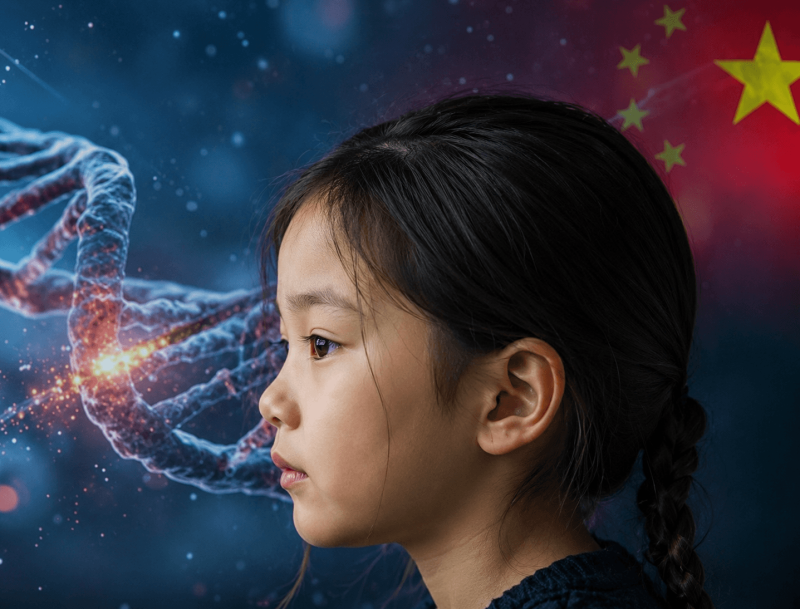
Six-year-old “Mei” had Snijders Blok-Campeau syndrome, a disorder diagnosed in just 237 people worldwide, marked by developmental delays and simple speech. In March 2025, doctors at Shanghai’s Xinhua Hospital infused trillions of viruses carrying an experimental base-editing therapy into her spinal fluid to correct the mutation. Seven days later she died of a severe immune reaction — a death never made public, as Science and Retraction Watch reveal in a joint investigation by Brendan Borrell.

Mis- and disinformation are distorting science and public policy. Subscribe to our Daily and Weekly Digests for incisive coverage of ‘disruptive’ innovations in AI, agricultural biotechnology, food, chemicals, nuclear energy, vaccines, and other disruptive innovations.

A trial with few guardrails

The trial, led by neuroscientist Zilong Qiu, ran as an “investigator-initiated trial” — a fast-growing pathway letting hospitals test novel therapies with only local ethics review, bypassing China’s national regulator. Mei’s parents paid over $800,000 from savings and relatives but weren’t adequately informed of the risks. Qiu later published a related Nature paper on base-editing in mice without mentioning her death or the family’s funding.

Steven Gray, a gene therapy researcher at UT Southwestern Medical Center, reviewed the case and said bluntly: “This shouldn’t have gone to trial.” The episode, echoing He Jiankui’s 2018 CRISPR-baby scandal, tests whether China’s booming biotech sector can police itself while racing to become a global biomedical power.
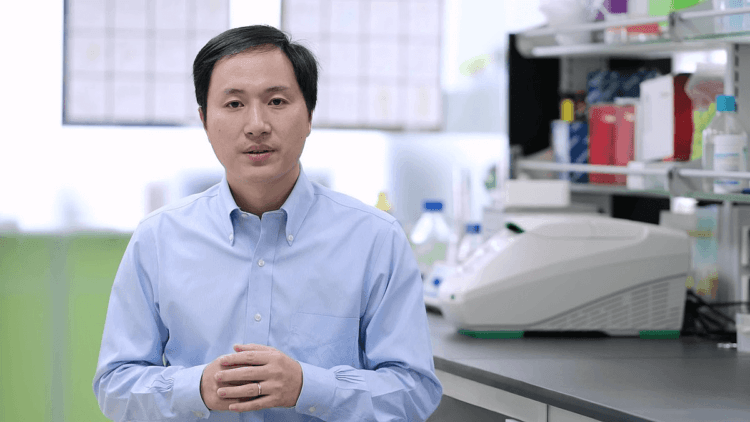
Chinese scientist He Jiankui, who created the world's first gene-edited babies
Related on the SLP
Vindication for He Jiankui? Seven years after the Chinese scientist’s pioneering work landed him in jail, scientists and ethicists are exploring the inevitably of gene edited babies

Read the original article here

Related Articles

Infographic: Global regulatory and health research agencies on whether glyphosate causes cancer

Infographic: Global regulatory and health research agencies on whether glyphosate causes cancer

Does glyphosate—the world's most heavily-used herbicide—pose serious harm to humans? Is it carcinogenic? Those issues are of both legal and ...

Most Popular

ChatGPT-Image-Sep-17-2026-12_28_43-PM
Vitamin D, omega-3 fish oil and glucosamine supplements could cause brain damage 
ChatGPT-Image-Mar-10-2026-01_39_01-PM
Viewpoint—“Miracle molecule” debunked: Why acemannan supplements don’t work
ChatGPT-Image-Sep-17-2026-10_17_15-AM
Viewpoint: Why are the less intelligent more likely to be conservative—and smarter people more socially liberal?
Screenshot-2026-09-10-at-12.20.19-PM
'Jet fuel didn't melt the steel': 9/11 conspiracy theories debunked
Screenshot-2026-09-16-at-12.07.47-PM
The heated debate over trans athletes in the WNBA
Screenshot-2026-09-10-at-11.50.46-AM
Did COVID vaccines kill 2,500 service members? RFK Jr. hires an investigator who compares vaccine promoters to Nazi doctors
Screenshot-2026-09-17-at-10.24.54-AM
Viewpoint: Dubious environmental fears: Why the AI buildout is critical to America’s ecological future
Screenshot 2026-07-29 at 10.40
The COVID vaccine turbo cancer scare is back. Science still proves it’s wrong.
ChatGPT-Image-Sep-9-2026-02_48_24-PM
Viewpoint: Trump-RFK Jr. report on “Gender Ideology & Left-wing Ideology’ targets LGBTQ community—and science
Screenshot-2026-08-12-at-11.31.46-AM
AI is helping develop new vaccines
glp menu logo outlined

Get news on human & agricultural genetics and biotechnology delivered to your inbox.