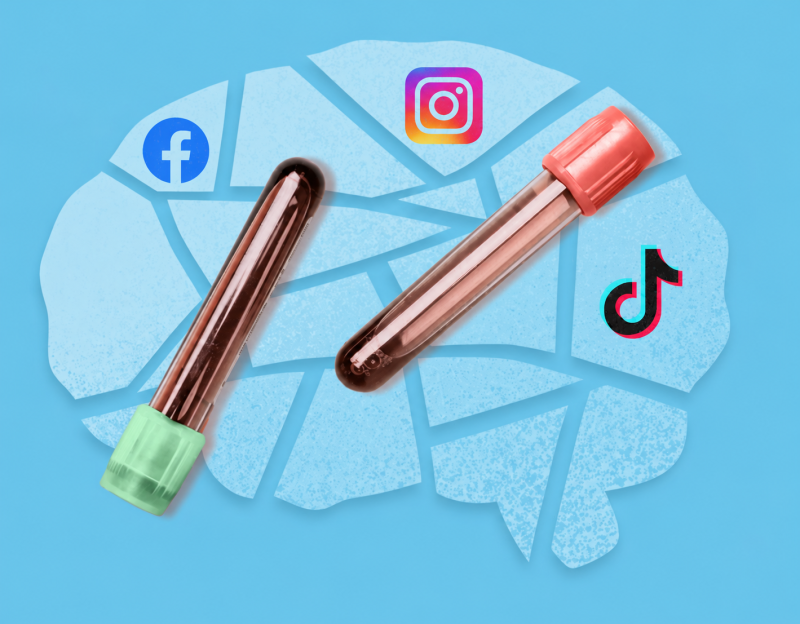
Blood tests for Alzheimer’s? The latest grifter, social media scam.

Social media is selling Alzheimer’s blood tests as a crystal ball for healthy people, and the evidence doesn’t back it up. That’s the finding of a new University of Sydney analysis of 188 posts on Facebook, Instagram and TikTok.

More than a third of the posts suggested the tests could screen people with no symptoms, which runs against current clinical recommendations. Accounts with a financial stake were three times more likely to push testing for healthy people.

The evidence behind these claims was thin. Only 36% of posts included any supporting evidence, and fewer than a quarter cited a specific study. Posts aimed at healthy audiences rarely mentioned harms such as overdiagnosis, false positives, or the psychological toll a diagnosis can take on patients and families.

“Social media is presenting exciting claims about what these new blood tests might be able to do, but that excitement can outpace the evidence,” said Dr. Jenna Smith, lead author and researcher at the University of Sydney’s School of Public Health.

Mis- and disinformation are distorting science and public policy. Subscribe to our Daily and Weekly Digests for incisive coverage of ‘disruptive’ innovations in AI, agricultural biotechnology, food, chemicals, nuclear energy, vaccines, and other disruptive innovations.

Smith noted that fear of dementia makes the pitch easy to fall for. “But for people without symptoms, there’s currently no evidence that screening provides a benefit,” she said. “People with no symptoms could be diagnosed with Alzheimer’s disease but not go on to develop dementia that impacts their life.”

The tests still have a legitimate role. They can help support diagnosis for people who already have cognitive symptoms, Smith said, as long as results are interpreted with clinical oversight. She wants posts to tell viewers to talk to a health professional before getting tested.


Read the original article here

Related Articles

Infographic: Global regulatory and health research agencies on whether glyphosate causes cancer

Infographic: Global regulatory and health research agencies on whether glyphosate causes cancer

Does glyphosate—the world's most heavily-used herbicide—pose serious harm to humans? Is it carcinogenic? Those issues are of both legal and ...

Most Popular

Screenshot-2026-10-01-at-10.52.08-AM
Non-browning CRISPR gene-edited bananas move one step closer to British markets
AI-Force-Leadership-Portrait
Jay Clayton controversy: The divisive history of Trump’s newly-appointed AI czar
ChatGPT-Image-Mar-10-2026-01_39_01-PM
Viewpoint—“Miracle molecule” debunked: Why acemannan supplements don’t work
Screenshot-2026-09-22-at-10.54.12-AM
‘They misunderstand science’: Research attempting to tie autism to changes in the gut microbiome comes under fire
ChatGPT-Image-Sep-10-2026-10_36_07-AM
Viewpoint: Even lousy scientific articles can shield authors when they hype dubious health claims and products
Elderly-Speaker-at-MAHA-Institute
At anti-vaccine MAHA conference, RFK Jr. pledges to unify federal health information and combat vaccine safety ‘misinformation’
generated-1790707585414
Facts & Fallacies podcast: America's health care system is broken. A doctor explains how to fix it
ChatGPT-Image-Sep-21-2026-11_21_39-AM
Viewpoint: Food cults: Online ‘nutrition communities’ can pose unique dangers
ChatGPT-Image-Sep-21-2026-03_15_09-PM
Viewpoint: Chipotle-inspired lesson: 10,000 sick customers suggest that processed foods can be safer than fresh ones
Screenshot 2026-10-01 at 12.30
Combating ‘narrative distortion’: Will pharma companies step up to challenge health misinformation?
Screenshot-2026-10-01-at-11.21.27-AM
Vaccine hesitancy, like malaria, surges globally, topping 35% in some countries
glp menu logo outlined

Get news on human & agricultural genetics and biotechnology delivered to your inbox.