
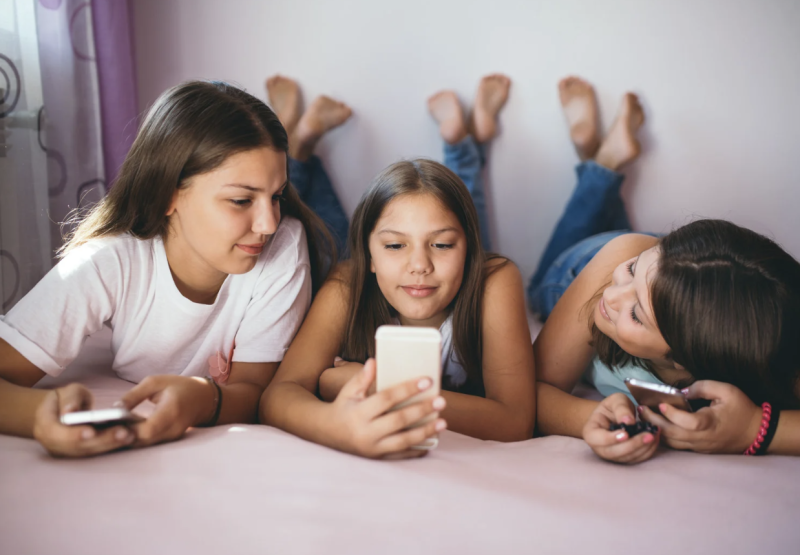
Countries around the world are rushing to pass teenage social media bans. Could they backfire?

Governments are racing to keep kids off social media, but whether those bans will actually improve teen mental health is far from settled, as Katherine Leach-Kemon, Alejandra Martinez and Lara Yeyati Preiss report for Think Global Health. Eight countries have now passed or implemented age-based restrictions. And on August 26, Meta settled with 47 U.S. states for up to $17 billion over claims its platforms harmed children, agreeing to cap teen use at two hours a day and scrap features like infinite scroll.

The urgency is understandable. A study published in The Lancet found the global burden of mental health disorders has more than doubled over the past three decades, with the highest rates among adolescents.

Yet the evidence tying social media to poor youth mental health is mixed. Some research finds a small harm, while other studies find none at all. Cutting teens off also carries risks. “Social cohesion is protective for mental health,” said Damian Santomauro, lead scientist measuring mental disorders for the Global Burden of Disease study.

Nobody knows yet whether these restrictions will pay off like raising the tobacco purchase age to 21, or flop like abstinence-only sex education.

Early results are uneven. In Australia, a government survey found account ownership among 10- to 15-year-olds fell from 52% to 42% under its under-16 ban. Malaysia’s ban let kids slip through and has been pushed back to January 2027, while the U.K. plans to follow in spring 2027.

Youth advocates worry about collateral damage. Lucy Thomas, cofounder and CEO of Project Rockit, cautioned that “we inadvertently make some young people more isolated while trying to make them safer.” Others dismiss the bans as performative and argue governments should regulate the tech companies directly rather than leave the job to parents.

For Thomas, the real test isn’t how many accounts disappear. “The more important question is whether young people are actually safer, healthier and more connected,” she said.


Read the original article here

Related Articles

Infographic: Global regulatory and health research agencies on whether glyphosate causes cancer

Infographic: Global regulatory and health research agencies on whether glyphosate causes cancer

Does glyphosate—the world's most heavily-used herbicide—pose serious harm to humans? Is it carcinogenic? Those issues are of both legal and ...

Most Popular

Personalized-Cancer-mRNA-Vaccine-Vial
Personalized mRNA vaccines are poised to revolutionize cancer treatments. Here are the barriers.
Screenshot-2026-10-11-at-10.24.21-AM
Viewpoint: RFK Jr.’s new CDC head Erica Schwartz greenlights hepatitis B vaccine study critics call “unethical and designed to cast doubts on its safety”
Screenshot-2026-10-05-at-11.57.44-AM
Scaremongering or legitimate safety concerns? The political dogfight over America’s food safety system
ChatGPT-Image-Mar-10-2026-01_39_01-PM
Viewpoint—“Miracle molecule” debunked: Why acemannan supplements don’t work
Screenshot-2026-09-22-at-12.26.15-PM
‘Forever chemical’ concerns: Separating hysteria from reasonable concern in the debate over PFAS danger
Deepfake Democracy Media Mosaic
31 states have passed a patchwork of laws to limit election deepfake commercials. They’re not working very well.
Screenshot 2026-10-12 at 12.25
Tearful onions? CRISPR has a solution for that
Screenshot-2026-10-08-at-1.23.28-PM
Countries around the world are rushing to pass teenage social media bans. Could they backfire?
Eating Nuts Adds up to Longer Life x
For millions with peanut allergies, Nurtured Nuts’ CRISPR gene-edited peanuts could ease the fear of accidental exposure
AI-Force-Uniform-Insignia-Close-Up
Trump wants an AI Force like Space Force, but that could make AI’s risks harder to manage
generated-1790707585414
Facts & Fallacies podcast: America's health care system is broken. A doctor explains how to fix it
Concerned-Farmer-at-Golden-Hour
GAHA: The corporate-created “healthier America” movement challenging what it claims is MAHA misinformation about modern farming, chemicals, and food
Radioactive-Americana-Collage-2
The kooky logic behind the raft of spurious cancer claims from Harvard’s T.H. Chan School of Public Health
glp menu logo outlined

Get news on human & agricultural genetics and biotechnology delivered to your inbox.





















