GE can help address California’s drought

The United Nations has called drought the “world’s costliest natural disaster,” both financially, imposing an annual cost of $6-8 billion, and in human terms; since 1900, it has affected two billion people, leading to more than 11 million deaths. That is because so much of the world is vulnerable; currently affected areas include Australia, Sub-Saharan Africa, South Asia, North and South America, and the Middle East.

Given that agriculture accounts for 70% of water consumption, on average, worldwide, it seems logical that this sector should be the focus of conservation measures. And, in fact, a proven technology exists that could go a long way toward reducing the impact of drought: genetic engineering (GE).

Sometimes called “genetic modification,” GE enables plant breeders to make existing crop plants do new things – such as conserve water. Even with research and development hampered by resistance from activists and excessive government regulation, drought-resistant GE crop varieties are emerging from the development pipeline in many parts of the world.
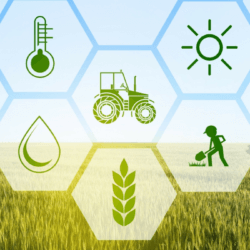
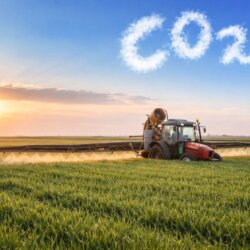
But, in the long term, the greatest boon of all, for both food security and the environment, will likely be the ability of new crop varieties to tolerate periods of drought and other water-related stresses. Even a small reduction in the amount of water used for irrigation could have huge benefits, especially in drought conditions.

Read the full, original article: More Crop for the Drop

Related Articles

Infographic: Global regulatory and health research agencies on whether glyphosate causes cancer

Infographic: Global regulatory and health research agencies on whether glyphosate causes cancer

Does glyphosate—the world's most heavily-used herbicide—pose serious harm to humans? Is it carcinogenic? Those issues are of both legal and ...

Most Popular

Screenshot-2026-11-17-at-12.18.09-PM
Challenging glyphosate fear-mongering: Statewide Nebraska study finds no link between weedkiller use and non-Hodgkin lymphoma
Wholewheat Bread and Yogurt Ingredients
Viewpoint: RFK Jr.’s reckless good intentions: Do we really want to ban whole-wheat bread and yogurt?
Screenshot-2026-11-18-at-12.42.18-PM
Viewpoint: MAHA/MAGA/RFK Jr. health disinformation crackup is coming. Beware as Bhattacharya, Makary, Prasad, and Oz seek lucrative second acts
Soybean Harvest in Cupped Hands
30 years of GMO farming: Defying cynics, we’ve had larger harvests, lower costs, and $385 billion in added global farmer income
Screenshot-2026-11-16-at-2.37.32-PM
30 years of GMO farming: Is the boom in glyphosate and glufosinate use harming the environment? Data show they’re the most sustainable choice
Grayscale Collage of Protest and Choice
Viewpoint: Medical Freedom movement? A sobering look at RFK Jr.’s disastrous two years as our health and food czar 
Neon-AI-Globe-Network
Viewpoint: The three biggest threats posed by AI hyper-intelligence
ChatGPT-Image-Mar-10-2026-01_39_01-PM
Viewpoint—“Miracle molecule” debunked: Why acemannan supplements don’t work
Screenshot-2026-11-17-at-10.41.13-AM
Viewpoint: The cost of resurgence: Let’s not forget how difficult it was to wipe out measles in the U.S.
Screenshot-2026-11-19-at-7.54.57-PM
European General Court sides with scientists, dismisses activist claims that glyphosate is toxically dangerous
Screenshot-2026-11-19-at-11.15.27-AM
'It's easier to open a surrogacy agency than a nail salon in most states'
Stormlit Portrait Over Golden Mountains
Searching for life where no one thought to look: A renowned astrophysicist’s seemingly quixotic quest to explore Venus’s clouds
Screenshot 2026-07-29 at 10.40
The COVID vaccine turbo cancer scare is back. Science still proves it’s wrong.
glp menu logo outlined

Get news on human & agricultural genetics and biotechnology delivered to your inbox.