Is producing more food to feed the world beside the point?

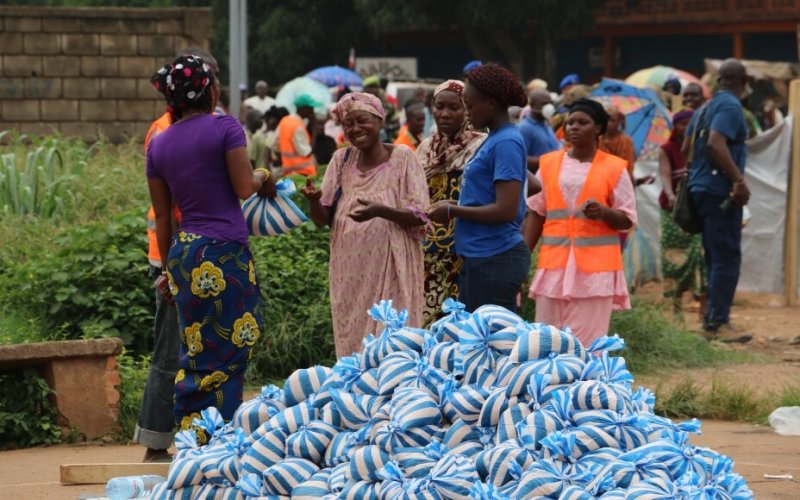
acces au point de distribution
[NOTE from GLP Editors]: Many supporters of crop biotechnology note that the world population is on course to exceed 9 billion people by 2050. The rise in the sheer number of people along with the increased caloric demands of the developing world that is becoming more prosperous and more desirous of meat in their diet will stress the global food system. While not a silver bullet, GM foods, they say, is a key tool, in helping to addressing this inevitable crisis.

Anti-GMOers vigorously dispute this scenario. They claim, correctly, that there are currently enough calories created to go around; the issue they say, is waste. Distribute food more fairly and efficiently, and the problem goes away.

Grist’s Nathanael Johnson addresses this dispute in an informative series on this controversial issue. In his latest article, he asks: “Is producing more food to feed the world beside the point?”
When I started this hungry-hungry-humans project (you can find the previous stories here), people began preemptively warning me that I was probably headed in the wrong direction. They feared that I would start by asking: How are we gonna feed 10 billion people without wrecking the planet? And then answer it by saying, well technology X can increase farm yields by this much, and technology Y can bump it up a little more …

Instead of focusing on agricultural productivity, these people said, we should be working on access to food. We currently have plenty of food, and yet we still have hunger, even in the U.S. So how will increasing yields further help?

As Gordon Conway points out, in his book One Billion Hungry: Can We Feed the World?: “If we were to add up all of the world’s production of food and then divide it equally among the world’s population, each man, woman, and child would receive a daily average of over 2,800 calories — enough for a healthy lifestyle. … But of course, food is not divided in this way (nor is income), and it is unrealistic to expect it will happen in the near, or even distant, future.”

Oh yeah. There’s that.

Read full original article: Is producing more food to feed the world beside the point?

Related Articles

Infographic: Global regulatory and health research agencies on whether glyphosate causes cancer

Infographic: Global regulatory and health research agencies on whether glyphosate causes cancer

Does glyphosate—the world's most heavily-used herbicide—pose serious harm to humans? Is it carcinogenic? Those issues are of both legal and ...

Most Popular

ChatGPT-Image-Mar-10-2026-01_39_01-PM
Viewpoint—“Miracle molecule” debunked: Why acemannan supplements don’t work
Prescription Capsules Scattered on Twenty-Dollar Bills
Facts & Fallacies podcast: America's health care system is broken. A doctor explains how to fix it, Part 2
Screenshot-2026-10-12-at-10.44.38-AM
Widely condemned as unethical, hepatitis B vaccine study funded by RFK Jr’s CDC gets a final greenlight
Screenshot-2026-10-08-at-10.41.33-AM
Viewpoint: Wellness patches: Most vitamin supplements are useless and sometimes even dangerous, but this craze is even worse
newborn baby spit up gerd
Vaccine-preventable congenital infections are a leading driver of autism
Cross and Syringe Standoff
Viewpoint: Hijacking Jesus: How anti-vaccine fanatics are exploiting religious exemptions and killing children
Deepfake Democracy Media Mosaic
31 states have passed a patchwork of laws to limit election deepfake commercials. They’re not working very well.
Screenshot-2026-10-14-at-11.45.36-AM
Viewpoint: RFK Jr.’s stacked FDA advisory council endorses multicancer screening test from ethically- questionable company that would increase false positives and waste billions of dollars
Screenshot-2026-10-15-at-12.13.33-PM
Ahead of the midterms, Meta has paid at least 29 anti-LGBTQ accounts for their posts
ChatGPT-Image-Sep-2-2026-02_03_32-PM
How much of a problem is AI’s water use?
glp menu logo outlined

Get news on human & agricultural genetics and biotechnology delivered to your inbox.