What’s so unnatural about GM foods?

Chipotle hit the headlines last week when the company announced it would no longer serve customers genetically modified foods.

Yet recent research drives home how misled alarmists are about genetically modified food. All human beings, two Cambridge University scientists have established, are genetically modified, including Chipotle’s customers. Over the years, hundreds of foreign genes have jumped into human DNA through a natural phenomenon called “gene flow.”

If humans can safely accept alien genes without mishap, why not food, too?

Farmers and breeders have for centuries used cross-breeding to improve the genetic characteristics of crops and animals. Because this process involves gene transfers within the same species, environmental advocates label it “natural” — even though cross-breeding is clearly man-made. Modern genetic splicing makes it possible to combine genes from completely different species to produce much-needed products, including pest-resistant and high-yielding crops.

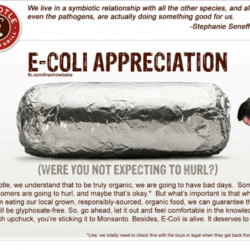
When fears about genetically modified foods first arose, little was known about gene flow, also called horizontal gene transfer. The idea that genes could jump across species violated then-conventional wisdom. But scientific research has established that natural gene transfers regularly occur. So genetic transfers are not a human invention — just a belated human effort to imitate what nature has been doing all along.

So, why should Chipotle even make the claim when its own customers are genetically modified?

The GLP aggregated and excerpted this blog/article to reflect the diversity of news, opinion and analysis. Read full, original post: If you don’t want your food genetically modified, tell nature to stop it.

Related Articles

Infographic: Global regulatory and health research agencies on whether glyphosate causes cancer

Infographic: Global regulatory and health research agencies on whether glyphosate causes cancer

Does glyphosate—the world's most heavily-used herbicide—pose serious harm to humans? Is it carcinogenic? Those issues are of both legal and ...

Most Popular

ChatGPT-Image-Mar-10-2026-01_39_01-PM
Viewpoint—“Miracle molecule” debunked: Why acemannan supplements don’t work
Diet Soda with Measuring Tape 2
Science challenges anti-soda activists: No, sodas won’t make you fat
Strawberry Clamshell with Warning Sticker
Viewpoint: Activists hype ‘dangerous level’ of pesticide residues in Driscoll berries: Separating health concerns from fear-mongering
Screenshot 2026-10-16 at 5.38
PFAS in Agriculture: Science, Uncertainty, and Risk Communication
Government Briefing on Autism Trends
Viewpoint: ‘Statistical murder’: Kennedy’s expanding record of “duplicity and mendacity”
Rustic Skillet of Raw Brains
‘Weird food’? Testicle- and brain-eating, supplement-gulping MAHA health food enthusiasts defend their ‘natural’ diets
Serene Mature Woman in Abstract Waves
Testosterone’s growing appeal to women: It anecdotally mildly improves sex life, but are there any other potential benefits—or red flags?
Prescription Capsules Scattered on Twenty-Dollar Bills
Facts & Fallacies podcast: America's health care system is broken. A doctor explains how to fix it, Part 2
png_cheese_Raw_milk
100% raw milk, 100% misguided: As MAHA-fueled demand for unpasteurized milk soars, American Academy of Pediatrics renews call for a ban on its sale and distribution
Silhouettes Beneath the Mosquito Nets
Guinea-Bissau halts widely condemned RFK Jr.-backed vaccine trial that would have withheld life-saving vaccines from thousands of newborns
Nutrition and Supplements Infinity Collage
Drugs and supplements can extend life and five other longevity myths
glp menu logo outlined

Get news on human & agricultural genetics and biotechnology delivered to your inbox.