


The GLP aggregated and excerpted this blog/article to reflect the diversity of news, opinion and analysis.
If you suffer from hayfever in spring or food allergies, you might want to blame a Neanderthal or Denisovan ancestor. The interspecies mating that accounts for a small proportion of our genome has given some people a hyper-alert immune system, providing extra protection at the cost of overreacting to harmless pollen or foods.
People of European descent have inherited between 1 and 6 percent of their genome from Neanderthals, although the circumstances under which the mating occurred remain unknown. In July, Dr. Michael Dannemann of the Max Planck Institute for Evolutionary Anthropology presented evidence at the Society for Molecular Biology and Evolution conference that this inheritance is particularly common in DNA controlling Toll-like receptors (TLRs), proteins that initiate the body’s response to potential dangers.
Both Dannemann and Dr. Lluis Quintana-Murci of the Institut Pasteur, lead author of the second paper, conclude that the Neanderthal versions of TLRs are expressed more strongly, producing stronger immune responses.
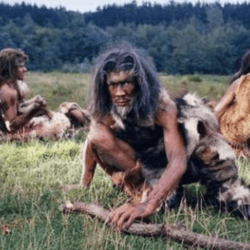




“We found that interbreeding with archaic humans – the Neanderthals and Denisovans – has influenced the genetic diversity in present-day genomes at three innate immunity genes belonging to the human Toll-like-receptor family,” said Janet Kelso, one of Dannemann’s coauthors, in a statement. The variations or alleles in question associated with TLR1 and TLR6 come from Neanderthals. A TLR10 allele resembles those seen in Denisovans, the mysterious third group of humans that lived in Siberia and interbred with both modern humans and Neanderthals.
Read full, original post: Blame Your Neanderthal Genes For Your Allergies





















