USDA: Pesticide residues in food below allowable levels, not safety risk

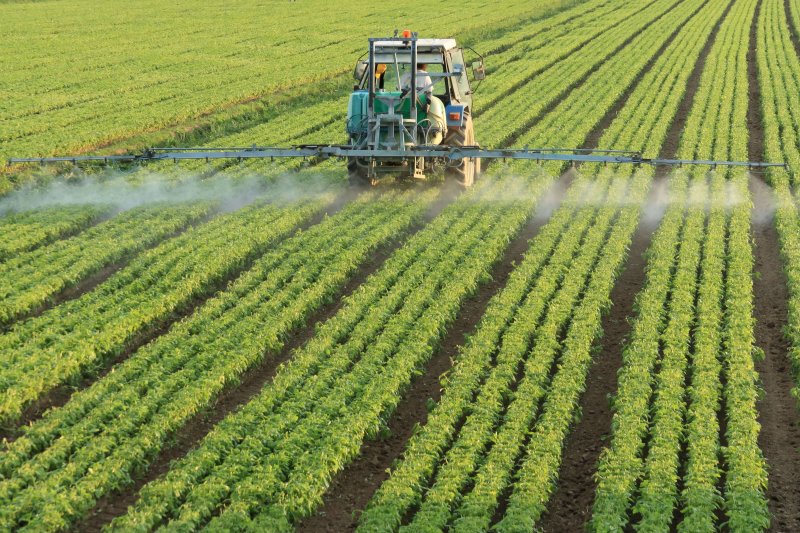
pesticide spraying

The GLP aggregated and excerpted this blog/article to reflect the diversity of news, opinion and analysis.

The U.S. Department of Agricultureโ€™s (USDA) Agricultural Marketing Service (AMS) has posted data from the 2014 Pesticide Data Program (PDP) Annual Summary, which confirms that overall pesticide chemical residues found on the foods tested are at levels below the tolerances established by the Environmental Protection Agency (EPA) and do not pose a safety concern. ย This information, along with an explanatory guide for consumers, can be found atย www.ams.usda.gov/pdp.

The 2014 PDP Annual Summary shows that over 99 percent of the products sampled through PDP had residues below the EPA tolerances. Residues exceeding the tolerance were detected in 0.36 percent of the samples tested. The PDP pesticide residue results are reported to Food and Drug Administration (FDA) and EPA through monthly reports. ย In instances where a PDP finding may pose a safety risk, FDA and EPA are immediately notified. ย EPA has determined the extremely low levels of those residues are not a food safety risk, and the presence of such residues does not pose a safety concern.

The findings of the Pesticide Data Program Annual Summary, Calendar Year 2014 can be downloaded atย www.ams.usda.gov/pdp.ย Printed copies of can be obtained by contacting the USDA, Agricultural Marketing Service, Science and Technology Program, Monitoring Programs Division by e-mail requestย @ย [email protected].

Read full, original post:ย USDA Releases 2014 Annual Summary for Pesticide Data Program: Report confirms that pesticide residues do not pose a safety concern for U.S. food


{{ reviewsTotal }}{{ options.labels.singularReviewCountLabel }}
{{ reviewsTotal }}{{ options.labels.pluralReviewCountLabel }}
{{ options.labels.newReviewButton }}
{{ userData.canReview.message }}

Related Articles

Infographic: Global regulatory and health research agencies on whether glyphosate causes cancer

Infographic: Global regulatory and health research agencies on whether glyphosate causes cancer

Does glyphosateโ€”the world's most heavily-used herbicideโ€”pose serious harm to humans? Is it carcinogenic? Those issues are of both legal and ...

Most Popular

ChatGPT Image Jun 3, 2026, 03_14_43 PM
Viewpoint: How Earthjustice became the poster child for the abuse of special interest activist funding
ChatGPT-Image-Jun-11-2026-01_15_03-PM
Selective Pressure, Selective Silence
ChatGPT Image Jun 3, 2026, 03_54_37 PM
Viewpoint: โ€œTurn on, tune in, drop outโ€โ€”Kennedy embraces the Timothy Leary psychedelic revolution
Screenshot-2026-06-05-at-2.12.30-PM
Some plants can poison you. So how did humans figure out what is safe to eat?
Screenshot 2026-05-26 at 10.15
Viewpoint: Double standardโ€”Why does the wellness industry get a free pass while Big Healthcare is treated as morally suspect?
ChatGPT-Image-Mar-10-2026-01_39_01-PM
Viewpointโ€”โ€œMiracle moleculeโ€ debunked: Why acemannan supplements donโ€™t work
ChatGPT Image May 28, 2026, 08_16_38 PM
Viewpoint: Why the EPA mismeasures cancer risk of chemicals and what should be done to fix it
ChatGPT-Image-May-26-2026-07_51_21-AM-2
Viewpoint: There are more than 1,000 chemicals in a cup of coffeeโ€”including many substances that can cause cancer. Why isnโ€™t it banned?
Screenshot-2026-06-03-at-1.24.46-PM
Challenging anti-GMO disinformation: Why genetically-tweaked crops offer bushels of benefits
ChatGPT Image Jun 1, 2026, 11_39_17 AM
Viewpoint: When food myths go viral, farmers pay the price

Sorry. No data so far.

glp menu logo outlined

Get news on human & agricultural genetics and biotechnology delivered to your inbox.