Lab-grown embryos reveal earliest stages of life

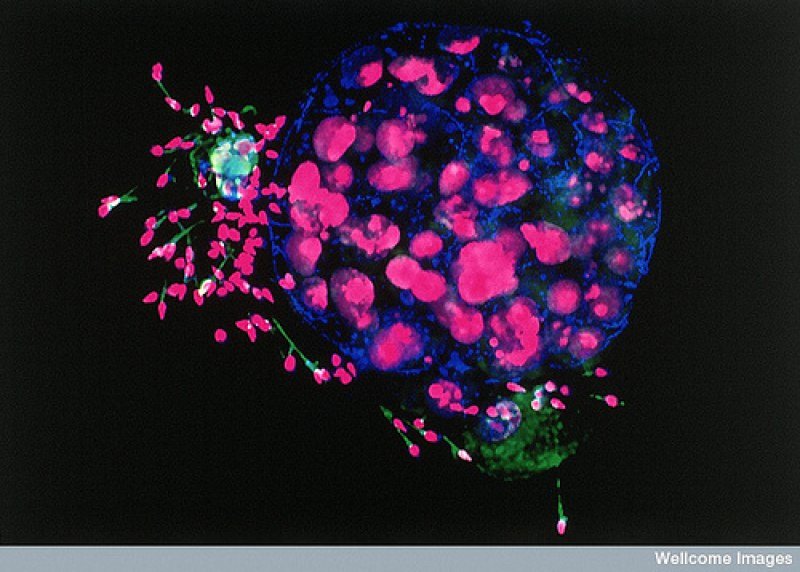
embryo
CREDIT: Flickr/wellcome images

The GLP aggregated and excerpted this blog/article to reflect the diversity of news, opinion and analysis.

Scientists say a breakthrough in growing embryos will improve fertility treatments and revolutionise knowledge of the earliest steps to human life.

For the first time, embryos have been grown past the point they would normally implant in the womb.

The research, in the UK and US, was halted just before the embryos reached the legal limit of 14-days old.

But in an ethically-charged move, some scientists have already called for the 14-day limit to be changed.

The earliest steps towards human life are largely a mystery, but the research in Nature and Nature Cell Biology, has been able to study embryos for longer than ever before.

About a week used to be the limit – with scientists able to grow a fertilised egg up to the stage it would normally implant into the womb.

The experiments were deliberately ended at the 13-day stage – just before the legal limit, but far beyond anything that has been achieved before.

The research is already providing insight into how an embryo starts the process of organising itself into a human being.

There is international agreement that experiments should not allow embryos to develop past 14 days.

This research is pushing right up against the legal limits and some scientists are already making the case for the 14-day limit to be reviewed.

Read full, original post: Embryo study shows ‘life’s first steps’

{{ reviewsTotal }}{{ options.labels.singularReviewCountLabel }}
{{ reviewsTotal }}{{ options.labels.pluralReviewCountLabel }}
{{ options.labels.newReviewButton }}
{{ userData.canReview.message }}

Related Articles

Infographic: Global regulatory and health research agencies on whether glyphosate causes cancer

Infographic: Global regulatory and health research agencies on whether glyphosate causes cancer

Does glyphosate—the world's most heavily-used herbicide—pose serious harm to humans? Is it carcinogenic? Those issues are of both legal and ...

Most Popular

Screenshot 2025-08-25 203032
Mazzenga’s 20-year old muscles: How a still-going-strong 92-year old sprinter wins every race she enters
Screenshot-2026-06-08-at-10.19.30-AM
‘Natural’ wellness supplements linked to liver injury
ChatGPT-Image-May-28-2026-12_56_54-PM
Viewpoint: Vaccines' non-specific effects? The ‘shoddy’ Danish couple whose 'research’ inspires RFK, Jr.’s health delusion
Screenshot-2026-06-05-at-2.12.30-PM
Some plants can poison you. So how did humans figure out what is safe to eat?
Credit: ACSH
Viewpoint: Who and what’s to blame for the surge in vaccine-preventable diseases?
Screen Shot at AM
Facts & Fallacies Podcast: Right-wing politics bad for your health? Separating speculation from science
Screenshot-2026-06-05-at-1.44.09-PM
Viewpoint: Scientists have scrapped the worst-case climate scenario. Is that proof that climate change is a hoax, as Trump claims?
ChatGPT-Image-Jun-9-2026-03_24_05-PM
Misinformed parents overdosing children with Vitamin A to fight measles
Screenshot 2025-07-30 at 10.48
Can gene editing eliminate Down syndrome? Scientists have done it in lab-grown cells
ChatGPT-Image-Mar-10-2026-01_39_01-PM
Viewpoint—“Miracle molecule” debunked: Why acemannan supplements don’t work
ChatGPT-Image-Jun-9-2026-11_54_59-AM
Why weight-loss drugs might be reducing cancer rates and making treatment more effective
ChatGPT-Image-Jun-9-2026-12_30_14-PM
The ‘low-quality’, retracted studies RFK, Jr. and MAHA rely on for anti-vaccine claims
glp menu logo outlined

Get news on human & agricultural genetics and biotechnology delivered to your inbox.