Chinese use CRISPR to breed hairier cashmere goats

Screen Shot at PM
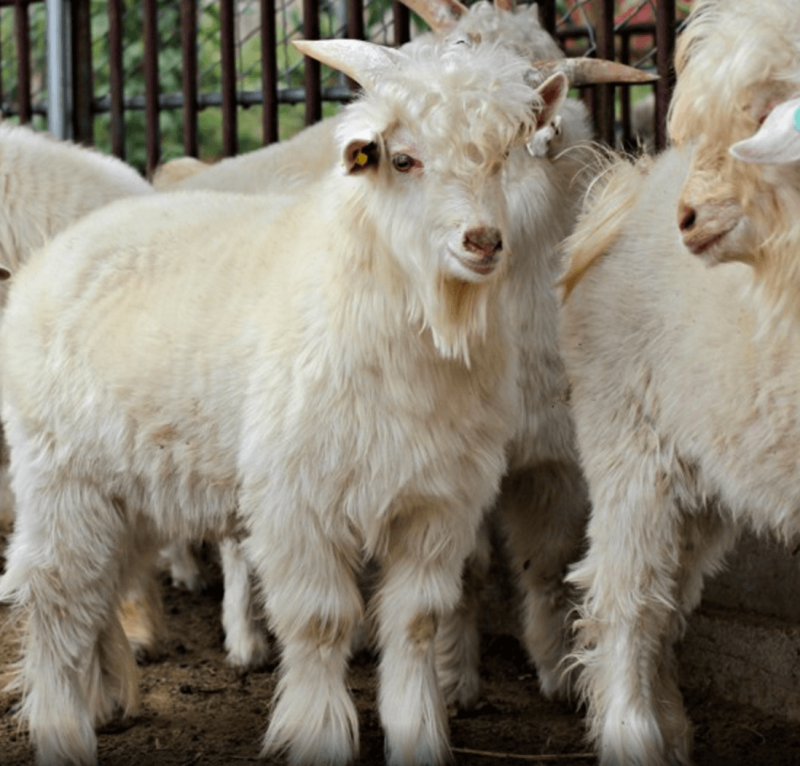
Cashmere goats at 6-moths old. Credit: Xiaolong Wang

In China, the world’s top producer of cashmere, scientists have been trying to breed more productive cashmere goats. They’ve now used CRISPR, the genetic editing technique, to disrupt a single gene in cashmere goats. The change made hair in their undercoats even longer and more numerous—but not, crucially, any thicker. The genetic tweak boosts yield by about three ounces.

Cashmere is a luxury product, its value derived precisely from its rarity…What happens to a luxury product in the age of genetic engineering?

So I called up Karl Spilhaus, longtime president of the Boston-based trade group Cashmere and Camel Hair Manufacturers Institute. Spilhaus was circumspect. He says the industry could be open to hair from these genetically modified goats if the quality was there. It’s just way too early to tell.

“Genetics always goes hand-in-hand with the environment and the production system,” says Scott Fahrenkrug, cofounder of the livestock genetics company Recombinetics…To win over the public to this new wave of genetic engineering enabled by CRISPR,…you need to alter it for the better.

The GLP aggregated and excerpted this blog/article to reflect the diversity of news, opinion, and analysis. Read full, original post: Would You Buy a Genetically-Engineered Cashmere Sweater?

{{ reviewsTotal }}{{ options.labels.singularReviewCountLabel }}
{{ reviewsTotal }}{{ options.labels.pluralReviewCountLabel }}
{{ options.labels.noReviewsLabel }}
{{ options.labels.newReviewButton }}
{{ userData.canReview.message }}

Related Articles

Infographic: Global regulatory and health research agencies on whether glyphosate causes cancer

Infographic: Global regulatory and health research agencies on whether glyphosate causes cancer

Does glyphosate—the world's most heavily-used herbicide—pose serious harm to humans? Is it carcinogenic? Those issues are of both legal and ...

Most Popular

Screenshot 2026-07-11 094410
Growing animal muscle and fat cells inside rice grains and calling it beef: One of numerous genetically engineered products shaking up our ecosystem
ChatGPT-Image-Mar-10-2026-01_39_01-PM
Viewpoint—“Miracle molecule” debunked: Why acemannan supplements don’t work
file-f-d-d-
Facts & Fallacies Podcast: Europe's AC debacle underscores fatal flaw in green activism
Screenshot-2026-07-16-at-11.32.12-AM
Viewpoint: Trump appoints climate change hoax promoter to head influential government policy project
Screenshot 2026-07-16 at 8.49
Pete Hegseth’s bizarre Viagra commercial as Trump administration endorses ‘hormone replacement therapy’
Screenshot-2026-07-16-at-6.02.54-PM
Wellness grifters overwhelm information channels in the developing world, and the problem is escalating
ChatGPT-Image-Jul-1-2026-03_33_49-PM
‘Alternative’ cancer treatments that could kill you
ChatGPT-Image-Jul-9-2026-02_39_22-PM
Viewpoint: Polyphenols or NAD+ supplements to combat aging: No, Gwenyth Paltrow and followers, don’t waste your money.
Screenshot-2026-07-16-at-12.08.38-PM
Viewpoint: With trust in doctors and mainstream medicine collapsing, medical professionals need a new communications strategy
ChatGPT-Image-Jun-25-2026-12_23_17-PM
No, Bill Gates did not secretly engineer ticks to promote veganism
afb-a-b
As the EU loosens restrictions on agricultural gene editing, it remains years behind the rest of the world on equally-safe GMO foods
Screenshot 2025-09-17 at 12.41
Misinformation alert: No, glyphosate use in Canadian forests is not spurring more wildfires
Screenshot-2026-07-08-at-9.36.03-AM
Viewpoint: Long-contained diseases are on the rise in the U.S. Are Trump cuts to blame?
glp menu logo outlined

Get news on human & agricultural genetics and biotechnology delivered to your inbox.