Healthy eating: Why doesn’t US government spend more on specialty crop research?

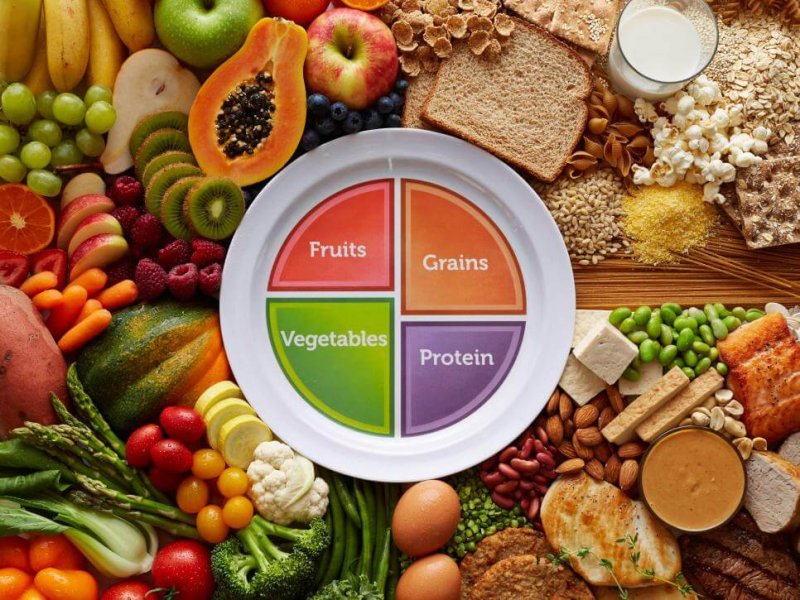
FN myplate intro s x jpg rend hgtvcom

As the country seeks solutions to the obesity epidemic, there’s been plenty of debate about how to get people to eat better. … But there’s one thing that’s often left out of the conversation: technology.

It might seem strange to think about vegetables as a technology, but they are. The average supermarket produce aisle represents decades, if not centuries, of agricultural research and development. But in the United States, big-league commodity crops like corn and soy, as well as meat, gobble up most of the agricultural research investment from both the public and private sectors.

Specialty crops remain special—just 3 percent of cropland is dedicated to growing them—though they make up roughly a quarter of the value of crops grown in the U.S. because they demand higher prices.

SO WHY DOESN’T the nation spend more on better lettuce? The answer lies partly in the history of the U.S. Department of Agriculture itself. On one hand, the department…is dedicated to promoting and boosting American agriculture as an industry…But the department is also tasked with encouraging healthy eating…and these two major goals can at times be directly at odds.

The USDA now dedicates some $400 million to studying specialty crops each year—a big increase, though still a modest fraction of the nearly $3 billion the government invests in agricultural research each year.

While much of the new federal boost for produce investment is motivated more by the industry’s business needs than any push to combat the nation’s crippling obesity epidemic, public health advocates with little political clout are thrilled to see the needle moving, however it happens.

The GLP aggregated and excerpted this blog/article to reflect the diversity of news, opinion, and analysis. Read full, original post: The vegetable technology gap

{{ reviewsTotal }}{{ options.labels.singularReviewCountLabel }}
{{ reviewsTotal }}{{ options.labels.pluralReviewCountLabel }}
{{ options.labels.newReviewButton }}
{{ userData.canReview.message }}

Related Articles

Infographic: Global regulatory and health research agencies on whether glyphosate causes cancer

Infographic: Global regulatory and health research agencies on whether glyphosate causes cancer

Does glyphosate—the world's most heavily-used herbicide—pose serious harm to humans? Is it carcinogenic? Those issues are of both legal and ...

Most Popular

wuhan institute of virology main entrance
​​COVID lab leak? Making a case that the Wuhan market origins theory is wrong
Screenshot-2026-06-17-at-9.44.03-AM
Viewpoint: Embryos are becoming the newest battleground of love, loss, and legal uncertainty
Screenshot-2026-06-18-at-11.41.51-AM
Viewpoint—Protecting baloney science: Far right senators move to protect the phony homeopathy industry
ChatGPT-Image-Jun-9-2026-01_11_37-PM
Turmeric supplements: More risks than benefits
Screenshot-2026-06-17-at-11.57.12-AM
Viewpoint: Raw milk and the myth of safety—ProPublica exposes the growing anti-homogenization movement
Screenshot-2026-06-18-at-2.52.05-PM
Activist organization accuses Trump of protecting methane-generating stripper wells to benefit billionaire and donor Jeffrey Hildebrand 
Screenshot-2026-06-16-at-10.02.22-PM
Viewpoint: ‘Industrial food’ primer—Challenging the dangerous delusions of the alternative food movement
ChatGPT-Image-Mar-10-2026-01_39_01-PM
Viewpoint—“Miracle molecule” debunked: Why acemannan supplements don’t work
ChatGPT-Image-Jun-18-2026-02_32_04-PM
Can illegal social media content be stopped before it goes viral? UK is going to try.
ChatGPT-Image-Jun-4-2026-03_07_27-PM
AAP v. Kennedy: While a court challenge grinds on, RFK Jr. quietly advances his anti-vaccine conspiracy agenda

Sorry. No data so far.

glp menu logo outlined

Get news on human & agricultural genetics and biotechnology delivered to your inbox.