Inexperienced hobbyist beekeepers ‘major driver’ of honey bee colony losses in Europe

b db cf a fdb a dc c

Reports of honey bee population decline has spurred many national efforts to understand the extent of the problem and to identify causative or associated factors.

[T]he impacts of beekeeper knowledge and beekeeping management practices have often been overlooked, despite honey bees being a managed pollinator.

Here, we established a standardised active monitoring network for 5 798 apiaries over two consecutive years to quantify honey bee colony mortality across 17 European countries.

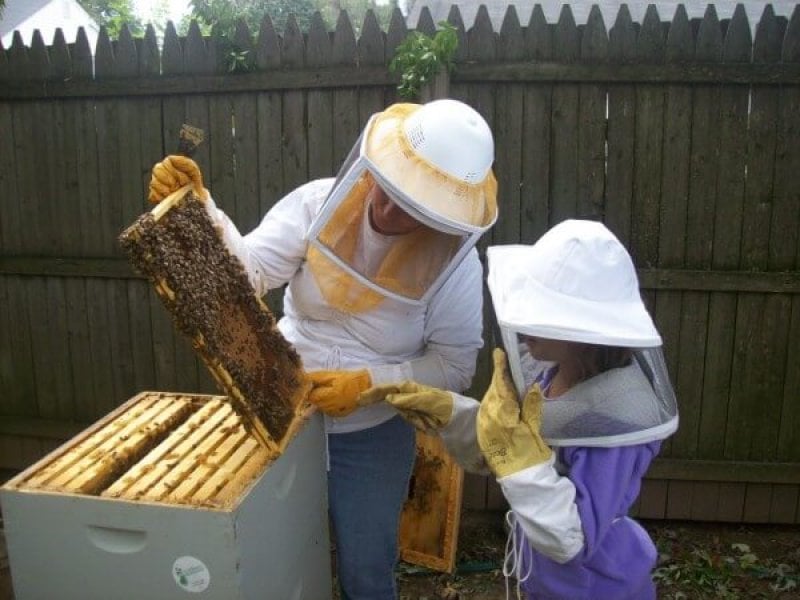
[M]odels revealed that hobbyist beekeepers with small apiaries and little experience in beekeeping had double the winter mortality rate when compared to professional beekeepers. Furthermore, honey bees kept by professional beekeepers never showed signs of disease, unlike apiaries from hobbyist beekeepers that had symptoms of bacterial infection and heavy Varroa infestation.

Our data highlight beekeeper background and apicultural practices as major drivers of honey bee colony losses.

Our results show that the main factors protecting honey bee colonies are beekeeper background and practices. More efforts are needed in beekeeper training to promote good beekeeping practices and achieve early identification of clinical signs of disease.

The GLP aggregated and excerpted this blog/article to reflect the diversity of news, opinion, and analysis. Read full, original post: A pan-European epidemiological study reveals honey bee colony survival depends on beekeeper education and disease control

For more background on the Genetic Literacy Project, read GLP on Wikipedia

{{ reviewsTotal }}{{ options.labels.singularReviewCountLabel }}
{{ reviewsTotal }}{{ options.labels.pluralReviewCountLabel }}
{{ options.labels.newReviewButton }}
{{ userData.canReview.message }}

Related Articles

Infographic: Global regulatory and health research agencies on whether glyphosate causes cancer

Infographic: Global regulatory and health research agencies on whether glyphosate causes cancer

Does glyphosate—the world's most heavily-used herbicide—pose serious harm to humans? Is it carcinogenic? Those issues are of both legal and ...

Most Popular

Screen Shot at AM
Facts & Fallacies Podcast: Right-wing politics bad for your health? Separating speculation from science
ChatGPT-Image-Jun-13-2026-11_51_39-AM
Viewpoint: COVID lab leak? Misguided backers of the lab leak theory refuse to give up
ChatGPT Image Jun 3, 2026, 03_54_37 PM
Viewpoint: “Turn on, tune in, drop out”—Kennedy embraces the Timothy Leary psychedelic revolution
drug look like ozempic
Six key health insights from taking weight-loss drugs
ChatGPT-Image-Jun-11-2026-01_15_03-PM
Selective Pressure, Selective Silence
Screenshot-2026-06-14-at-9.14.26-AM
‘Humanitarian catastrophe’: Trump’s USAID shutdown could help drive nearly 23 million deaths — including 5.4 million children — by 2030, Lancet study warns
ChatGPT Image Jun 3, 2026, 03_14_43 PM
Viewpoint: How Earthjustice became the poster child for the abuse of special interest activist funding
ChatGPT-Image-Jun-14-2026-09_41_44-AM-2
Viewpoint—‘The gleeful efficiency of an arsonist’: Administration’s health and science research cuts are ‘sabotaging’ America’s future
ChatGPT-Image-Mar-10-2026-01_39_01-PM
Viewpoint—“Miracle molecule” debunked: Why acemannan supplements don’t work
Screenshot-2026-06-14-at-9.53.54-AM
Is the World Cup a perfect storm for the spread of infectious diseases?
ChatGPT Image Jun 12, 2026, 02_32_14 PM
‘Have you asked your doctor?’: AMA launches campaign to counter health misinformation
Screenshot-2026-06-05-at-2.12.30-PM
Some plants can poison you. So how did humans figure out what is safe to eat?
glp menu logo outlined

Get news on human & agricultural genetics and biotechnology delivered to your inbox.