DNA of marathoning: Can knowing our genetics improve performance?

marathon

A few weeks ago, a press release hit the wires with a curiosity-provoking title and subtitle: “Are your muscles genetically prepared to run a marathon? The way is open for the use of genetics in training.”

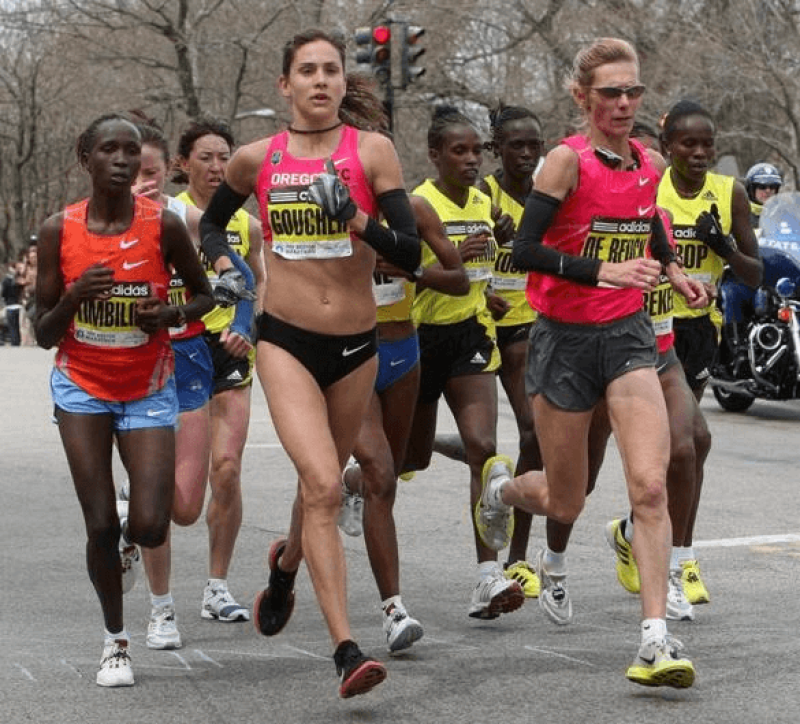
The study followed 67 runners at the Rock ’n’ Roll Madrid Marathon, who gave blood samples and completed some simple tests immediately before and after the race. In particular, they measured levels of two proteins—creatine kinase (CK) and myoglobin—that leak into the blood when muscles are damaged.

Some sample headlines: “Maybe you just weren’t born to run a marathon, says science,” according to Metro.

So a better headline would have been “That Explains Nothing.” I don’t doubt that the genes identified are indeed linked to how much levels of CK increase, and that this increase is in some way related to muscle damage. But these subtle differences, in this study at least, have absolutely zero predictive power for how fast you run or how sore you feel.

In a sense, you can take this as a broader cautionary tale about the dubious practical value of many of the genetic tests that are currently being marketed to athletes and everyone else. Even when the effects are real, the resulting differences are subtle.

The GLP aggregated and excerpted this blog/article to reflect the diversity of news, opinion, and analysis. Read full, original post: Is Post-Marathon Muscle Soreness in your Genes?

For more background on the Genetic Literacy Project, read GLP on Wikipedia

{{ reviewsTotal }}{{ options.labels.singularReviewCountLabel }}
{{ reviewsTotal }}{{ options.labels.pluralReviewCountLabel }}
{{ options.labels.newReviewButton }}
{{ userData.canReview.message }}

Related Articles

Infographic: Global regulatory and health research agencies on whether glyphosate causes cancer

Infographic: Global regulatory and health research agencies on whether glyphosate causes cancer

Does glyphosate—the world's most heavily-used herbicide—pose serious harm to humans? Is it carcinogenic? Those issues are of both legal and ...

Most Popular

Screen Shot at AM
Facts & Fallacies Podcast: Right-wing politics bad for your health? Separating speculation from science
ChatGPT-Image-Jun-13-2026-11_51_39-AM
Viewpoint: COVID lab leak? Misguided backers of the lab leak theory refuse to give up
ChatGPT-Image-Jun-11-2026-01_15_03-PM
Selective Pressure, Selective Silence
ChatGPT Image Jun 3, 2026, 03_54_37 PM
Viewpoint: “Turn on, tune in, drop out”—Kennedy embraces the Timothy Leary psychedelic revolution
drug look like ozempic
Six key health insights from taking weight-loss drugs
ChatGPT Image Jun 3, 2026, 03_14_43 PM
Viewpoint: How Earthjustice became the poster child for the abuse of special interest activist funding
Screenshot-2026-06-14-at-9.14.26-AM
‘Humanitarian catastrophe’: Trump’s USAID shutdown could help drive nearly 23 million deaths — including 5.4 million children — by 2030, Lancet study warns
ChatGPT-Image-Mar-10-2026-01_39_01-PM
Viewpoint—“Miracle molecule” debunked: Why acemannan supplements don’t work
ChatGPT-Image-Jun-14-2026-09_41_44-AM-2
Viewpoint—‘The gleeful efficiency of an arsonist’: Administration’s health and science research cuts are ‘sabotaging’ America’s future
Screenshot-2026-06-05-at-2.12.30-PM
Some plants can poison you. So how did humans figure out what is safe to eat?
Screenshot-2026-06-14-at-9.53.54-AM
Is the World Cup a perfect storm for the spread of infectious diseases?
ChatGPT Image Jun 12, 2026, 02_32_14 PM
‘Have you asked your doctor?’: AMA launches campaign to counter health misinformation
Screenshot 2026-05-26 at 10.15
Viewpoint: Double standard—Why does the wellness industry get a free pass while Big Healthcare is treated as morally suspect?
glp menu logo outlined

Get news on human & agricultural genetics and biotechnology delivered to your inbox.