Americans pay less attention to ‘organic’ and ‘GMO’ in weighing food health benefits, survey finds

food label claims e

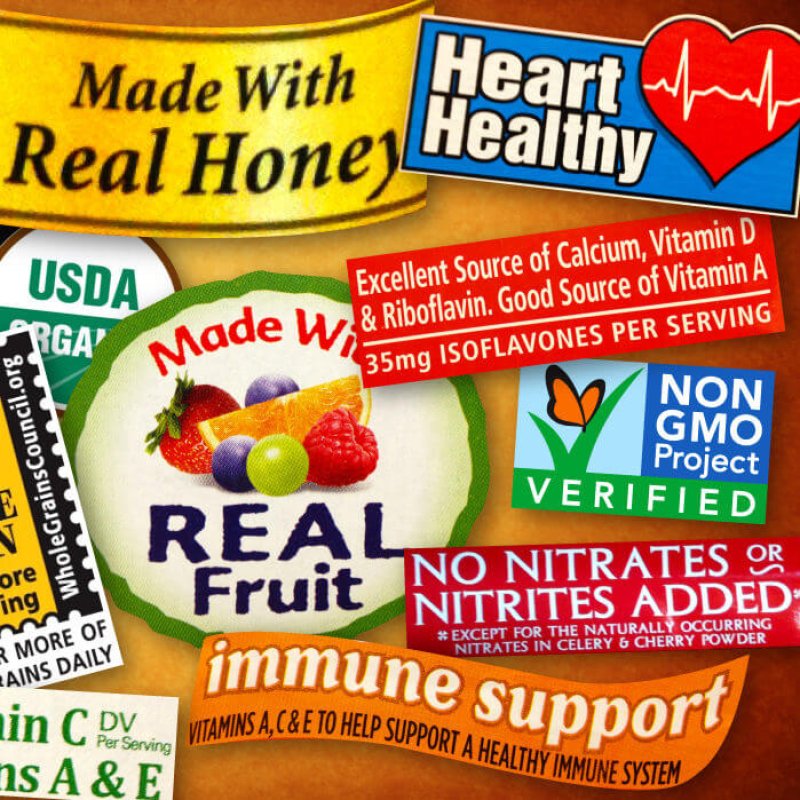
Determining what exactly is a “healthy” food has us all scratching our heads.

A new survey suggests that most Americans are confused about what counts as a healthy food choice.

About eight in 10 survey respondents said they have found conflicting information about what foods to eat and what foods to avoid — and more than half of them said the conflicting information has them second-guessing the choices they make, according to the International Food Information Council Foundation’s annual Food and Health survey….

The survey involved 1,002 American adults, who completed it online in March. Nearly 60% of respondents ranked being “high in healthy components or nutrients” as one of the top three factors for a “healthy” food.

Slightly more than half of respondents ranked “free from artificial ingredients, preservatives or additives” among the top three factors, and nearly 50% ranked “part of an important food group that I need to build a healthy eating style” among the top three factors.

Factors such as “organic” and “non-GMO,” or genetically modified, were less likely to be ranked.

“Looking at the survey results, it’s positive that the public recognizes the importance of foods being high in healthy components, nutrients, and part of an important food group and correctly pay less attention to criteria like GMO or organic,” [said Dr. Dariush Mozaffarian, dean of the Friedman School of Nutrition Science and Policy at Tufts University, who was not involved in the new survey.]

The GLP aggregated and excerpted this blog/article to reflect the diversity of news, opinion, and analysis. Read full, original post: ‘Healthy’ foods have most of us confused, survey finds


{{ reviewsTotal }}{{ options.labels.singularReviewCountLabel }}
{{ reviewsTotal }}{{ options.labels.pluralReviewCountLabel }}
{{ options.labels.newReviewButton }}
{{ userData.canReview.message }}

Related Articles

Infographic: Global regulatory and health research agencies on whether glyphosate causes cancer

Infographic: Global regulatory and health research agencies on whether glyphosate causes cancer

Does glyphosate—the world's most heavily-used herbicide—pose serious harm to humans? Is it carcinogenic? Those issues are of both legal and ...

Most Popular

ChatGPT-Image-Mar-10-2026-01_39_01-PM
Viewpoint—“Miracle molecule” debunked: Why acemannan supplements don’t work
afb-a-b
As the EU loosens restrictions on agricultural gene editing, it remains years behind the rest of the world on equally-safe GMO foods
ChatGPT-Image-Jul-8-2026-12_32_48-PM
Viewpoint: SCOTUS strikes a blow against junk science in Bayer glyphosate case. Will it deter mass tort litigators?
Screenshot-2026-07-10-at-2.02.54-PM
Viewpoint: In abortion-restricting Florida, misinformation abounds when Republican congresswoman faces an ectopic pregnancy

ChatGPT-Image-Jul-7-2026-01_57_55-PM
Viewpoint: Europe’s rejection of air conditioning is the poster child for misunderstanding how to mitigate the impact of climate change
ChatGPT-Image-Jun-25-2026-12_23_17-PM
No, Bill Gates did not secretly engineer ticks to promote veganism
Screenshot-2026-07-10-at-3.10.50-PM
Snake-oil cures throughout history
Screenshot-2026-07-10-at-3.25.10-PM
Using AI for health questions? Here are 4 tips for the most accurate answers.
Screen-Shot-at-PM-pe-vra-kipgaprbdo-vd-ms-jpule-n-jqqaxf-l-e
Viewpoint: Will new breeding techniques help make European agriculture more competitive?
Screenshot-2026-07-10-at-12.55.21-PM
Cancer health facts are particularly susceptible to online misinformation
ChatGPT-Image-Jul-1-2026-03_33_49-PM
‘Alternative’ cancer treatments that could kill you
Screenshot-2026-07-08-at-2.14.27-PM
Belief in unproven dietary regimes, vitamins, and crank therapies is putting patients’ health in danger and increasing the risk of getting cancer
d a ca e c c beb x
Facts & Fallacies podcast: The 'woke' crusade against anthropology? Dr. Elizabeth Weiss
glp menu logo outlined

Get news on human & agricultural genetics and biotechnology delivered to your inbox.