


Ancestry & Evolution

Wine story: From Stone Age seed domestication to new age fermentation, here is the evolutionary history of wine
Over the millennia, humans have radically transformed viticulture from a happy accident to a scientifically precise art form and global ...
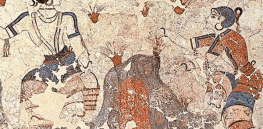
A single kilo of saffron is worth up to $10,000. Here’s the genetic history of the world’s most expensive spice
When and where was saffron first domesticated by our ancestors? In a review in Frontiers in Plant Science, researchers conclude that ...

Comparing primate intelligence: What’s so unique about the human brain that makes us so smart?
Humans are unrivalled in the area of cognition. After all, no other species has sent probes to other planets, produced ...
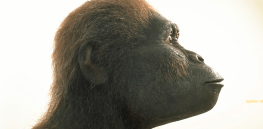
Bones found in the ‘cradle of civilization’ in South Africa date to as long as 3.7 million years ago, a million years older than previously thought
The earth doesn’t give up its secrets easily – not even in the “Cradle of Humankind” in South Africa, where ...
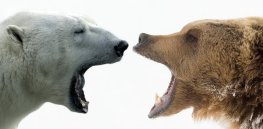
What is a species? New DNA analytic tools upend outdated neat categories
It’s clear to anyone that an African elephant and a garden snail are different species, but the lines blur around ...

How genetics made dogs man’s best friend
You love your dog. Your dog loves you. Your love is the upshot of thousands of years – perhaps tens ...

Where did the Black Death begin? DNA in ancient teeth provide clues
Researchers believe they have discovered the origins of the Black Death, more than 600 years after it killed tens of ...
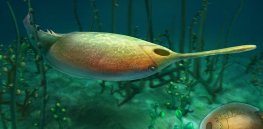
Our middle ear may have evolved from fish gills
Embryonic and fossil evidence proves that the human middle ear evolved from the spiracle of fishes. However, the origin of ...
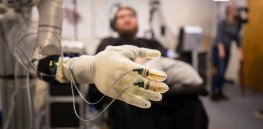
Updated X-Files: Can implants and computers spur human evolution?
You’ve seen the advancements in the medical field in regard to thought-controlled prosthetics, right? If you haven’t, you should really ...

Viewpoint: ‘The true Charles Darwin was neither the atheist’s hero nor the fundamentalists’ parody’
Darwin was a convinced and convicted monogenist because his family, the Wedgewoods, were deeply devout Bible believers who supported and ...
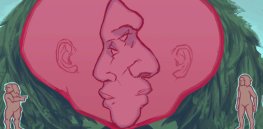
Can we blame Neanderthal-human sex for a million COVID deaths?
About 60,000 years ago, a human had a sexual encounter with a Neanderthal. Now, a genetic scientist has claimed that ...

Evolving smaller humans? Scientists debate whether rising temperatures will cause our species to shrink
Throughout history, species have evolved to adapt to their changing surroundings. Now, with skyrocketing carbon dioxide levels in the atmosphere ...

Is science racist? Genetics, evolutionary human differences and ‘critical race theory’
The killing of George Floyd at the knee of a policeman last May ignited a global wave of protest. Almost ...
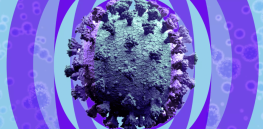
New COVID Omicron variants become dominant strains in US, especially in South
The United States appears to be in the midst of another biological baton pass between Covid-19 variants. The Omicron lineage ...

Video: Are babies born with a moral compass?
Are people born with a sense of right and wrong? A new study finds young infants can already make moral ...

GLP Podcast: Teenage psychopaths? Cancer-free smokers; Pesticide propaganda in Europe
Are young people more likely to display narcissistic and psychopathic traits? If so, why? A recent study has proposed intriguing ...

Human technological innovation arose in a variety of prehistoric human civilizations
For the first few million years of human evolution, technologies changed slowly. Some three million years ago, our ancestors were ...
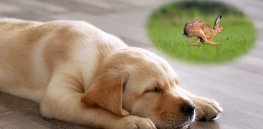
Do dogs ponder the future? Here’s what we can learn from animal dreams
Other animals may not ponder deep, existential questions, but the fact that they dream proves that they possess formidable memories ...

Crimes of the Future: David Cronenberg movie ‘imagines a world in which humans are evolving and mutating and growing new organs regularly’
Pain is a essentially a thing of the past for some in David Cronenberg’s “ Crimes of the Future,” a ...
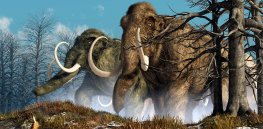
How did ancient animals evolve to be so giant?
Prehistoric giants used to populate the Earth. These behemoths included mighty dinosaurs, airplane-size pterosaurs, massive crocodiles and snakes, and even ...

‘We just clicked’: Is there a chemical basis to ‘love at first sight’?
Finding true love may actually be due to how well your body synch’s up with your partner, according to researchers ...
African genes are not well represented in research databases. Here’s why that’s a problem
The Human Genome Project, which took 13 years to complete from 1990 to 2003 was the first successful global effort ...
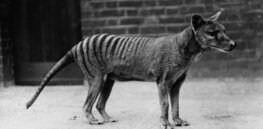
Deextinction: How feasible is scientists’ plan to bring back the Tasmanian tiger?
A team of genetic scientists led by biosciences professor Andrew Pask is attempting to make the concept of “de-extinction” a ...
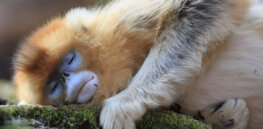
Humans sleep a lot more than other primates. Here’s an evolutionary explanation why
On dry nights, the San hunter-gatherers of Namibia often sleep under the stars. They have no electric lights or new ...

Why did humans evolve to show signs of stress — such as fidgeting or nail biting? Here’s one theory
Showing signs of stress could make us more likable and prompt others to act more positively towards us, according to ...
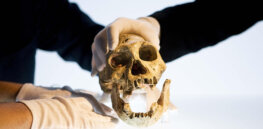
We know Homo sapiens were not the first humans. Who were?
How far back in time must we go for our ancestors to not be human and be, instead, an ape ...
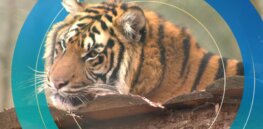
‘A frozen backstop in case of extinction’: Conservation scientists freezing threatened species in bio-banks to prepare for the worst
"He's gone," murmurs Chester Zoo vet Gabby Drake - holding a stethoscope to the feathered chest of a 28-year-old, bright ...
