



Ancestry & Evolution

‘Salmiak’: Genetics explain a newly-identified ‘sally licorice’ cat color
A genetic mutation has been creating some striking cats with designer coats in a dazzling shade called “salty licorice”: tuxedo ...
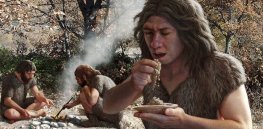
How much did the Neanderthals penchant for cannibalism lead to their extinction?
Neanderthals went extinct about 30,000 years ago. They lived successfully in Europe, Asia, and Africa for hundreds of thousands of ...
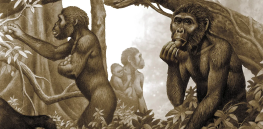
The carnivore myth? One study challenges the long-held belief that our human ancestors were mostly meat eaters
[E]arly human ancestors, specifically Australopithecus africanus, primarily had a plant-based diet despite previous evidence suggesting meat consumption. The research, led ...

‘Evolution Evolving’: New book suggests a rethink of how evolution works
It’s rare that researchers question theories that make up the backbone of whole fields. But in Evolution Evolving, Kevin Lala ...

Video: ‘Dragon Man’—What did our Denisovan ancestors look like 150,000 years ago?
Scientists have reconstructed the face of a long-lost human ancestor that may have played a critical role in our evolution ...
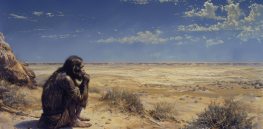
A million years ago some early humans lived in extremely hot and arid desert climes that few animals could survive
An early human ancestor of our species successfully navigated harsher and more arid terrains for longer in Eastern Africa than ...

The pronatalist movement: Should women be encouraged to have more children?
Pronatalism, literally meaning pro-birth, is a broad ideological movement driven by concern that the world is no longer producing enough ...

Lucy, our plodding ancestor
Ancient human relatives ran on two legs, like modern humans, but at a much slower pace, [suggesting] 3D computer simulations ...
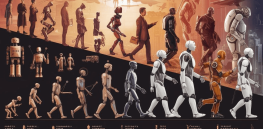
Non-trivial AI evolution
What will humans be like generations from now in a world transformed by artificial intelligence (AI)? Plenty of thinkers have ...

Filling an ecological niche in a post-human world’: Why octopuses could succeed humans as Earth’s dominant species
[S]peculative fiction author Ray Nayler published "The Mountain in the Sea," his first novel, depicting a not-too-distant future in which ...
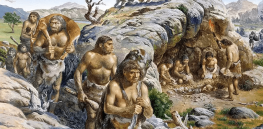
Early humans are one of the few animals of that era that did not migrate when the climate cooled
Humans seem to have ... adapted to the last ice age in similar ways to wolves and bears, according to ...
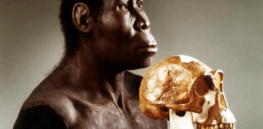
Out of Africa? Intriguing evidence that early humans may have moved from Europe into Africa not the other way around
For decades, common scientific knowledge has held that homo sapiens—human beings as we know them today—evolved in Africa some 200,000 years ago ...

Here are some animal stars who brought us wonder and joy in 2024
Every year has its breakout stars, and 2024 yielded a bumper crop: Glen Powell, Chappell Roan, Pommel Horse Guy. But only one had ...

Who will inherit our planet if—when—humans breathe their last
Our species’ relationship with the planet has been profoundly destructive. Habitat destruction, climate change, and relentless resource extraction have pushed ...

‘We are going straight to Mars’: Musk pledges to reset US space exploration ambitions
Although SpaceX founder Elon Musk is known for outspokenness and controversial comments on his social media site X, ... he ...

‘Warrior gene’: If we genetically screen children to protect them from diseases, why shouldn’t we investigate their proclivity to act agressively
“Some people have real problems right out of the starting block. We can't dodge the responsibility for social action." ...
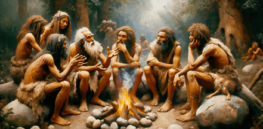
‘Language Puzzle’: Exploring the mystery of how humans learned to communicate
According to Guinness World Records, the world’s fastest talker is one Sean Shannon, capable of unleashing a staggering 665 English words per minute ...
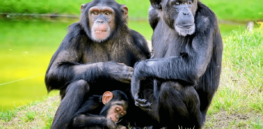
Can chimpanzees develop a human-like culture?
Chimpanzees may refine cultural behaviors over time, with advanced toolsets spreading through migrating females, suggesting early stages of cumulative culture ...
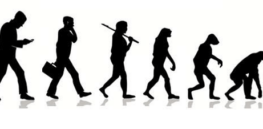
Dinosaurs got dumber over time. Could it happen to humans (is it already?)
Horned dinosaurs saw a decline in their intelligence, hearing, and sense of smell as they grew larger over the course ...

How many ways can a human laugh?
[People] can chortle, chuckle, titter, hoot, giggle, snigger, howl, or guffaw. This richness of language may suggest to some that ...
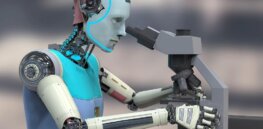
We are well on our way to automating science
Many scientists are already excited about AI. In a Nature survey of 1,600 scientists published in September 2023, more than half of ...
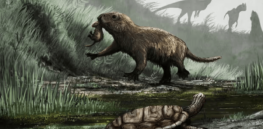
Even before the dinosaur era, mammal characteristics had begun to emerge
Mammals are familiar beasts. From a squirrel on a power line to a blue whale swimming through the sea, we ...
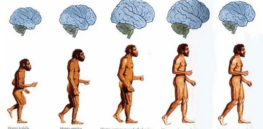
Did the human brain evolve in sudden leaps as current theories suggest?
A detailed investigation of the expansion in human brains over 7 million years finds faster growth in modern humans and ...

Why do humans kiss? Scientists now think they know, and it’s kind of creepy
Nobody knows when kissing emerged among humans. But the practice of plopping one's mouth on another human, whether in friendship ...
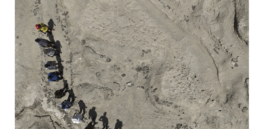
Two different human species almost certainly encountered each other on the banks of a Kenyan lake 1.5 million years ago
Muddy footprints left on a Kenyan lakeside suggest two of our early human ancestors were nearby neighbors some 1.5 million ...

Longevity expert says tinkering with the aging process won’t help you live longer
“We don’t have an ageing intervention yet,” says [Dr Stuart Jay Olshansky] ... The only way humans are going to ...
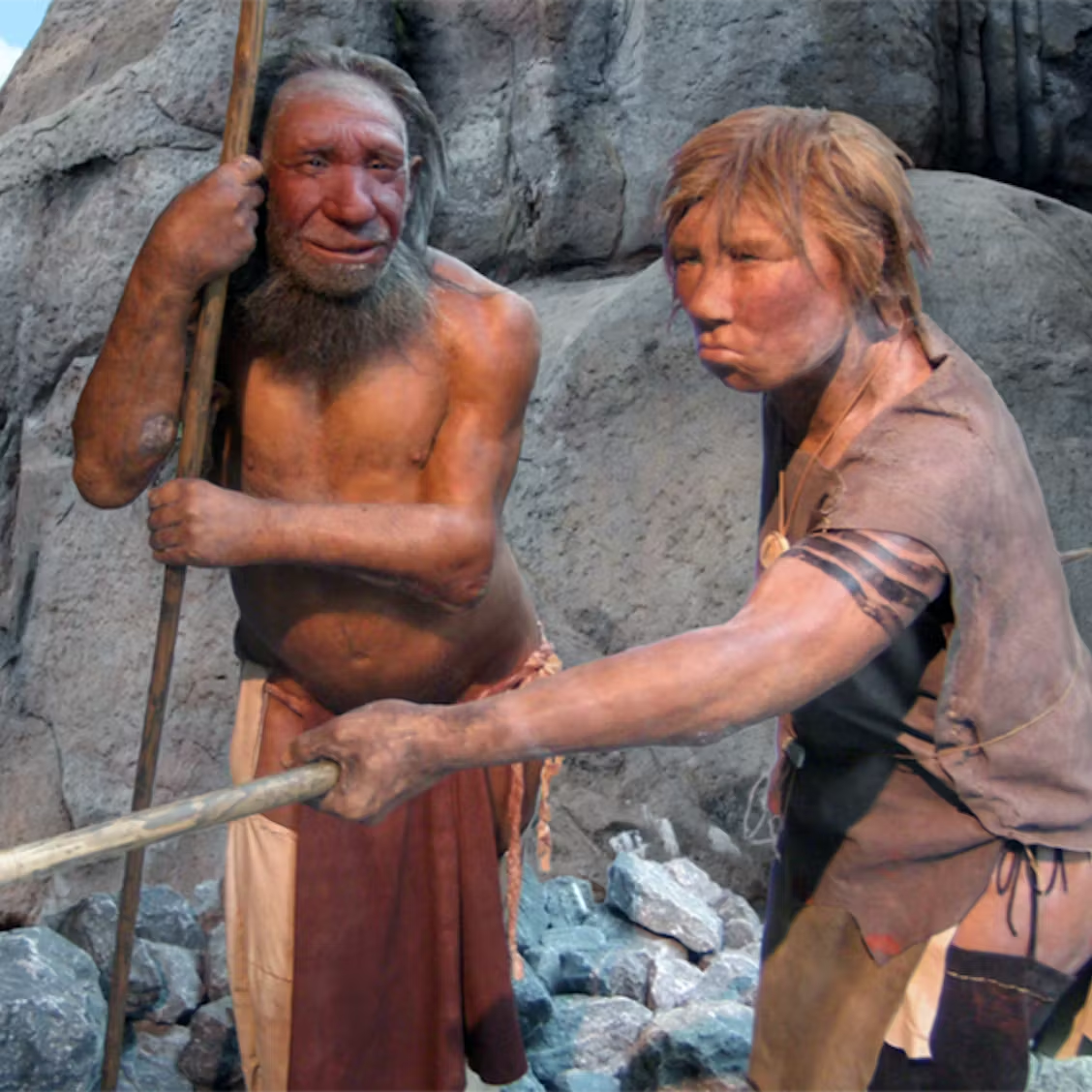
We all bear the consequences of Neanderthal and Denisovan promiscuity
For much of our history, we coexisted with other members of our genus, and our prehistoric ancestors didn’t waste the ...
