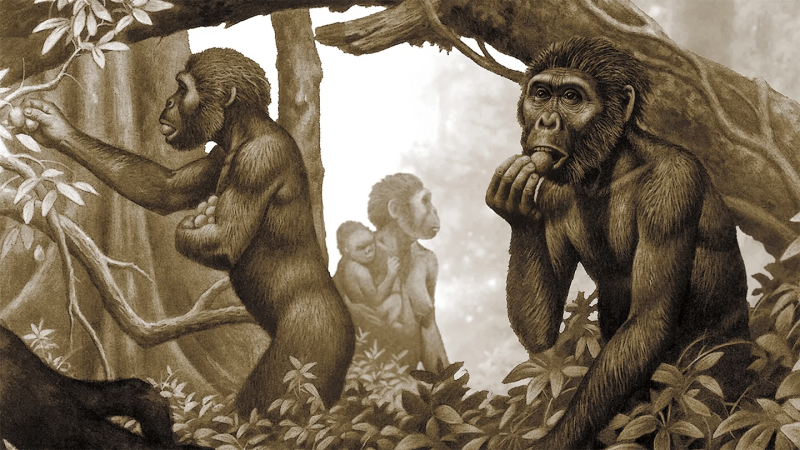

[E]arly human ancestors, specifically Australopithecus africanus, primarily had a plant-based diet despite previous evidence suggesting meat consumption. The research, led by geochemist Tina Lüdecke from the Max Planck Institute for Chemistry in Germany and the University of Witwatersrand in South Africa, was published in the journal Science.
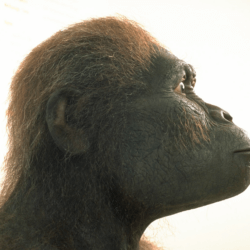 Bones found in the ‘cradle of civilization’ in South Africa date to as long as 3.7 million years ago, a million years older than previously thought
 Fact checking ancient Greek history: Teeth recovered from military gravesites contradict historical beliefs that no mercenaries were deployed in battles
Lüdecke and her colleagues conducted isotopic analysis on fossilized teeth found in South Africa’s Sterkfontein caves, a site rich in hominin fossils often referred to as the Cradle of Humankind. They studied tooth enamel samples from seven Australopithecus individuals dating between 3.3 and 3.7 million years ago.
“The tooth enamel is the hardest substance in the body. It often conserves an isotopic fingerprint of an animal’s food,” said Lüdecke, as reported by N-TV. Using this isotopic fingerprint, the researchers determined that the enamel composition of Australopithecus was much more similar to herbivores than to carnivores. The finding indicates that these early human ancestors consumed a predominantly plant-based diet.
Bones found in the ‘cradle of civilization’ in South Africa date to as long as 3.7 million years ago, a million years older than previously thought
Fact checking ancient Greek history: Teeth recovered from military gravesites contradict historical beliefs that no mercenaries were deployed in battles