


Chemical Controversies
Can EPA ‘restore science and common sense’ to neonicotinoid insecticide regulations?
[A] federal district court judge has ruled that the Environmental Protection Agency failed to consult with the FWS before approving ...

Organic food imports plagued by ‘corruption, bribery and falsified documents’
Roughly 40% of all organic food sold in America tests positive for prohibited pesticides, according to two USDA studies. And, ...

20-year GMO report card: Biotech shrinks ag’s ecological impact, increased farm income $167 billion
Genetic modification has had a dramatic impact on crop production, agricultural sustainability and the economics of farming, in the 26 ...

How to resist health scares: Review of Geoffrey Kabat’s ‘Getting Risk Right’
Public health regulations, particularly as regards to chemicals, are often driven by precautionary fears stirred by sloppy reporting sparked by ...
Does Consumer Reports mislead readers by promoting Non-GMO Project label?
Consumer Reports claims to provide consumers with unbiased information about products and services. But the site is accused of exploiting ...
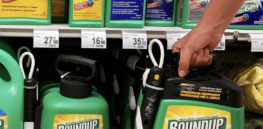
Did EPA and Monsanto conspire to downplay potential danger of glyphosate before EU review?
The European Food Safety Authority dismissed a study linking a Monsanto weedkiller to cancer after counsel from a US Environmental ...
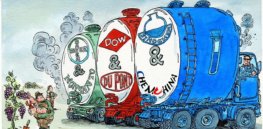
What’s driving the wave of agrichemical company mergers?
After a decade without any big deals, since 2015 three mega-mergers, collectively worth around $240bn, have been proposed. When they ...

Unsustainable farming: Why your organic T-shirt might be bad for the environment
The word “organic” is a powerful marketing tool. In clothing—just as in food—brands love to tout their use of organic ...

Video: ‘Weed seed pulverizing machine’ could help combat herbicide resistance
Known by a name seemingly out of a superhero comic book, the Harrington Seed Destructor is a mechanical beast that ...
10 ways Whole Foods misleads consumers about organic food and farming
[Editor's note: Hank Campbell is president of the American Council on Science and Health.] I was at a meeting with ...

Fake food news: Non-GMO Project sets standard for misleading consumers
[Editor's note: Kavin Senapathy is a freelance writer and co-author of The Fear Babe: Shattering Vani Hari’s Glass House.] As a ...
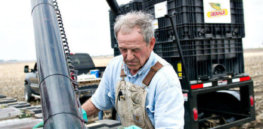
Myth busting: Does Monsanto ‘control’ farmers with contracts that bar seed saving?
[Editor's note: Read the GLP's coverage of farmers' responses to Bette Midler criticizing Monsanto’s seed patent contracts here.] [Editor's note: Brian Scott ...

Video: Organic food is a great business but a bad environmental investment
[Editor's note: Bjorn Lomborg is director of the Copenhagen Consensus Center and a visiting professor at Copenhagen Business School.] There are no health benefits ...

Video: Pest-resistant GE cowpeas could reduce pesticide use, increase yields of African staple
Dr. TJ Higgins discusses a global effort to genetically engineer a pest-resistant variety of cowpea (black-eyed peas) that will help ...

Sustainability myth: Stanford misleads students about organic farming’s reduced environmental impact
The promotion of 'sustainable' organic farming at one of the nation's top universities shows just how pervasive myths about conventional ...

Scared to Death: Environmental Working Group fails the ‘sound science’ chemicals test
The Environmental Working Group (EWG) uses an authoritative sounding name to peddle scientific half-truths and outright fabrications. Along with Greenpeace ...

‘Sugar is sugar is sugar’: What Hershey doesn’t want you to know about its GMO-free chocolate
[Editor's note: Wanda Patsche and her husband own and operate an independent farm in southern Minnesota, raising corn, soybeans and pigs.] ...

Diet and land: Why organic farming is ‘less sustainable’ than conventional
[Editor's note: Steven Novella is an academic clinical neurologist at Yale University School of Medicine.] Perhaps the biggest problem with ...

Video: Food Evolution—Neil deGrasse Tyson-narrated documentary on GMO debate—set for June 23 release
Food Evolution aims to take a look at the science underlying the heated rhetoric of the GMO debate. Filmmaker Scott ...
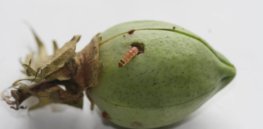
Talking Biotech: Plants that ‘protect themselves’ and reduce pesticide may be future of crop biotechnology
Genetic engineering pioneer Calgene's Maurice Moloney on developing plants that 'naturally' fend off pests ...
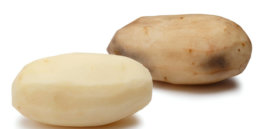
GM non-bruising potatoes won’t be grown commercially in Canada this year
There will be no commercially grown GMO potatoes on Prince Edward Island [in 2017], according to Simplot Plant Sciences, the ...
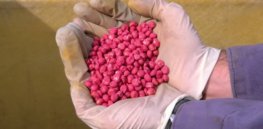
Neonicotinoid corn seed treatments likely ‘far exceed demonstrable need’, study says
Nearly every foraging honey bee in the state of Indiana will encounter neonicotinoids during corn planting season, and the common ...

Video: How are CRISPR crops regulated differently than GMOs?
Critics say the Obama Administration balked on an opportunity to update Reagan-era guidelines on how agencies like the Department of ...

Black market GM cotton seeds flood Chinese market, cutting pesticide use and boosting yields
China is one of the world’s top cotton producers partly because of a widespread sowing of banned seeds, according to ...

5 reasons why it’s so hard to know whether ‘organic’ food is really organic
Regulating [food] supply chains to ensure, for example, that “organic” foods deserve their labels is hard. Here are five reasons ...
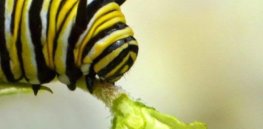
To revive monarch butterflies, plant milkweed in yards and on wild lands, study says
If Monarch butterflies are going to stay off the endangered species list, they need more to eat. And it’s up ...

Anti-pesticide, anti-nuclear activist named France’s new environment minister
The new French president stunned businesses by appointing Nicolas Hulot, an anti-nuclear and anti-pesticide environmental activist, as the country's environmental ...
