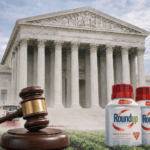
Plaintiffs suing Monsanto over alleged carcinogenicity of herbicide glyphosate say EPA colluded with company

roundup products super e

For 12 years, [Christine] Sheppard had no idea what might have caused her non-Hodgkin’s lymphoma — until a group of cancer researchers reported (PDF) that glyphosate, the key ingredient in the popular weed killer Roundup, is “probably carcinogenic to humans” (PDF).

That’s the same herbicide Sheppard said she sprayed on her coffee farm in Hawaii for five years.

“I was incensed,” said Sheppard, 67. “We had no idea.”

Sheppard is one of more than 800 cancer patients suing Monsanto, the maker of Roundup, claiming the company failed to warn consumers about the risk of cancer associated with Roundup products.

Monsanto says there’s no proof that glyphosate is carcinogenic. In fact, it cites a report by the Environmental Protection Agency’s Cancer Assessment Review Committee that said glyphosate is “not likely to be carcinogenic to humans” (PDF).

But the former chairman of that committee offered to stop an independent review on whether glyphosate could cause cancer, according to a plaintffs’ motion to compel his deposition. And that has left Sheppard even more incensed.

But Monsanto said there are more than 800 studies demonstrating glyphosate’s safety, including studies conducted internationally.

The GLP aggregated and excerpted this blog/article to reflect the diversity of news, opinion, and analysis. Read full, original post: Patients: Roundup gave us cancer as EPA official helped the company


{{ reviewsTotal }}{{ options.labels.singularReviewCountLabel }}
{{ reviewsTotal }}{{ options.labels.pluralReviewCountLabel }}
{{ options.labels.newReviewButton }}
{{ userData.canReview.message }}

Related Articles

Infographic: Global regulatory and health research agencies on whether glyphosate causes cancer

Infographic: Global regulatory and health research agencies on whether glyphosate causes cancer

Does glyphosate—the world's most heavily-used herbicide—pose serious harm to humans? Is it carcinogenic? Those issues are of both legal and ...

Most Popular

Screenshot-2026-03-13-at-12.14.04-PM
The FDA wants to make many popular prescription drugs OTC—a great idea. Here’s why it’s unlikely to happen
Screenshot-2026-05-04-at-12.54.32-PM
How Utah became the country’s supplement capital  — and a haven for unregulated, ineffective and fake products
Screenshot-2026-04-20-at-2.26.27-PM
Viewpoint — Food-fear world: The latest activist scientists campaign: Cancer-causing additives
Screenshot-PM-24
Viewpoint: The herbicide glyphosate isn’t perfect. Banning it would be far worse.
images
The never-ending GMO debate: Pros and cons
Screenshot-2026-05-01-at-11.56.24-AM
‘Science moves forward when people are willing to think differently’: Memories of DNA maverick Craig Venter
Screenshot-2026-04-30-at-2.19.37-PM
5 myths about summer dehydration that could damage your health — or even kill you
Screenshot-2026-04-03-at-11.15.51-AM
Paraben panic: How a flawed study, media hype, and chemophobia convinced the public of the danger of one of the safest classes of preservatives
79d03212-2508-45d0-b427-8e9743ff6432
Viewpoint: The Casey Means hustle—Wellness woo opportunism dressed up as medical wisdom
ChatGPT-Image-May-1-2026-02_20_13-PM
How RFK, Jr.’s false vaccine claims are holding up $600 million to fight diseases in poor countries
glp menu logo outlined

Get news on human & agricultural genetics and biotechnology delivered to your inbox.