



Chemical Controversies
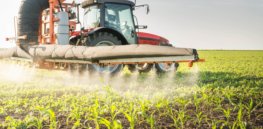
Viewpoint: ‘Heavy’ pesticide exposure linked to cardiovascular disease? Flawed study raises ‘troubling’ questions about public health research
What do the results really show? ...

‘Science proves GM corn and the herbicide glyphosate are harmful to human health and native crop varieties’: US claims Mexico ignores ‘decades’ worth of evidence demonstrating their safety
In a written submission to a panel of the United States-Mexico-Canada Agreement, Mexico, the top buyer of U.S. corn, argued ...

‘Texas Two-Step’ — Bayer weighs new Roundup suit strategy as costs of cancer litigation mount
Bayer AG is weighing whether to use a controversial legal maneuver known as the Texas Two-Step bankruptcy to try to resolve ...

Viewpoint: Proposed Vermont bill follows New York in banning neonic pesticides — a move that lacks evidence and will hurt farmers
A new bill in the Vermont House would ban the use of certain insecticides by the state’s agricultural sector. Bill ...

Viewpoint: Court rulings and science are increasingly at odds when it comes to evaluating crop chemicals
In early February, dicamba once again found itself on the wrong side of the law. A federal court in Arizona vacated EPA’s ...
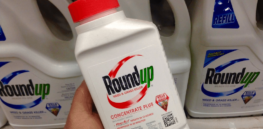
Roundup weedkiller cancer trials now trending Bayer’s way
Bayer on March 5 said it won a trial in a lawsuit brought by a retired postal service worker in ...

GLP podcast: AAP refuses to print rebuttal to anti-GMO study; Billion-dollar anti-pesticide ‘money grab’; Ultra-processed food won’t make you obese?
The American Academy of Pediatrics (AAP) published a spurious attack on GM crops and pesticides, then reneged on its commitment ...

AI poised to develop new agricultural practices to curtail plant pests and disease
In keeping with the age-old saying: ‘prevention is better than a cure’ more sustainable approaches should await the farmers of ...

Viewpoint: BPA and phthalate hysteria — Venturing out of its knowledge zone, ‘Consumer Reports’ launches anti-chemical tirade on plastic food packaging
If you want advice on which coffee maker or space heater to buy, Consumer Reports (CR) is where you go ...

Viewpoint: Environmental Working Group’s manufactured ‘dangerous levels of chlormequat in oat cereals’ study underscores the ‘risk perception gap’
The number of messages I received from people, mostly parents, who said they had been terrified to feed their children ...

Viewpoint: Journal Pediatrics reneges on its commitment to print response to botched article claiming GMOs are harmful to children. Here’s what they censored
A lot has been said about the journal Pediatrics December 2023 Clinical Report on "Using GMOs on Children". The poor scholarship ...
GLP podcast: Bad research sows distrust in science; Pesticides in food aren’t dangerous—unless you eat 340 apples daily
Bad research in peer-reviewed journals is undermining the public's trust in science. What can experts do to stop the flow ...

Viewpoint: Are organizations claimed as “partners” with tort industry-funded Heartland Study aware of the scam? Here’s an ‘open letter’ challenge
Multiple science communicators and scientists have composed a letter to various universities and government organizations that have been linked to ...

Rwanda faces a ‘honey crisis’: Here’s how genetically-modified pest-resistant potatoes could help reduce pesticide use and boost bee populations
If adopted in Rwanda, genetically modified crops such as irish potatoes that no longer require use of pesticides in treating ...

What drives Environmental Working Group to falsely claim that Quaker Oats cereals contain dangerous levels of pesticides? To ‘create another round of fearmongering about toxins in our food and shill for the organic food industry’
You know the rule about headlines – if there is a question in a headline the answer is almost always “no”. This ...

Viewpoint: Money grab — How the Environmental Working Group works hand-in-hand with tort lawyers to generate billion-dollar junk suits
On February 15th, the litigation outfit known as Environmental Working Group, most famous for using public USDA data (although excluding pesticides from ...

Viewpoint: Exploiting chemophobia—Environmental Working Groups’s manufactured study claiming oat cereal contains dangerous pesticides designed to manipulate the media
The Environmental Working Group (EWG) and media outlets are trying to scare people away from demonstrably safe and nutritious conventional food products ...
Viewpoint: Why is Bayer paying billions of dollars in negligence lawsuits over Roundup weedkiller when consensus science shows no links to cancer and the EPA does not require warning labels?
In total, Bayer has paid more than $10 billion in settlements to those claiming that Roundup causes non-Hodgkin’s lymphoma. There’s just one ...
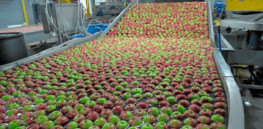
Viewpoint: Feeding your child 2,000 nectarines or 340 apples in one day? Environmental Working Group claims about the dangers of conventionally-grown produce are scientifically absurd
The advocacy organization American Council on Science and Health, or ACSH has written extensively about the safety of conventionally grown ...

Preservatives and probiotics: Do additives in meat and cheese harm gut bacteria?
Nisin, a lantibiotic, is a preservative used in the production of foods including packaged meat such as sausages and dairy ...

Viewpoint: Righteous Risks — Here’s how (and why) environmental advocacy groups misrepresent the risks from innovations but cynically ignore genuine dangers
Synthetic pesticides are under constant regulatory pressure, but not organic pesticides. “Green” renewables and EVs have very little regulatory scrutiny ...

Idaho lawmakers introduce bill to curb pesticide lawsuits, citing exploitation of the legal system by anti-chemical activists
State senators in Idaho have introduced new legislation that aims to limit chemical exposure and injury lawsuits filed against pesticide ...

Boost to regenerative agriculture: Nanotechnology-enhanced bacterial fertilizer might could reduce farmers’ synthetic chemical dependency
Claims we may only have 60 harvests left appear to be hyperbole but the fact remains that our agricultural land ...
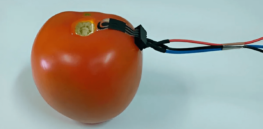
Easy-to-use, biodegradable plant-based pesticide detector in development could provide an extra layer of food safety
Brazilian researchers have created a sensor that can be attached to the skin of fruits and vegetables to check for harmful ...

GLP podcast/video: Weed won’t improve your workout; Predatory science journals attack GMOs; Eating insects will be mandatory?
Can marijuana make your workout better? Probably not, according to a recent study. Four science publications produce a large swath ...

US food is pesticide free: Latest USDA report finds 99+% of 23 conventionally-grown fruits, vegetables and grains test below hazard benchmarks
The USDA has published the 2022 Pesticide Data Program Annual Summary, which shows that over 99% of the samples tested had ...

Viewpoint: Pesticides ensure ‘sustainable productivity’ — UK farmers bemoan ‘scaremongering’ on pesticides
Three leading farmers have accused the RSPB of irresponsible scaremongering by claiming that a ‘cocktail’ of pesticides used by British farmers ...
