


Chemical Controversies
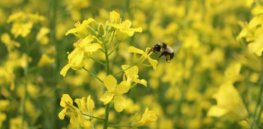
Fresh from European ban victory, anti-chemical activists turn their sights on Canada, targeting neonicotinoid pesticides as a ‘bee killer’
There is an inevitable consequence when technically inexpert politicians and politically-influenced bureaucrats allow public policy to be driven by dogmatic ...

Glyphosate exposure causes ‘transgenerational inheritance of disease’ in rats, study claims, but scientists question data
Washington State University researchers have found a variety of diseases and other health problems in the second- and third-generation offspring ...

Vietnam’s glyphosate ban: Beginning of a dangerous global trend?
Vietnam’s decision to ban farmers from using glyphosate is troubling in three ways: it appears to rely on decisions set ...

Drought, neonicotinoid insecticide ban cut EU’s canola yields 18 percent, USDA reports
The European Union is picking a good time to produce its second straight subpar rapeseed crop. The United States Department ...

Food companies pursue ‘glyphosate free’ certification as Roundup-cancer legal battle rages
Companies are increasingly enrolling in a voluntary certification program that provides glyphosate-free labels for their products, as consumers grow more wary of ...

CRISPR-edited wheat could cut China’s toxic weed killer use
Chinese farmers are facing worsening problems with jointed goatgrass (Aegilops tauschii) – a close relative to wheat – growing in ...

Pakistan announces field trials of 85 GMO pest-resistant Bt cotton varieties
The Pakistan Central Cotton Committee (PCCC) has announced that 93 new cotton varieties will undergo National Coordinated Varietal Trials (NCVT) in four ...
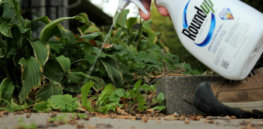
Viewpoint: Roundup on trial—speculative glyphosate-cancer lawsuits based on ‘junk science’
“The art of junk science is to brush away just enough detail to reach desired conclusions, while preserving enough to ...

Will glyphosate residue in beer and wine raise your cancer risk? If you drink 8 gallons a day
How much should we be worried? Not at all ...

Engineered ‘self-limiting’ insect could suppress soybean looper, ‘exponential’ threat to US crops
Oxitec Ltd., a UK-based biotechnology company that pioneered the use of biologically-engineered insects to control disease-spreading mosquitoes and crop-destroying agricultural ...
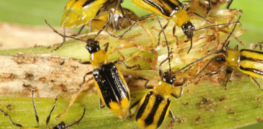
Podcast: 7 modern pest control tools that protect our food from hungry bugs
Need to manage a pest problem? Luckily, there are many ways to do that! From physical to biological and chemical ...

Glyphosate trial: Text messages, emails reveal Monsanto’s ‘cozy’ relationship with EPA, plaintiffs’ lawyer argues
As the trial over the world’s most widely used herbicide and its connection to a California couple’s cancer stretches into ...
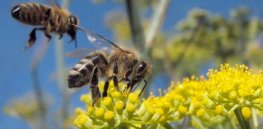
‘Bee safe’ pesticides that replaced neonicotinoids may harm pollinators, activist-funded study finds
New pesticides regarded as “bee safe” could actually be causing harm to these vital pollinators when combined with other chemicals ...
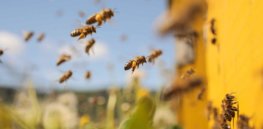
EU neonicotinoid insecticide ban spurs farmers to abandon canola crops, important resource for bees
When neonicotinoid seed treatments were first banned in flowering crops, control of cabbage stem flea beetle in oilseed rape [OSR] ...

State officials urge EPA to permit additional restrictions on controversial herbicide dicamba
The nation's state pesticide regulators are fighting back after EPA's recent announcement that it is considering limiting states' ability to ...

Facing 10,000 plus glyphosate-cancer lawsuits, Bayer enters court-ordered mediation with next plaintiff
Bayer said on [April 12] it would comply with a U.S. federal judge’s order to enter mediation with a plaintiff ...

Why do we need GMOs if we already grow enough food to feed the world?
The world produces enough food to feed everyone, but what does that really mean, considering abundant food in the west ...
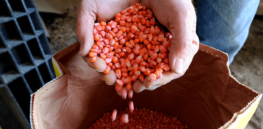
Canada codifies new neonicotinoid insecticide rules, allows key agricultural use to continue
Health Canada will restrict some uses of neonicotinoid pesticides because of their impact on honeybees and other pollinators, but the ...

Viewpoint: Do pesticides boost autism risk? New report says ‘possibly’ but correlations are ‘weak’ and ‘misleading’
Recently a study titled “Prenatal and infant exposure to ambient pesticides and autism spectrum disorder in children: population based case-control study” ...

USDA: Vietnam’s glyphosate ban ‘devastating’ to global agricultural production
U.S. Secretary of Agriculture Sonny Perdue on [April 11] criticized Vietnam’s move to ban imports of glyphosate herbicide [Bayer's Roundup], ...
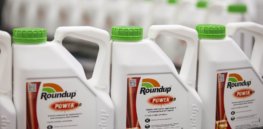
New CDC glyphosate report: “Most studies found no association between exposure to glyphosate-based products and risk of cancer”
A new [Centers for Disease Control and Prevention] report on glyphosate’s toxicological effects likely will play a role in the ongoing ...

Plant hormones help battle purple witchweed, major threat to sub-Saharan Africa’s staple crops
Striga hermonthica, also known as purple witchweed, is an invasive parasitic plant threatening sub-Saharan Africa's food production. Striga infects the region's staple ...

Judge dismisses lawsuit alleging Bayer tried to monopolize dicamba-resistant seed market
A federal court has granted Monsanto's move to dismiss a complaint filed by a Missouri farmer alleging a conspiracy to ...

Bayer lawsuits: USDA Secretary Sonny Perdue defends glyphosate before House appropriations subcommittee
Agriculture Secretary Sonny Perdue....defended the use of the weedkiller Roundup after two cases resulted in multimillion-dollar jury verdicts against Bayer ...

Viewpoint: Politico veers again into pseudoscience and politics with another misleading glyphosate infographic
Once again, a website known for its political coverage proves itself unable to report on science-related issues ...

Bayer releases 107 Roundup safety studies as glyphosate-cancer legal battle continues
With recent legal battles, Bayer [has released]....all 107 Bayer-owned glyphosate safety study reports that were submitted to the European Food Safety ...

Neurologist Steven Novella: Here’s what latest science says about glyphosate-cancer link
Glyphosate has been in the news recently because of the recent court case in which a jury awarded DeWayne Johnson ...
