


Featured in Weekly Newsletter

Podcast: Do facts matter when we we make policy decisions about sustainable agriculture? That’s being tested as the public debate over the benefits of gene editing in food and farming ramps up
Innovation Forum founder Toby Webb talks with Jon Entine, executive director of the Genetic Literacy Project, about the rise of ...

Viewpoint — COVID fallout raises prickly question: Does science need a ‘rebrand’ to restore credibility as nonpartisan?
Harley-Davidson is one of the most iconic brands in the world. Harley-Davidson, however, doesn’t sell motorcycles – it sells a ...

Viewpoint: Anti-biotechnology activists claim Western corporations ‘colonize’ the developing world. Here’s why they are wrong
Today, many scientific discussions are shot through with social justice rhetoric, and the debate over food security in the developing world ...

Ukraine war exposes EU’s organic obsession and biotechnology rejectionism
Beyond needless loss of life, the war in Ukraine has caused a trade war that could slash global food production, ...

Artificial wombs: The coming era of motherless births?
Scientifically, it’s called ectogenesis, a term coined by J.B.S. Haldane in 1924. The technology is on its way. How will ...

GLP Podcast: ‘Science-backed’ case for organic food; Dirty Dozen debunked; Gene therapy treats deadly immune disorder
Is there a science-based case for organic farming? One professor says yes, but how compelling are his arguments? Environmental Working ...

Meeting UN sustainability goals: Why gene editing is key
Innovations in agriculture productivity between 2005 and 2015, greatly contributed to reductions in the number of people that were food ...

Viewpoint: E.O. Wilson’s legacy under fire in some quarters after donated papers underscore fascination with racial differences and human diversity
Did Edward O. Wilson — Harvard professor, iconic biologist, champion of global biodiversity — promote racist ideas? For years, some ...
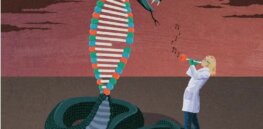
When will CRISPR gene editing be widely adopted in farming — and what are the blockages?
If you’re involved in animal or plant sciences, you’ve been reading about CRISPR technology for many years. Ranging from the ...

Part 2: Misinformation or disinformation? Deniers or skeptics? How the GMO and vaccine controversies are undermining science communication
“Disinformation” is a clever term to relegate the views we don’t like or care to hear to the realm of ...

Universal ‘pan coronavirus vaccine’? Scientists believe it’s possible within 2-3 years
Masks are coming off and we’re venturing back into the world, thanks largely to vaccines and natural immunity. Still, viral ...

Part 1: Does Europe-based Precautionary Principle protect consumers from reckless corporations or retard innovation and undermine public trust in science?
Proponents of the precautionary principle often claim that it is necessary to secure public trust in research and technology. Without ...
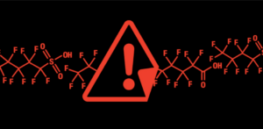
Viewpoint: Before we ban all PFAS ‘forever chemicals’ — found in products from non-stick frying pans to medical equipment — let’s require ideologically-neutral cost-benefit analysis
Recently, calls for a complete ban of per- and polyfluoroalkyl substances (PFAS), also known as “forever-chemicals”, have intensified in the ...

Technological innovation is spurring evolutionary changes. Here’s how humanity may look 10,000 years from now
Humanity is the unlikely result of 4 billion years of evolution. From self-replicating molecules in Archean seas, to eyeless fish ...

Nutrigenomics: Can what you eat reprogram your genes?
People typically think of food as calories, energy and sustenance. However, the latest evidence suggests that food also “talks” to ...
GLP Podcast: ‘Cancel’ culture comes for science outreach; Activism blocks avian flu solution; CRISPR-edited cats?
A major university recently halted a science outreach event because the invited speakers were white men. Has so-called "cancel culture" ...

Viewpoint: What regulatory and diplomatic steps are necessary to forge a transatlantic alliance promoting agricultural biotechnology innovation?
Mutual self-interest provides a strong basis for transatlantic cooperation in biotechnology based on shared recognition of its vast potential to ...

Where should society draw ethical lines for experimental CRISPR gene therapies that appear able to cure diseases?
It has been more than a year since Markus Mapara, MD, a professor of medicine and director of blood and ...

What are acetogens? And how could synthetic biology turn oil, coal and other fossil fuels into green, carbon-negative chemicals?
When most people hear about oil, as in petroleum, they think of what gets refined to produce gasoline. But it’s ...

Part II: The Clean 18 — USDA finds almost no pesticide-related health concerns from fruits and vegetables grown on American farms, while data on organic food is lacking
The purpose of the following section is to explore commodity to commodity differences by a variety of measures and not ...

Should Medicare routinely cover cost of $28,000-a-year Alzheimer’s drug Adumelm? Most medical professionals say ‘no’ but the pharmaceutical industry is fighting back
The drug industry, patient advocates, and congressional Republicans have all attacked federal officials’ decision to decline routine Medicare coverage for ...

Part I: The Clean 18 — Challenging Environmental Working Group’s Dirty Dozen scare survey of pesticide residues on conventional fruits and vegetables
The recent release of the “Dirty Dozen List” by the organic-industry-funded Environmental Working Group has stirred up its annual hornets’ ...

Viewpoint: Is science white or black? Politically-correct censorship targeting whites and supporters of biotechnology invade academia
North Carolina State University recently cancelled a science-outreach event because the invited speakers have the wrong skin color. It's another ...
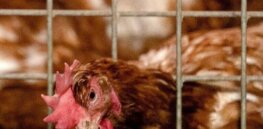
Viewpoint: There is a solution to the devastating poultry pandemic – but anti-technology activist groups and outdated regulations are blocking it
The bulldozer belches black smoke into the air, an engine revving with extra effort to push a hill of feathered ...
GLP Podcast: Artificial sweetener-cancer study debunked; MLB and vaccine mandates; Cholesterol not so bad after all?
A controversial study recently suggested that artificial sweetener consumption may be linked to elevated cancer risk. Have food-safety regulators overlooked ...
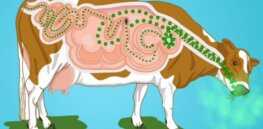
Will plant based meat alternatives curb the greenhouse gas impact of animal agriculture? This independent study concludes consumers are key
New plant-based meat (PBM) alternatives that aim to mimic the taste and texture of beef could have significant economic, environmental, ...

Why the developing world isn’t reaping benefits from the human genomics revolution
Since the first human genome was sequenced in the early 2000s, scientists have touted the breakthrough as a blessing to humanity ...
