


Sustainability & Climate Change

Far-right election successes across the EU may disrupt European Commission’s goals to achieve zero carbon emissions by 2050
The growing electoral success of nationalist parties across the [European] continent risks undermining pro-environment forces in the next European Parliament ...

Effort to rescue the almost-extinct American chestnut tree hits a snag, as rift develops between major sponsoring organizations over gene-editing techniques
The American Chestnut Foundation, a nonprofit where [Jared] Westbrook is director of science, has poured years of work into a ...
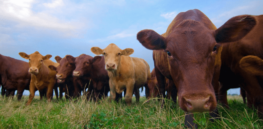
Carbon tradeoff: Which is better for the environment — grain-fed or pasture-raised beef?
Beef production accounts for the largest share of global livestock greenhouse gas emissions and is an important target for climate ...

Modernizing ancient techniques: How harnessing microbes could make alternative proteins more palatable
There’s a growing category of foods using an age-old technique that experts say could be a dark horse in the ...

Pondering the future of fruit in a climate-challenged world: Can we grow fruit without trees?
Plant Cell Culture technology utilizes the ability of a single plant cell to produce multiple cells. In the lab, we ...

Is Bill Gates a global agriculture puppet master? Indian fact-checking site unmasks anti-biotechnology ‘environmentalists’ as source for fake claims
No, the statement that Bill Gates instructed world governments to replace real food with genetically modified alternatives to combat global ...
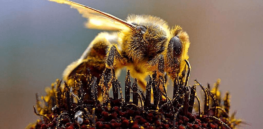
How genetics can revolutionize 100-year old strategies failing to protect honeybees
Beekeepers lose between 30% and 40% of their colonies annually, mostly to parasites and pathogens. Losses during one bad year ...
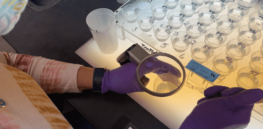
Glyphosate disinformation: French activists use fake ‘glyphosate detection tests’ in campaign to turn public against safe weedkiller
Opponents needed a tool that would strike public opinion. Monica Kruger, an activist and director of the private veterinary testing ...

How zapping roots with electricity can supercharge plant growth
Barley seedlings grow on average 50% more when their root system is stimulated electrically through a new cultivation substrate. In ...

Viewpoint: Without measurable metrics, ‘regenerative agriculture’ is often little more than a data-less claim and a form of greenwashing. Here’s how to make it more science based and sustainable
In a previous column for SSA, just under a year ago, I highlighted concerns that the Sustainable Markets Initiative (SMI), a ...
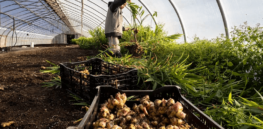
Study: Organic farming produces less food than conventional. How huge is this yield gap?
The productivity of organic farming systems and their capacity to address the global food demand of a rapidly increasing population ...

Dissecting claims about Monsanto suing farmers for accidentally planting patented seeds
Much to the dismay of anti-GMO activists, courts around the world including SCOTUS have consistently upheld the rights of companies ...

Cell-based, lab grown meat is splitting food and agricultural sustainability communities. Here’s why
Proponents of cultivated meat argue that it carries numerous environmental benefits compared to conventional agriculture — all of which are particularly ...

Cherry tomatoes of the future are here today thanks to gene editing. They grow faster, in clusters, and even indoors
Scientists have just genetically modified cherry tomatoes to make them easier to grow, and the future applications could include making them more ...
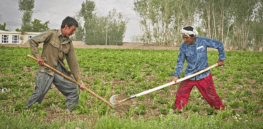
Pakistan edges closer to inevitable embrace of sustainable genetically-modified seeds
The debate on consuming genetically modified organisms (GMO) in agriculture has erupted once again in Pakistan ...

To reach climate change targets set at COP28, we need agricultural biotechnology to help decarbonize economies around the world
Climate change is affecting communities worldwide, and innovative solutions are more urgently needed than ever. As leaders from around the ...

Upcycling food waste: Corn cobs, the circular economy and industrial production: Plant biomass offers alternative industrial products
The practice of upcycling –present in a variety of industries from fashion to construction– not only revitalizes discarded items, adding new values ...

As climate change threatens to eliminate land suitable for arabica production, cell-based coffee may eventually offer a solution
Scientists in Finland have shed new light on the process of making, roasting and analyzing lab-grown cellular coffee ...
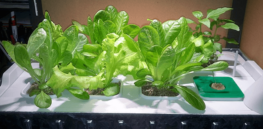
The investment bubble surrounding indoor farming has burst. One plodding but high-tech startup is bucking the trend, and here’s how
Indoor farming startups seeking to revolutionize the nation’s food supply have endured a rocky year. Investors have significantly pulled back ...

Feather-based fuel? How millions of tons of poultry waste, an agricultural byproduct, could be transformed into clean, green hydrogen fuel cells
Look at a chicken feather, and what you’re seeing is 91% keratin. Now a team of scientists have found a way to ...

Viewpoint: Are ESG — environmental, social and governance — goals the next step in corporate citizenship or an activist imposition?
Corporate ESG (Environmental, Social and Governance) performance measurements have recently polarised the business community. Many see it as the next ...
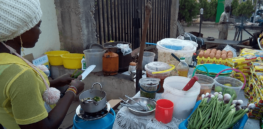
Why African farmers fighting against notoriously low yields need innovation to survive inflation and starvation in a warming world
Rising temperatures mean large chunks of Africa are whipsawing between increasingly severe droughts and more frequent and intense cyclones, threatening ...

Viewpoint: Why we need to get over our gene-editing fears and embrace optimized, climate-resilient crops
As the planet warms, gene editing is one of our greatest hopes for developing resilient crops that allow for adaptation ...

Environmental activists claim neonicotinoid and glyphosate pesticides threaten bees. Here are the facts
"The honeybee is in no way endangered. If there’s a top ten list of what’s killing honey bee colonies, I’d ...
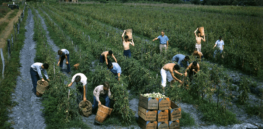
‘Agriculture catches blame for climate change’: Here’s 3 ways innovation can transform farming challenges into solutions
As climate change intensifies, the conversation around two of the most significant contributors — energy and transportation — has shifted ...
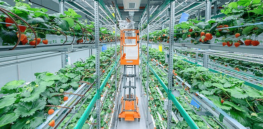
Will indoor farming revolutionize sustainable agriculture, or is it another case of greenwashing?
With the help of LED lighting plants are grown in indoor spaces, using closed nutrient and water cycles. As of ...

CRISPR co-creator Jennifer Doudna: ‘I think many of us will experience CRISPR in the agricultural world before we experience it clinically’
It’s been a monumental year for Crispr, the molecular tool scientists use to edit genetic material. ...
