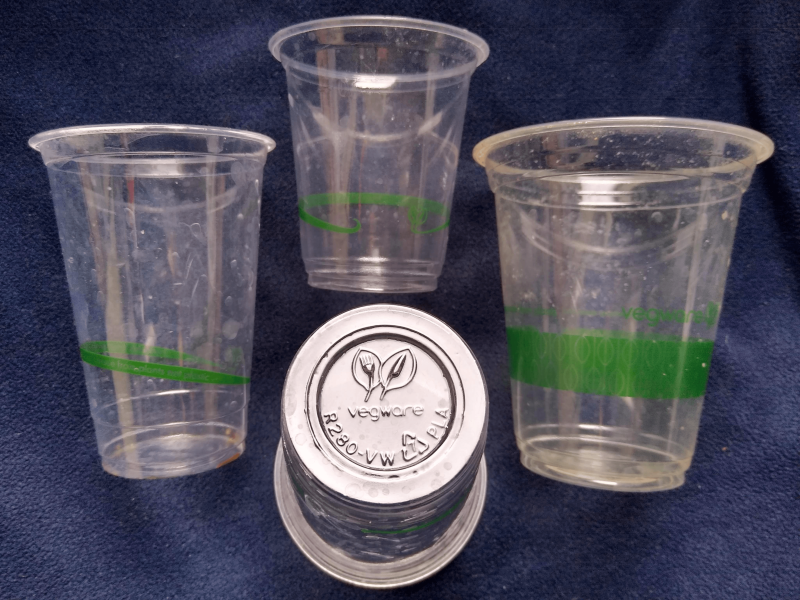
Environmentally-friendly GMO bioplastics favored by consumers despite prevailing negative sentiment on GMO foods

cmglee pla cups
Credit: Wikimedia Commons (CC BY-SA 4.0)

The technology of genetically modified organisms (GMO) and especially genetically modified plants (GMP) applied in agriculture is a key element in a bioeconomy-based sustainability transition. However, consumers in many European countries allegedly disapprove of ‘green biotechnology’. Drawing on innovation adoption and risk perception literature, we explore the acceptance of GMP-based food packaging. Fossil-fuel-based production and plastic waste have become a major concern in many societies, and GMP-based technologies might offer solutions. Taking fully degradable material based on GMP as an example to replace conventional plastic in many applications, we present new insights into the GMP debate using a choice-based conjoint analysis in four European countries. Our results show that GMP-based packaging material is preferred to conventional plastic packaging in all countries.

Follow the latest news and policy debates on sustainable agriculture, biomedicine, and other ‘disruptive’ innovations. Subscribe to our newsletter.

We propose that GMP-based technology that could contribute to solutions for pressing environmental problems may have become more acceptable amongst the public than generally thought. Insights from the field of risk perception and of innovation adoption support this proposition. GMP-based technology might be seen as a less dreadful hazard when perceived as a tool to address more dreadful environmental problems. This may especially hold for people with a communitarian or egalitarian worldview who are particularly concerned about environmental problems and who see its advantages in the context of combating pollution.


This is an excerpt. Read the original post here

{{ reviewsTotal }}{{ options.labels.singularReviewCountLabel }}
{{ reviewsTotal }}{{ options.labels.pluralReviewCountLabel }}
{{ options.labels.noReviewsLabel }}
{{ options.labels.newReviewButton }}
{{ userData.canReview.message }}

Related Articles

Infographic: Global regulatory and health research agencies on whether glyphosate causes cancer

Infographic: Global regulatory and health research agencies on whether glyphosate causes cancer

Does glyphosate—the world's most heavily-used herbicide—pose serious harm to humans? Is it carcinogenic? Those issues are of both legal and ...

Most Popular

organic scaled
Facts & Fallacies podcast: Organic food cuts pesticide exposure? A response to Dr. Rhonda Patrick
ChatGPT-Image-Mar-10-2026-01_39_01-PM
Viewpoint—“Miracle molecule” debunked: Why acemannan supplements don’t work
kratom
Viewpoint: Kratom ‘supplement’ crisis: DEA sits on its hands while patient addictions to this ineffective drug  rise
Screenshot 2026-07-22 at 10.25
Science brain drain escalates as Trump purge extends to USDA
using genetics to reverse aging
Is the longevity obsession a new form of ageism?
Screenshot-2026-07-01-at-2.49.48-PM
Dr. TikTok and male fertility: Viral claims tout GLP-1 drugs as fertility boosters. What does the science say?
Blood blockage
High cholesterol? FDA approves effective oral medication
ChatGPT-Image-Jun-25-2026-02_53_56-PM
Embryo gene editing is on the horizon, stirring mixed emotions
a-mature-farmer-working-in-the-field-at-sunrise-harvesting-crops-generated-by-ai-photo
What’s the prospect of developing gene-altered crops that are more nutritious and resist climate disruption
close up arabica coffee farmer s hands picking beans plant his farm colombia
Viewpoint: Why do so many ‘mainstream’ and ‘respected’ media outlets exaggerate climate change threats?
ChatGPT-Image-Jun-25-2026-12_23_17-PM
No, Bill Gates did not secretly engineer ticks to promote veganism
ChatGPT-Image-Jul-6-2026-02_25_26-PM
40 million Americans take glucosamine. If you have memory loss, it could accelerate cognitive decline.
file-f-d-d-
Facts & Fallacies Podcast: Europe's AC debacle underscores fatal flaw in green activism
glp menu logo outlined

Get news on human & agricultural genetics and biotechnology delivered to your inbox.