


Health & Medicine

Junk food cravings? That burning desire for chocolate may be genetic
[A]ccording to some new research on how your genes affect the foods you seek out, it’s not your fault [if ...
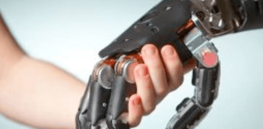
Would you amputate your nerve-damaged hand for a bionic prosthetic?
A team of surgeons in Vienna, Austria...recently developed bionic reconstructions of the hands of 16 people who had lost manual ...

Black men at greater risk for prostate cancer, may require earlier, more frequent screening
A new study indicates that higher prostate cancer death rates among black men in the US may be due to ...
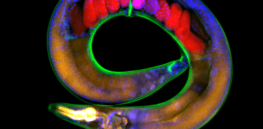
Inheritance of epigenetic modifications observed through 14 generations in roundworms
To a degree, our lineage dictates how our genes are expressed, how we look, age, and live. However, a recent study ...

Puberty timing linked to genes associated with risk for breast, ovarian, prostate cancers decades later
The largest genomic analysis of puberty timing in men and women conducted to date has identified 389 genetic signals associated ...

Can epigenetics help fuel personalized medicine revolution in cancer treatment?
Already, doctors, to some degree, use personal genomics tests that integrate our unique genetic makeup into clinical decision-making. However, there ...
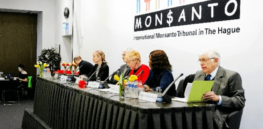
International Monsanto Tribunal: Fake trial distracts from real food, farming problems
[Editor's note: Kavin Senapathy is an author, public speaker and science advocate.] The verdict I predicted has landed—agri-giant Monsanto has ...

After months without a secretary of agriculture, former Georgia governor Sonny Perdue confirmed to post
After months without a secretary of agriculture, the Senate voted Monday evening [April 24, 2017] to confirm former Georgia Gov ...

Funding for USDA’s National Organic Program tripled under Obama. What will Trump do with it?
[Editor's note: Mischa Popoff is a policy advisor at The Heartland Institute, and is the author of Is it Organic? Jay Lehr ...

Shocking: Electrical zaps to your brain may improve memory
Zapping the brain with just a bit of electricity at the right time may help to improve memory function in ...

Average looking? Displaying your creativity may make you more attractive
Showing a bit of creativity on your online dating profile could make you appear more attractive to potential dates, a ...

Sculpted by our genes: Figuring out which facial features are ‘strongly heritable’
Examining 3-D face models of nearly 1,000 female twins, researchers have found that the shapes of the end of the ...

Can quantum mechanics explain human consciousness?
Despite all the research we’ve done, we still know relatively little about how the human brain works, and we know ...

When genetics has no answer: Heart disorder patients gain knowledge, but no help
Getting a better understanding of a disease can open all sorts of possibilities for better treatments, even ones tailored to ...

Malawi moves towards commercialization of GM cotton, cowpeas and bananas
[Editor's note: Katherine Chaweza is a 2016 Alliance for Science Global Leadership Fellow and the communication and outreach coordinator for the Programme ...

Cargill under fire: ‘We don’t agree’ GMOs unhealthy; biotech crops ‘key tool for sustainability’
Cargill is attempting to satisfy both ends of the spectrum by acknowledging the growing group of people against genetically-modified organisms ...

EU food safety chief: Critics of glyphosate safety finding are ‘playing politics’, undermining science
Politicians who attack the EU agency that ruled the weedkiller glyphosate probably does not cause cancer are in danger of ...

Why you can tell the difference between fake laughter and the real thing
Most of us will laugh at a good joke, but we also laugh when we are not actually amused. Fake ...
Two halves better than one: Why our brain evolved to be symmetrical
The human brain evolved to have two halves — and a new review of previous research suggests that this dual ...

Babies might avoid deadly infections by receiving gut microbe transfers
In research published in Science, an international team of researchers found that a bacterium known as Clostridia helped mouse pups ...

Could it be possible to slow, or even rewind, our body’s aging clock?
Ageing in humans (and animals) can be seen as either an inevitable process of wear and tear or as an ...

Have patients been forgotten in the quest to build private BRCA variant databases?
Databases on life-threatening genetic mutations -- including the BRCA variants linked to breast cancer -- are maintained by corporations for ...

Why I changed my mind about the need to feed my kids organic food
[Editor's note: Jenny Splitter is a writer, storyteller and mother of two.] A few years ago I learned that most ...

Fake science news: Rise of ‘predatory journals’ makes it easier to publish, spread ‘advocacy research’
[Editor's note: Robert Fraley is Executive Vice President and Chief Technology Officer at Monsanto. He has Ph.D. degrees in microbiology ...

Can you be a skeptic and anti-GMO?
[Editor’s note: Myles Power is a chemist in Manchester, England.] Over the past year, I have been giving a talk to ...

How US NGOs are exploiting Europe’s precautionary chemophobia to ban glyphosate and GMOs
Environmental NGOs have a harder time influencing the evidence-based US regulatory system, so they're taking the fight to Europe — ...

‘Thirsty plants’ to land conservation: How biotechnology helps address developing world’s agricultural challenges
[Editor's note: Sarah Evanega holds a doctorate in plant biology from Cornell University, where she is the director of the Alliance ...
