Why I changed my mind about the need to feed my kids organic food

Screen Shot at PM

[Editor’s note: Jenny Splitter is a writer, storyteller and mother of two.]

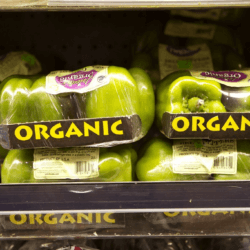
A few years ago I learned that most of what I believed about organic is wrong. For example, I thought organic produce always meant pesticide-free, but it turns out organic farmers use pesticides too. So what’s the difference? Well, the pesticides used in organic farming are mostly natural, rather than synthetic, but the law regulating organic food even allows some synthetic pesticides too.

Since these organic pesticides are natural, that must mean they’re at least gentler and less toxic, right? Not necessarily. Just because something is natural doesn’t mean it’s less toxic. There are plenty of natural things that can make you sick….

So maybe what you’re really worried about is GMOs (genetically-modified organisms). Well, it’s true that by law, organic food can’t include genetically modified ingredients, but I don’t think there’s any reason to avoid GMOs either. The overwhelming scientific evidence suggests GM foods are just as healthy as the non-GM version of these foods. And if you think GM foods are “unnatural” because they were created with scientific tinkering, check out seedless watermelon and ruby red grapefruit. These two bred-by-science crops are welcome in organic agriculture because scientists just happened to use a different method to create these seeds.
The GLP aggregated and excerpted this blog/article to reflect the diversity of news, opinion, and analysis. Read full, original post: Why I Don’t Worry About Feeding My Family Organic Food

For more background on the Genetic Literacy Project, read GLP on Wikipedia

{{ reviewsTotal }}{{ options.labels.singularReviewCountLabel }}
{{ reviewsTotal }}{{ options.labels.pluralReviewCountLabel }}
{{ options.labels.newReviewButton }}
{{ userData.canReview.message }}

Related Articles

Infographic: Global regulatory and health research agencies on whether glyphosate causes cancer

Infographic: Global regulatory and health research agencies on whether glyphosate causes cancer

Does glyphosate—the world's most heavily-used herbicide—pose serious harm to humans? Is it carcinogenic? Those issues are of both legal and ...

Most Popular

Screenshot 2025-07-30 at 10.48
Can gene editing eliminate Down syndrome? Scientists have done it in lab-grown cells
ChatGPT Image May 26, 2026, 08_42_17 AM (1)
Viewpoint: Greenpeace and poison: How environmental advocacy groups rely on compliant (and often ignorant) journalists to spread disinformation and spark litigation
Screenshot-2026-05-28-at-1.36.28-PM
Viewpoint: Can mRNA research survive the Trump administration?
ChatGPT Image May 26, 2026, 08_21_36 AM
Limiting gender affirming interventions: Trump administration targets Texas even though it already bans youth access
Screenshot-2026-06-03-at-1.24.46-PM
Challenging anti-GMO disinformation: Why genetically-tweaked crops offer bushels of benefits
ChatGPT-Image-May-26-2026-07_51_21-AM-2
Viewpoint: There are more than 1,000 chemicals in a cup of coffee—including many substances that can cause cancer. Why isn’t it banned?
ChatGPT-Image-Jun-2-2026-03_04_17-PM
Viewpoint: Why the hyper-promoted doping ‘enhanced games’ pseudo Olympics flopped
ChatGPT-Image-Jun-2-2026-11_39_58-AM
Viewpoint: Who is RFK, Jr.’s newly-appointed CDC senior counselor, Sara Brenner — Vaccine skeptic and self-proclaimed “MAHA mom”
ChatGPT-Image-Jun-3-2026-12_33_40-PM-2-1
Viewpoint—The end of ‘ivory tower science’: What does that even mean, and what comes next
tick-DNA
GLP podcast: Spread meat allergy with gene-edited ticks? Bioethicists pose vile ‘thought experiment’
ChatGPT-Image-Mar-10-2026-01_39_01-PM
Viewpoint—“Miracle molecule” debunked: Why acemannan supplements don’t work
Picture1
Sounds we can’t hear — the hidden planetary signals behind science, fear, and misinformation
glp menu logo outlined

Get news on human & agricultural genetics and biotechnology delivered to your inbox.