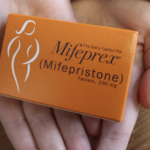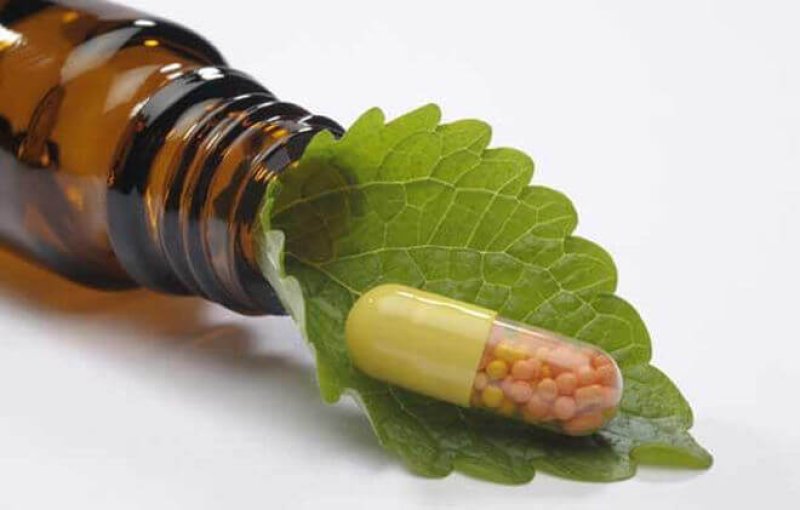
Why do people accept biotech in medicine but not GMO foods?

plantdrug

[Editor’s note: this article summarizes a paper (PAY WALL) published in the journal Annual Review of Resource Economics.]

In a paper─ The Political Economy of Biotechnology ─ Ron Herring of Cornell University and Robert Paarlberg of Harvard Kennedy School look for pushes and pulls in the material interests of advocates and opponents of these technologies … seek reasons in political structures, social behaviour and public notions of acceptable risk.

[P]ublic disapproval of genetic engineering of crop plants, despite important science academies supporting the technology, is hard to comprehend.

[T]here is no evidence of GE crops grown so far posing new risks to humans, animals or the environment.  The same public accepts drugs like insulin made with recombinant DNA technology. It discounts the risks thrown up during clinical trials. Its distrust of regulatory authorities charged with the approval of GE crops stands in contrast to its faith in medical regulators despite tragic errors: thalidomide approved for morning sickness caused birth defects in thousands of babies. What accounts for these differing standards?

Transnational environmental groups like Greenpeace have also been effective in stigmatizing GE crops as GMOs (genetically-modified organisms)

Environmentalists and private enterprise-hating leftists have also been able to paint GE technology as a conduit for corporate control of national agricultural systems.

In the case of GE crops, opponents have constructed uncertainty as risk.

Proving the absence of risk is impossible for science, the authors say.

The GLP aggregated and excerpted this blog/article to reflect the diversity of news, opinion, and analysis. Read full, original post: Explaining the Political Economy of Biotechnology Which Makes Recombinant DNA Technology Acceptable in Medicine But Not Genetic Engineering of Plant Crops


Related Articles

Infographic: Global regulatory and health research agencies on whether glyphosate causes cancer

Infographic: Global regulatory and health research agencies on whether glyphosate causes cancer

Does glyphosate—the world's most heavily-used herbicide—pose serious harm to humans? Is it carcinogenic? Those issues are of both legal and ...

Most Popular

ChatGPT-Image-Mar-10-2026-01_39_01-PM
Viewpoint—“Miracle molecule” debunked: Why acemannan supplements don’t work
ChatGPT-Image-Sep-13-2026-10_24_17-AM
Bayer urges court to approve $7.25 billion Monsanto Roundup settlement that could limit its future liabilities
Screenshot-2026-09-10-at-11.50.46-AM
Did COVID vaccines kill 2,500 service members? RFK Jr. hires an investigator who compares vaccine promoters to Nazi doctors
ChatGPT-Image-Sep-15-2026-06_05_13-PM
CRISPR fine-tuning unlocks vitamin C-rich potatoes without yield loss
Screenshot-2026-09-10-at-12.20.19-PM
'Jet fuel didn't melt the steel': 9/11 conspiracy theories debunked
ChatGPT-Image-Sep-15-2026-05_59_18-PM
RFK Jr. spent two years distancing himself from Children’s Health Defense. Now he’s keynoting its anti-vaccine DC conference.
ChatGPT-Image-Aug-28-2026-03_33_46-PM
Viewpoint: Bad science—Five bogus Trump administration claims about vaccines and autism
Screenshot-2026-09-11-at-2.26.23-PM
Newly approved GMO chestnut trees planted across from the White House are stirring debate
ChatGPT-Image-Sep-2-2026-10_30_14-PM
Zero: That is the official American measles death toll for 2026. Here is what RFK Jr.’s CDC leaves out.
Screenshot-2026-09-14-at-10.52.30-AM
AI is being used in dangerous bioscience experiments
ChatGPT-Image-Sep-14-2026-11_36_25-AM
How the reckless AI race among Anthropic, OpenAI and China spawned today’s safety crisis
screenshot at  am
‘Glyphosate is not carcinogenic’: Independent EU chemical oversight agency reaffirms—for the 3rd time in 9 years—that the herbicide is safe-as-used
glp menu logo outlined

Get news on human & agricultural genetics and biotechnology delivered to your inbox.