


Daily Human Digest
There’s still a lot of confusion about how monkeypox spreads. Here is what we know so far
Monkeypox has spent most of its evolutionary history living inside Central and Western Africa’s small mammals — squirrels, rats, mice, ...

Viewpoint: Why the COVID-19 lab leak theory refuses to die
Ever since the coronavirus now known as SARS-CoV-2 was first identified as the cause of an outbreak of a mysterious ...
Could the universe be an elaborate game constructed by bored aliens?
Elon Musk thinks you don’t exist. But it’s nothing personal: he thinks he doesn’t exist either. At least, not in ...

Safety of muscular dystrophy gene therapy in spotlight after two deaths connected to Novartis Zolgensma treatments
Novartis has recorded two deaths after treatment with its spinal muscular atrophy gene therapy Zolgensma, once again bringing gene therapy’s ...
Are monkeypox vaccines easy to get? Debunking 11 common myths
To help provide accurate information about monkeypox, Healthline spoke with medical experts to debunk 11 troubling myths currently circulating about ...

New insomnia treatments on the horizon? Different areas of the brain have unique sleep schedules, paving the way for new therapies
Dolphins can swim with one hemisphere asleep while the other is alert, and some neurons in sleep-deprived rats can “switch ...

Lactose tolerance: Early humans couldn’t easily process milk and cheese. How, why and when did that change?
Just 5,000 years ago, even though it was a part of their diet, virtually no adult humans could properly digest ...
How might biotechnology revolutionize America’s national defense?
The Biotechnology Community of Interest released a study on the future of biotechnology in April, titled “Bio-Futures 2050: Defense Impacts ...

Neuroplasticity and epilepsy: Why our ever-adapting brain cells are a blessing and sometimes a curse
Brain plasticity is often touted as a miracle cure, but it does have a dark side. Addiction, for example, occurs ...

Could alien life survive harsh environments? Green slime dug up in lava caves offers an intriguing theory
Deep within the lava caves of Hawaii, microbial life thrives. In fact, a recent study has found that the life ...

‘It has to happen’: Tech titans pour billions into anti-aging research — yet overlook promising metformin trial
Beating back the diseases of aging has become something of a pet project for many of Silicon Valley’s tech titans ...

Are there evolutionary benefits to celibacy?
Evolution is often perceived as an individual affair: Traits that are helpful to the individual get passed on and eventually ...

‘Risks, pitfalls, and challenges’: Synchron’s brain-computer interfaces are on the horizon, but future embrace is murky
Thomas Oxley is the founder and CEO of Synchron, a company creating a brain-computer interface, or BCI. These devices work ...

‘Mind after midnight’: How our brains evolved to hyperfocus on the negative after dark
Plenty of evidence suggests the human mind functions differently if it is awake at nighttime. Past midnight, negative emotions tend ...
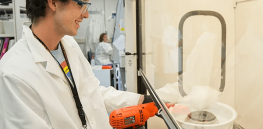
A ‘cotton candy machine’ that prints cardiac fibers brings us one step closer to easily repairing heart injuries
Researchers at Harvard’s John A. Paulson School of Engineering and Applied Sciences (SEAS) believe they have taken a step towards ...

Loss of smell is a common symptom of Alzheimer’s, not just COVID. Do these diseases share cognitive symptoms too?
One of the stranger symptoms of Covid — the loss of the sense of smell — is a symptom that, ...

Appetite reducing pill? It’s being researched — but it won’t replace the mental health benefits of exercise
Researchers from the Baylor College of Medicine, publishing their findings in the journal Nature, have found a molecule produced by ...

Exploring the history and mystery of Einstein’s stolen brain
When you think of intelligent people, Albert Einstein may be the first name to come to mind. Given his high ...

Why do we yawn? Here are several theories on the evolution of this sleepy signal
Obviously, people and other animals yawn when they are tired; we all know that. But there must be more to ...
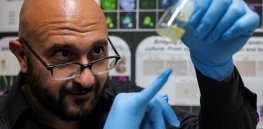
Synthetic embryos: What are they, and how are they challenging ethical constraints?
Scientists at the Weizmann Institute in Israel found that stem cells from mice could be made to self-assemble into early ...
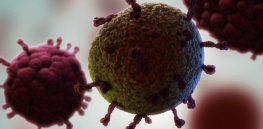
What the latest highly-contagious omicron variant signals about COVID evolution in the months and years ahead
What is driving the evolution of omicron sublineages? The answer to that is a well-known process called natural selection ...

Differences between human and Neanderthal brains are minimal — so why are we so much smarter?
Our closest human relatives are Neanderthals (split from modern humans at least 500,000 years ago) and their Asian relatives the ...
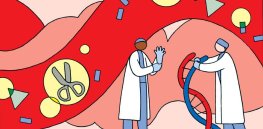
Do you have high cholesterol? With gene editing, there soon may be a CRISPR cure
A trial testing a new CRISPR-based treatment to lower cholesterol has officially kicked off in New Zealand. If it works ...
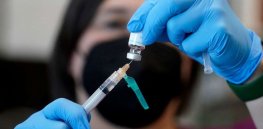
Can we learn? How Israel — a world leader in handling COVID — is ramping up to deal with monkeypox
Despite having recorded only 125 cases of the disease, Israeli health authorities have taken the unusual approach of securing 10,000 ...

Hybrid brains: Implanting human neurons into animals to observe their behavior raises ethical concerns
In a darkened room in a laboratory in London, a group of students and researchers watch a clump of human ...

COVID disruptions and anti-vaccination fervor drops global child vaccination rates to 30-year low
Since the start of the COVID-19 pandemic, global childhood vaccinations have experienced the largest sustained decline in about 30 years, ...
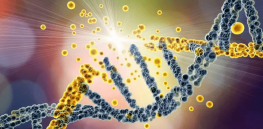
Could CRISPR gene editing raise cancer risks?
It was a groundbreaking development a decade ago: CRISPR gene-editing technology that allows the snipping of DNA to remove undesired ...
