


Daily Human Digest

‘I found my people’: The path some parents travel to become anti-vaxxers
They waved signs that read “Defeat the mandates” and “No vaccines.” They chanted “Protect our kids” and “Our kids, our ...

Whales reproduce into their 90s and elephants into their 60s. Why do humans hit menopause so much younger?
There is no reason to suppose that age and reproduction are necessarily incompatible. Female African elephants breed into their 60s, ...

Weight loss surgery found to dramatically decrease risk of dying from cancer
A large new study found that people who lost significant amounts of weight through bariatric surgery gained a striking benefit: ...

Viewpoint: Why suffering is necessary for a meaningful life
Q: The fundamental thesis of your new book, The Sweet Spot: The Pleasures of Suffering and the Search for Meaning, ...

‘Cognitive evolution’: How our brains learned to quickly adapt to jarring new environments
I am positive that every person reading this is fundamentally different from when the pandemic started. Because that's how our ...

Sensitive to hot coffee? It’s called ‘cat tongue’ and many people have this genetic proclivity
Some seem to be able to down scalding hot coffee, while others have to wait until it has cooled down ...
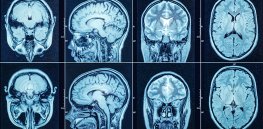
Mutiny: Here’s how glioblastoma uses the brain against itself to spread cancer and resist treatment
New research this week suggests that an aggressive brain cancer can hijack the brain’s own circuitry to further spread and ...
All the science you need to know about COVID-19
If there's one thing we've learned since March 2020, it's that pandemics are all about hard decisions. It's hard to keep track ...

Why do humans speak while apes do not? An evolutionary explanation
Scientists have identified evolutionary modifications in the voice box distinguishing people from other primates that may underpin a capability indispensable ...

Human brain shrank 3,000 years ago? Long accepted theory challenged by University of Nevada anthropology team
Did the 12th century B.C.E. — a time when humans were forging great empires and developing new forms of written ...

Moving from off-the-shelf cancer vaccines to shots personalized to your genetic makeup
In recent years, we have seen great advances in disease diagnosis through biomarkers and, increasingly, gene sequencing ...

Alzheimer’s is more common in women. Here’s why
Researchers from the Boston University School of Medicine (BUSM) and the University of Chicago have found a new gene called ...

Mars may once have housed life. Did it come from Earth?
In all the Universe, only Earth is known to be inhabited. But even among the Milky Way, billions of other ...

Shadow of the AIDS crisis hangs over emerging monkeypox threat
As cases of monkeypox surge around the globe, four pioneers of the AIDS activist movement watch in awe and with ...

‘Retracted memories’: The mind treats false recollections as real
False memories can seem just as real as genuine memories. It should be no surprise, then, that they influence how ...

It’s the 25th anniversary of dystopian genetics movie Gattaca. Do scientists think it has survived the test of time?
This October marks the 25th anniversary of the film’s release. Ever since, the word Gattaca—made up of the letters that ...

Which is better — morning or evening exercise? It’s different for men and women, and depends on your health goals
For some people, making coffee is the most they can manage in the morning, whilst others bounce out of bed ...
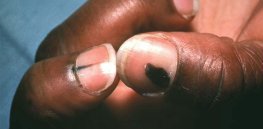
People with darker complexions are less likely to get skin cancer, but have higher mortality rates. Why?
Historically, Black people and those with dark skin have been left out of efforts to combat skin cancer. Long neglected ...
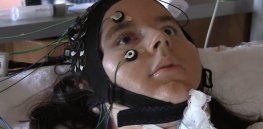
Locked-in syndrome: We don’t know much about the mental health of people who are fully paralyzed yet conscious
In 1993, Julio Lopes was sipping a coffee at a bar when he had a stroke. He fell into a ...

Tasmanian tiger: Scientists hope to revive this marsupial from extinction
Scientists in Australia and the US have launched an ambitious multimillion-dollar project to bring back the thylacine, a marsupial that ...

Most terminal cancer patients don’t fully grasp the severity of their prognoses. Why?
Doctors are often called upon to deliver bad news to patients, and there isn't much that's worse than a diagnosis ...

New teaching tactics? Verbal and spatial skills may be inextricably linked in the brain
When students use spatial skills in the classroom, the benefits extend beyond spatial understanding to other kinds of thinking, such ...

Conclusions drawn by many artificial intelligence studies cannot be replicated. Here’s why this is a concern
Princeton professor Arvind Narayanan and his PhD student Sayash Kapoor got suspicious last year when they discovered a strand of ...

Repeating AIDS mistakes: Framing monkeypox as a ‘LGBTQ-only virus’ could lead to a wider spread of the disease
As HIV/AIDS surged in previous decades, the government scrambled to address the strange illness that seemed to afflict mostly men ...

Men face higher risks for most cancers. Here’s why
Rates of most types of cancer are higher in men than in women for reasons that are unclear. Results from ...

Germs implicated in fall of great ancient civilizations, bone analysis shows
Thousands of years ago, across the Eastern Mediterranean, multiple Bronze Age civilizations took a distinct turn for the worse at ...

Put down the baby aspirin: Risks might outweigh heart health benefits
For years, we have been told that most adults should take a baby aspirin every day to help prevent heart ...
