Sensitive to hot coffee? It’s called ‘cat tongue’ and many people have this genetic proclivity

Credit: Yiu Yu Hoi
Credit: Yiu Yu Hoi

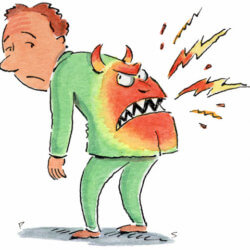
Some seem to be able to down scalding hot coffee, while others have to wait until it has cooled down a bit. In Norway we do not have a name for this phenomenon, but they do in Japan: 猫舌 (ねこじた) nekojita – cat tongue. This word refers to having a ‘heat-sensitive tongue’ and is used to describe people who cannot tolerate hot food and drinks.

Follow the latest news and policy debates on sustainable agriculture, biomedicine, and other ‘disruptive’ innovations. Subscribe to our newsletter.

The researchers gave 87 people a cup of coffee. Participants checked if the coffee was too cold, just right, or too hot for them. Then they were given new cups of increasingly hot coffee.

Participants stopped when they felt the coffee was burning their tongues.

There were large differences in the temperature at which participants reached their pain threshold. The first cup of coffee that everyone received was 58°C. At that temperature, some felt that their tongue was burning. While one participant did not feel a burning sensation until the coffee was 71°C.

“There is a huge difference in how much pain people feel and can endure,” says Christopher Nielsen. He is a researcher at the Norwegian Institute of Public Health and does research on, amongst other things, sensitivity to pain.

Some people feel pain quickly, and can be characterized as having a low pain threshold, while others are able to tolerate more before they feel pain.


This is an excerpt. Read the original post here

{{ reviewsTotal }}{{ options.labels.singularReviewCountLabel }}
{{ reviewsTotal }}{{ options.labels.pluralReviewCountLabel }}
{{ options.labels.noReviewsLabel }}
{{ options.labels.newReviewButton }}
{{ userData.canReview.message }}

Related Articles

Infographic: Global regulatory and health research agencies on whether glyphosate causes cancer

Infographic: Global regulatory and health research agencies on whether glyphosate causes cancer

Does glyphosate—the world's most heavily-used herbicide—pose serious harm to humans? Is it carcinogenic? Those issues are of both legal and ...

Most Popular

Screenshot-2026-07-09-at-1.09.25-PM
Anti-vaccine myths rattle health care
ChatGPT-Image-Mar-10-2026-01_39_01-PM
Viewpoint—“Miracle molecule” debunked: Why acemannan supplements don’t work
ChatGPT-Image-Jul-10-2026-12_21_03-PM
Viewpoint: Is there new evidence that the animal deworming drug ivermectin decreases the risk of Covid and cancer? Don’t waste your money.
Picture1
Hiroshima at 81: America’s new nuclear bomb, a buried Iranian target, and a question no one wants to ask
ChatGPT-Image-Jun-25-2026-12_23_17-PM
No, Bill Gates did not secretly engineer ticks to promote veganism
Screenshot-2026-07-30-at-3.07.42-PM
Controversy over WNBA star Sophie Cunningham’s comment opposing trans females in women’s sports reinvigorates the culture wars
leeteam
How Kennedy and his family could pocket millions from Merck’s $50 million vaccine injury settlement that he oversaw
Screenshot-2026-07-30-at-2.30.35-PM
Climate scientists claim conservative activists are promoting ‘lies’ that Europe’s summer heatwaves are far from unusual

Sorry. No data so far.

glp menu logo outlined

Get news on human & agricultural genetics and biotechnology delivered to your inbox.