


Daily Human Digest
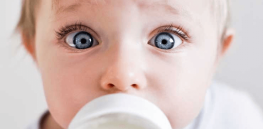
You don’t always retain the eye color you’re born with. Here’s a genetic explanation why
Evidence suggests that whether a baby's eye colour changes or not depends a lot on the colour itself. One study ...

How can you distinguish normal aging from dementia — and what do you need to do to diagnose your situation?
A blood test that can be used to make a precise diagnosis of people with symptoms of dementia is just ...

‘Domino extinction effect’: Here’s what might happen to humans if key animal species start dying from climate change
Everything has a purpose here on Earth, and everything in each ecosystem is intertwined. Population changes to one animal or ...
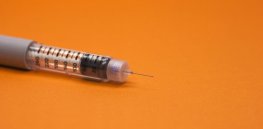
We now know a possible trigger for Type 1 diabetes
It seems that a common bacterium found in the human gut makes a protein that looks just enough like insulin ...

Why do some people live longer than others? This ‘lifespan machine’ scans thousands of worms every day to unlock the secrets of aging
Not far from the popular Barceloneta beach in Barcelona, Spain, an underground room houses 35 office scanners stored in refrigerated ...
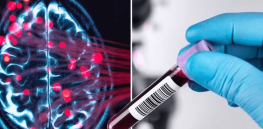
Ethical dilemma: Blood test can reveal dementia risk — but we are no closer to a cure
It can be discomforting when your memory fails. It can cause people to worry that dementia is right around the ...

Latest investor in wooly mammoth de-extinction gene editing technology? The CIA, and why that matters
As a rapidly advancing climate emergency turns the planet ever hotter, the Dallas-based biotechnology company Colossal Biosciences has a vision: ...
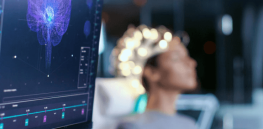
What’s next for the Human Genome Project — Mapping the brain to understand the impact of disease
The latest announcement is part of a continuing effort known as Brain Research Through Advancing Innovative Neurotechnologies (BRAIN), which was ...
Viewpoint: Social justice movement challenges basic science — ‘Restricting research on the science of human nature won’t cure injustice or prejudice’
Does nature shape who we are? Since the advent of cognitive science, neuroscience and behavioral genetics, this age-old question has ...
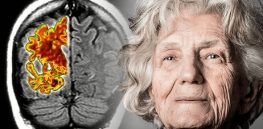
Why ‘superagers’ retain ‘super memories’ well into their 80s
“Superagers” – people aged 80 or over with exceptionally good memories – may have larger than expected neurons in a ...

Hate brushing your hair? You may have ‘uncombable hair syndrome’ — a rare genetic disease
Uncombable hair syndrome is more than just difficult hair. As its name suggests, it's hair that sticks out at all ...

10-year CRISPR anniversary: How gene editing revolutionized medicine, and what lies ahead
Ten years ago, a little-known Science paper authored by Jennifer Doudna, Ph.D., and Emmanuelle Charpentier, Ph.D., proposed using CRISPR/Cas9 for gene editing ...

How the coronavirus pandemic flipped uber-liberal Marin County from vaccine rejectionist hub to shaming COVID vaccine skeptics
In the pandemic age, getting a Covid-19 shot has become the defining “vax” or “anti-vax” litmus test, and on that ...

These key grizzly bear genes keep them diabetes-free over long winter hibernations — offering clues to how we might better treat the disease in humans
If a human ate tens of thousands of calories a day, ballooned in size, then barely moved for months, the ...

‘When we exercise, we’re not just doing it for ourselves’: Why going on a run today could benefit your future grandkids
Exercising now is good for you. But could it also be good for your future children and grandchildren? ...
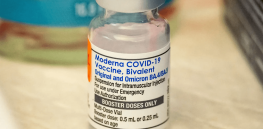
How safe are the new COVID vaccine boosters?
In case you haven’t heard, there’s now a new set of vaccine booster shots that protect against the latest variant ...
Viewpoint: BRAIN 2.0 — US government pouring billions into understanding the genetics of the human brain. Rightwing Federalist society raises ‘dangerous’ spectre of government mind control
The U.S. government is pouring billions of dollars into understanding genetics and the human brain, and most consequentially, how to ...
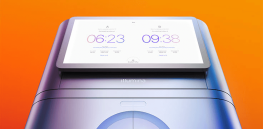
This genome sequencing machine can decode a person’s genetic code twice as fast as before — driving costs down to just $200 a pop
Ten years ago, it cost about $10,000 for researchers to sequence a human genome. A few years ago, that fell to ...

Is the ‘7-year itch’ real? The science behind why some relationships seem to struggle as time goes on
You would think that the longer a couple has stayed together, the closer they would feel towards each other. And ...
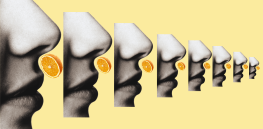
‘Olfactory training’: 5% of COVID survivors have long-lasting smell and taste problems. Here’s what can help recover their senses
Without smell, you may not recognize the telltale signs of fires, natural gas leaks, poisonous chemicals or spoiled food and ...

Viewpoint: Bringing back extinct animals — Can breakthroughs in gene editing technology offset humanity’s dicey environmental stewardship track record?
Today, the only surviving members of the white rhino species are two females at a conservancy in Kenya, Najin and ...

Viewpoint: Challenging the ‘us vs. them tribalism myth’ — No, humans are not programmed by evolution to be in conflict with others
More than 200 million people were killed in the 20th century due to war and acts of genocide. Many of ...

Why do some people suffer mild COVID while it debilitates others? Gene variant plays decisive role
It may be the most baffling quirk of COVID: What manifests as minor, flu-like symptoms in some individuals spirals into ...

CRISPR co-creator Emmanuelle Charpentier: ‘Studying microbes can solve some of the biggest problems facing humanity, including how our metabolisms and brains work’
In early September, CRISPR co-creator Emmanuelle Charpentier traveled to Yerevan, Armenia to be one of the main speakers at the ...

The brain genetics behind feeling sick
Infections are often associated with symptoms that aren’t directly tied to the pathogen, such as lethargy and loss of appetite ...
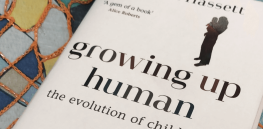
‘Uniquely helpless’: ‘Growing Up Human’ discusses why our species has such an extraordinarily long childhood
Despite all the advice books written for parents about infancy and childhood, there have been surprisingly few treatments of childhood ...
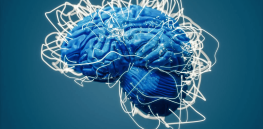
Brain map: $126 million project to decipher the brain and better understand traumas and disease
With a five-year, $126 million grant from the National Institutes of Health (NIH), a team led by Salk Institute scientists ...
