


Science Controversies

CRISPR co-creator: We should have freedom to choose our ‘genetic destiny’
[Editor's Note: Jennifer Doudna is a professor of chemistry and molecular and cell biology at the University of California Berkeley ...

Hate hitting the gym? Your ‘laziness’ might just be genetic
For some, the hardest part of hitting the gym is lacing up their shoes. But for others, it’s the actual ...

What sets humans, chimpanzees apart? Genetic markers could offer answers
What makes humans different from chimpanzees? Evolutionary biologists from Howard University and the Yale School of Public Health have developed ...

Can we stop drug addiction with vaccines?
Between 2000 and 2015 half a million people in America alone died of drug overdoses...On August 8th Tom Price, the ...

Animal geneticist Alison Van Eenennaam: Agriculture supporters need to stand up to GMO fearmongering
Alison Van Eenennaam, an animal geneticist at the University of California-Davis, told the Idaho Milk Processors Association annual conference there ...

How technology can reduce pesticide drift
Though neither the EPA nor various state agencies could provide reliable statistics on the total number of [pesticide] drift incidents, ...

Selective breeding for shorter plant stems contributed to ‘Green Revolution’ yield gains
Untangling the genetics that control and regulate the yield of a crop is a complicated, but potentially rewarding puzzle. High-yielding ...

CRISPR could efficiently improve difficult-to-breed oilseed crops, study shows
CRISPR/Cas9 is a valuable tool for both basic and applied research that has been widely applied to different plant species ...

Billionaire Randal Kirk behind GMO salmon, apples and mosquitoes
The world’s first genetically modified fish farm is a subsidiary of Intrexon, a $2.2bn company headed by Randal Kirk, a ...

Unraveling the paradox: Why GMO drugs and GMO foods are treated differently by critics
Many of the people who express outrage over genetic modification of crops because it 'tinkers with nature' are supportive of ...

Do we need mandatory genetic screening of sperm donors?
The multibillion-dollar sperm donation business has shockingly little oversight, leading to false promises of anonymity, insufficient medical testing and high ...

Women with breast, ovarian cancer are rarely tested for BRCA mutations
A new study conducted by the UCLA Fielding School of Public Health, states that among nearly 4 million women in ...

Portable DNA sequencer can identify plant species in hours, not months
In a paper published today in Scientific Reports , researchers at the Royal Botanic Gardens, Kew, detail for the first ...

India may be forced to import more food if it doesn’t adopt biotech crops to increase yields
India is not keeping pace with its peers like China in adopting innovative farm technologies, especially biotechnology, a US embassy ...

Human gene-editing debate: ‘We all need to educate ourselves’
[Editor's note: Charles Sackerson is a biology lecturer at California State University Channel Islands.] In 1973, biotechnologist Herbert Boyer and ...

Can GMO crops help Australian farmers cope with climate change?
Queensland farmers could use genetically-modified plants to tackle the threat of climate change. Environment Minister Steven Miles said farmers would ...

Infographic: Why single out GMOs—one of many forms of crop modification—for labeling?
[Editor's note: Layla Katiraee is a scientist at Integrated DNA Technologies. She has a PhD in molecular genetics with a ...

Heart attack vaccine? Innovative injection could prevent cholesterol buildup
Heart disease is the leading cause of death of men and women in the US. Over half a million Americans die from ...

Driving evolution: Sequencing of ocean microbiome shows nutrient limitation plays key role
Microbes dominate the planet, especially the ocean, and help support the entire marine food web. In a recent report published ...

Muscular dystrophy ‘death sentence’ targeted by gene therapy trials
[T]hree U.S. teams say they are ready to try to treat Duchenne [Muscular Dystrophy] with gene therapy. The first study ...

Why we hallucinate–and why it’s not always a bad thing
Hallucinations are often distressing—a suggestion that something is amiss in our brains. But new research suggests we’re all susceptible to ...

Mozambique harvests first GMO corn field trial
Mozambique's Institute of Agricultural Research (IIAM) is harvesting its first genetically modified maize (GM maize), which has been grown in ...

Will Britain fumble regulations on human and agricultural gene editing as it has on GMOs?
Britain has an opportunity to seize on the latest breakthroughs in gene editing and pioneer new approaches in agriculture, research ...

Podcast: Can the US learn from Canada’s ‘product-based’ GMO regulatory system?
Biotech legal expert Robert Potter: How GMOs are regulated differently in the US and Canada ...
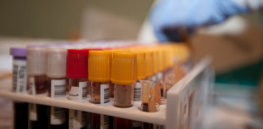
Cancer early warning system: Blood test looks for bits of DNA shed from tumors
In a bid to detect cancers early and in a noninvasive way, scientists at the Johns Hopkins Kimmel Cancer Center ...

Male sterility may be correctable through stem cell treatments, if mice studies lead to human cure
A common genetic cause of male infertility has been overcome in mice using a technique that creates healthy sperm in ...

Yoga may be good for your mind, body–but what about your genes?
Research suggests that yoga, and similar mindfullness-focused activities, may foster genetic changes that help people cope with stress and avoid ...
