


Daily Food & Ag Digest
Mushrooms protect honey bee from disease-carrying Varroa mite, study shows
It’s not easy being a bee these days. Apis mellifera, the Western honey bee, is crucial to agriculture worldwide but faces ...

Roundup ban? Glyphosate-free farming would mean higher food prices
Food production without the use of glyphosate (commonly sold as Roundup) to control weeds, will mean increased food prices. ...

70 percent of consumers confused about GMOs, but may still embrace crop biotech
To better gauge and understand consumer perceptions of genetically modified organisms (GMOs) ..... a new public survey commissioned by GMO ...

Conflicting pesticide regulations may fuel needless food safety disputes
Since 1961, the Codex Alimentarius has provided a common set of standards for food safety, ranging from nutrition labeling to ...

Viewpoint: Divide between GMO and organic is ‘arbitrary nonsense’
The organic food lobby has been successfully demonizing safe and effective biotechnology for the last two decades. Part of their ...
Viewpoint: Anti-GMO groups offer no solutions to Africa’s food security problems
A joke that is going around refers to non-governmental organizations (NGOs) as “nothing going on.” My experience over a 15-year ...

Why does America grow 90 million acres of corn every year?
The U.S. is the No. 1 producer of corn in the world. Planted on over 90 million acres, it is ...
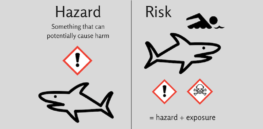
Viewpoint: ‘Black and white’ hazard-based safety rules boost hunger in poorest countries
To the average person, “hazard” and “risk” may seem synonymous, both implying a threat that needs to be addressed. But ...

Plant domestication takes decades. With CRISPR it could take two years
Gene editing can speed up plant domestication, taming wild vines, bushes and grasses and turning them into new crops. Editing ...
As genetic engineering evolves, are non-GMO food labels meaningful?
A group called the Information Technology and Innovation Foundation has petitioned the [FDA] to prohibit use of the term “Non-GMO” on food .... [T]he ...

Plaintiff’s attorney ‘manipulated’ jury in Roundup-cancer trial, Bayer claims
Calling Monsanto’s efforts to hide the alleged carcinogenicity of its Roundup weed killer “reprehensible,” attorneys for a school groundskeeper dying ...

Sunflower pollen may protect bees from deadly diseases
[A] new study offers hope for a relatively simple mechanism to promote bee health and well-being: providing bees access to ...

Biotech industry will engage public to ease fear of CRISPR gene editing
A new gene-editing technology known as CRISPR could soon be used to alter the crops producing the food we eat ...

First ever FDA glyphosate study finds weed killer exposure ‘not concerning for public health’
FDA testing of glyphosate residues in food found no detectable amounts of the herbicide in over half of commodities tested ...

Video: Organic vs conventional farming—do we have to pick one or the other?
The public debate over the costs and benefits of organic and conventional farming continues unabated. But what exactly separates them? ...

Viewpoint: Consumers Union calls Zen Honeycutt ‘a loon,’ but still promotes her anti-GMO message
Michael Hansen is a senior scientist for Consumers Union, the consumer advocacy group that publishes Consumer Reports. He has also been fighting ...

Will ‘precautionary mindset’ at UN biodiversity meeting threaten agricultural innovation?
Some 196 countries may decide to limit access to the benefits of pioneering new biotechnological applications at an upcoming international ...

GMO plants could boost production of earth-friendly biofuels
A study at the U.S. Department of Energy's Brookhaven National Laboratory identifies new details of how a sugar-signaling molecule helps ...

Scientists engineer bacteria-hunting virus to kill E. coli in drinking water
To rapidly detect the presence of E. coli in drinking water, Cornell University food scientists now can employ a bacteriophage ...

Will lab-grown burgers succeed where ethical arguments against meat eating failed?
[O]ne-sixth of the world’s greenhouse gas emissions are directly attributable to raising livestock, and the figure is rising as more ...
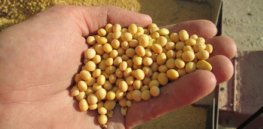
Biotech firm Calyxt strikes deal with non-GMO food processor to release gene-edited soybeans
Minnesota-based gene-editing firm Calyxt has found a market for its new, healthier type of soybean, announcing a deal with a soybean ...
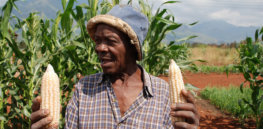
Hybrid corn could eradicate harvest-destroying disease in Africa
A centralized maize lethal necrosis disease screening facility established in [Kenya] five years ago has released 15 disease-resistant hybrid maize ...
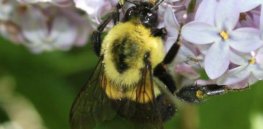
Viewpoint: New glyphosate study suggesting danger to honeybee microbiota is detailed, sophisticated—and wrong
Erick Motta and colleagues at the University of Hawaii just published a paper in PNAS entitled "Glyphosate perturbs the gut microbiota of honey bees." ...

Climate change could accelerate demand for robot farmers
It’s harvest season in the Northern hemisphere, so farmers head into the fields to gather the fruit of their hard ...
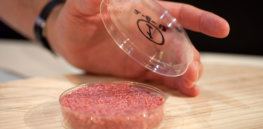
$5 lab-grown burger could be ready by 2021
Back in 2013, the emerging biotech field of lab-grown meat products held a tasting of a lab-grown burger which cost a staggering ...
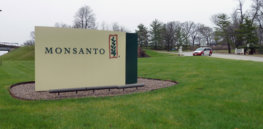
Monsanto ‘didn’t fully disclose’ involvement in 2016 glyphosate review, publisher says
Bayer AG’s defense of Roundup weed killer may take a hit after an academic journal [Critical Reviews in Toxicology] said ...

Toxic organic pesticides pose surprising challenge to pro-environment politicians
The European Food Safety Authority (EFSA) has released fresh data which re-confirms the toxicity of copper compounds, pesticides that are ...
