First ever FDA glyphosate study finds weed killer exposure ‘not concerning for public health’

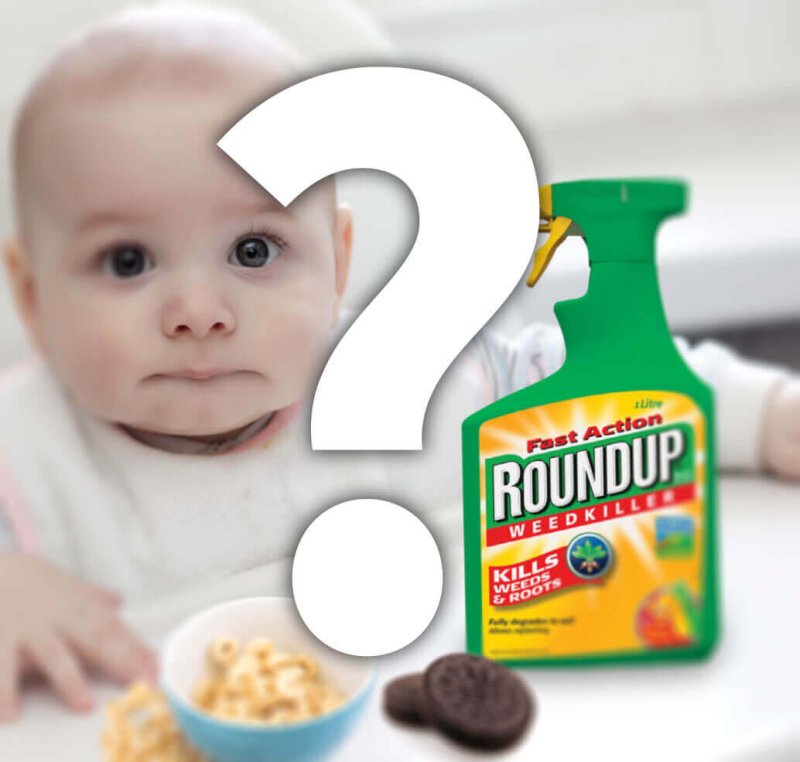
baby roundup question

FDA testing of glyphosate residues in food found no detectable amounts of the herbicide in over half of commodities tested and minimal amounts in corn and soybean samples, the agency said [October 1].

“The findings in this report demonstrate that overall levels of pesticide chemical residues measured by the FDA are below EPA’s tolerances and …. not concerning for public health,” the agency said in a news release.

Those results were included in the FDA’s 2016 Pesticide Residue Monitoring Program, which tested for 711 pesticides across 7,413 samples. The annual survey found that more than 99 percent of domestic and 90 percent of imported food samples were in compliance with federal pesticide standards, which the agency said “were consistent with previous years’ findings.”

The study marked the first time [the herbicides] glyphosate and glufosinate were tested by the FDA. Researchers examined the presence of the chemical in corn, soybeans, milk and eggs. The agency discovered that more than 53 percent of samples had no detectable pesticide residues, and all the residues found in the corn and soybean samples were below the tolerance levels set by EPA. No amounts of glyphosate or glufosinate were found in milk or eggs.

Read full, original article: FDA finds no glyphosate residue in food (Behind Paywall)

{{ reviewsTotal }}{{ options.labels.singularReviewCountLabel }}
{{ reviewsTotal }}{{ options.labels.pluralReviewCountLabel }}
{{ options.labels.noReviewsLabel }}
{{ options.labels.newReviewButton }}
{{ userData.canReview.message }}

Related Articles

Infographic: Global regulatory and health research agencies on whether glyphosate causes cancer

Infographic: Global regulatory and health research agencies on whether glyphosate causes cancer

Does glyphosate—the world's most heavily-used herbicide—pose serious harm to humans? Is it carcinogenic? Those issues are of both legal and ...

Most Popular

ChatGPT-Image-Mar-10-2026-01_39_01-PM
Viewpoint—“Miracle molecule” debunked: Why acemannan supplements don’t work
Picture1
Hiroshima at 81: America’s new nuclear bomb, a buried Iranian target, and a question no one wants to ask
Screenshot-2026-07-09-at-1.09.25-PM
Anti-vaccine myths rattle health care
ChatGPT Image Jul 29, 2026, 06_26_01 PM 2
Facts & Fallacies podcast: Organic food myths make a comeback on Instagram, with Dr. Kevin Folta
ChatGPT-Image-Jul-10-2026-12_21_03-PM
Viewpoint: Is there new evidence that the animal deworming drug ivermectin decreases the risk of Covid and cancer? Don’t waste your money.
ChatGPT-Image-Jul-10-2026-09_42_12-AM-1
Peptides, patient autonomy, and the limits of medical freedom
ChatGPT-Image-Jun-25-2026-12_23_17-PM
No, Bill Gates did not secretly engineer ticks to promote veganism
ChatGPT-Image-Jul-22-2026-09_13_07-AM
Viewpoint—The Strategic Litigation boom: Understanding the tightening coalition among NGOs, foundations, journalists, and tort lawyers
leeteam
How Kennedy and his family could pocket millions from Merck’s $50 million vaccine injury settlement that he oversaw
organic scaled
Facts & Fallacies podcast: Organic food cuts pesticide exposure? A response to Dr. Rhonda Patrick

Sorry. No data so far.

glp menu logo outlined

Get news on human & agricultural genetics and biotechnology delivered to your inbox.