


Daily Food & Ag Digest
Cell-based, lab grown food banned in Italy
Italy's lower house of parliament gave final approval for a law banning the use of laboratory-produced food and animal feed ...

Cleaning up the atmosphere: Can seaweed farming help capture carbon dioxide?
Researchers are looking into a wide range of approaches to removing carbon from the atmosphere. Some are straightforwardly technical, like direct ...
Boosting taste, shelf life and climate resilience: Why creating a genetic map is the first step in creating the perfect apple
Leveraging unique genome mapping research from Dalhousie’s Faculty of Agriculture, startup Foodimprover is set to transform the global fruit sector’s ...
Oil-based chemicals are used in everything from pillows to house paint. What are possible substitutes?
Petrochemicals are in everything from cleaning agents, paints and cosmetics to pillows, acrylic worktops and much of our clothing and ...
‘Our living seed bank belongs to future generations’: Colorado MASA Seed Project collects and preserves climate-change-resistant crop varieties
It’s not enough to just grow one’s own produce anymore; the first step is in planning for foods that can ...

What’s next for Bayer after losing $1.56 billion Roundup glyphosate case?
Bayer AG suffered its biggest drop ever, losing about €7.6 billion ($8.3 billion) in market value, after major legal and ...
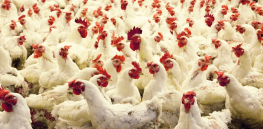
Eliminating bird flu: How gene-edited chickens could mitigate threats
In a recent gene editing study, my colleagues and I showcased the potential of gene editing to protect chickens from the threat ...
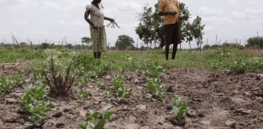
Facing food security threats, Ghana makes 4-year commitment to promoting research and development on genetically modified crops
The designation of Ghana as the International Atomic Energy Agency’s (IAEA) collaborating center for Africa, focusing on plant breeding and ...

Biofuels, e-fuels and solar fuels are possible substitutes for fossil fuels and electric vehicles. Is that realistic?
Synthetic fuels (or synfuels) are liquid or gaseous fuels that are practically similar to fossil fuels in everything but the ...
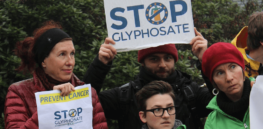
Glyphosate reauthorized for 10 years by divided EU
[November 16] the European Standing Committee on Plants, Animals, Food and Feed (PAFF committee) was again unable to get a ...
Can a company trademark ‘eco-friendly’ branding?
A decision over a sustainability-centric trademark in Argentina provides one of the latest looks at how trademark offices and courts ...

From potential to progress: Latest developments in Golden Rice deployment in the Philippines
In the Philippines, about two million children under five are at risk of vision issues and weak immune systems. These ...

Robot bees: How can artificial pollination help vertical farming thrive?
Robotic pollinators resemble oversized bees equipped with wheels and an arm. This technological innovation is designed to address the pressing ...
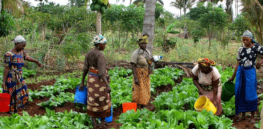
Africa needs collaboration, not harmonization to benefit from biotechnology transformation
Africa does not need to harmonize its biosafety laws before enjoying the benefits of the ongoing agricultural revolution powered by ...
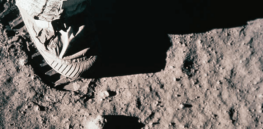
Growing food on the moon: With an injection of bacteria, scientists turn inhospitable lunar soil into fertile home for crops
If humankind is ever to establish long-term bases on the moon, there will be a need for a regular source of ...
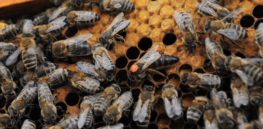
Deformed wing virus (DWV), one of the deadliest threats to bee health, seems to be evolving to be less harmful
This year’s cold and flu season is bringing good news for honey bees: Penn State researchers have found that the ...

Viewpoint: Inflation and climate change prompt American farmers to assess agricultural practices
Agricultural policy has gotten caught up in culture wars that have snarled other aspects of American life ...
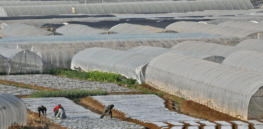
Why China’s aggressive GM crop approvals represent real great leap forward in food security
China is getting close to commercially producing a variety of genetically modified crops and that is good news for Canadian ...

Viewpoint: ‘So-called environmentalists can eat crow, transgenic corn proves a win for science and the public’
In 2020, storms caused an estimated $12 billion in damage, including in Iowa, where a giant amount of America's corn ...
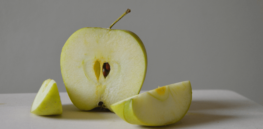
Why gene-edited non-browning ‘Arctic apples’ are potential game changer for reducing food waste and extending supply chains
Three varieties of non-browning Arctic apples developed by a Summerland-based company are now rolling off the production line at a ...

Viewpoint: Agroecology supporters raise doubts about whether biotechnology-based intensive agriculture can both increase production and minimize biodiversity loss
The idea that increasing agricultural productivity will free up land for biodiversity and solve global hunger is gaining popularity in ...
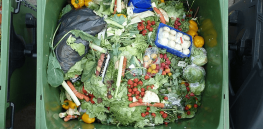
Transforming agricultural waste into bioplastics
Although bioplastics have been touted as a promising sustainable alternative to traditional plastics for some time, making bio-based materials that ...

Viewpoint: Dark money and tort-lawyer-funded Environmental Working Group (EWG) launches new campaign to scare public about ‘dangerous’ pesticide spraying near schools
On Nov. 2, the EWG (the same folks behind The Dirty Dozen) launched an interactive map created to demonstrate just how ...
Argentina on cusp of releasing first genetically modified non-browning potato in Latin America
Scientists from the National Institute of Agricultural Technology - INTA of Argentina, the public entity in charge of carrying out ...
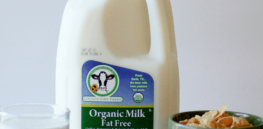
Viewpoint: If the EU insists on food labeling, organics, not gene edited foods, should be at top of list on safety grounds
The UK Food Standards Agency (FSA) has followed the science in recommending a streamlined approach to regulating gene edited food ...
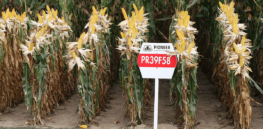
Viewpoint: Mexico’s GM crop import ban creates dire legal and trade consequences
In December 2020, Mexico’s President Andres Manuel Lopez Obrador (AMLO), issued a decree banning genetically modified (GM) corn for human consumption. Mexico ...
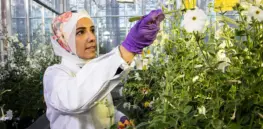
Ever seen an orange petunia? CRISPR gene-editing can make that happen naturally
White petunias exist in nature, but not bright orange and yellow ones. In 2015, one of my PhD advisers, Teemu ...
