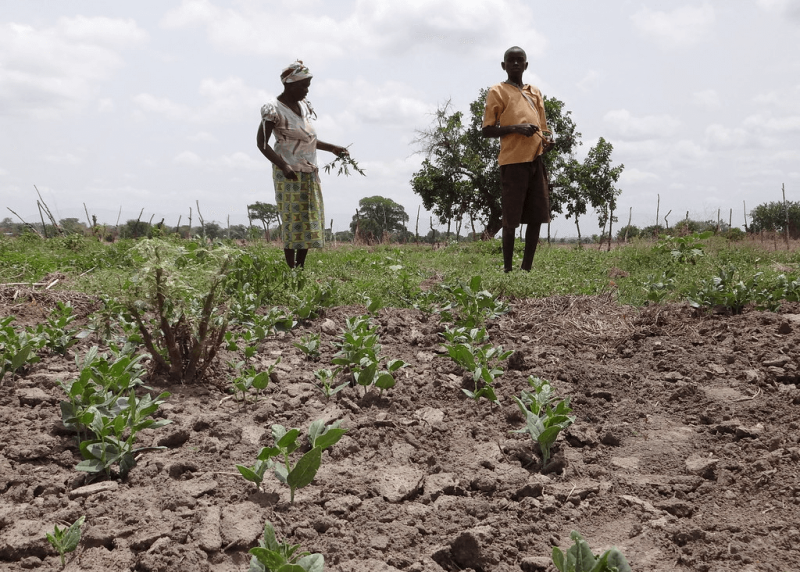
Facing food security threats, Ghana makes 4-year commitment to promoting research and development on genetically modified crops

bdf f c b
Credit: CGIAR/Flickr (CC BY-NC-SA 2.0)

The designation of Ghana as the International Atomic Energy Agency’s (IAEA) collaborating center for Africa, focusing on plant breeding and associated technologies for food and nutrition, is being seen as a pivotal moment in the application of genetic modification in Africa.

In a recent press statement, the IAEA announced its collaboration with the Biotechnology and Nuclear Agriculture Research Institute (BNARI) of the Ghana Atomic Energy Commission, in a four-year commitment “to promote research and development on mutation breeding in West and sub-Saharan Africa.”

Mis- and disinformation are distorting science and public policy. Subscribe to our Daily and Weekly Digests for incisive coverage of ‘disruptive’ innovations in AI, agricultural biotechnology, food, chemicals, nuclear energy, vaccines, and other disruptive innovations.

Ghana has, in recent times, been at the forefront of embracing genetic modification technology to enhance crop and plant species. The nation is poised to introduce its first genetically modified cowpea, developed by the Savannah Agriculture Research Institute (SARI), into the Ghanaian market this year.

Projections indicate that this modified cowpea will substantially increase yields – by nearly 300 percent. Jerry Nboyine, a senior research fellow at SARI highlighted in an interview on GhanaWeb that the modified variety does not require the use of insecticides, in contrast to non-GMO cowpeas.


Africa’s food crisis cannot be understated, and it extends beyond hunger, encompassing nutrition gaps that have been exacerbated by erratic climate conditions resulting from local and global human-induced climate change, and logistics challenges.


This is an excerpt. Read the original post here

Related Articles

Infographic: Global regulatory and health research agencies on whether glyphosate causes cancer

Infographic: Global regulatory and health research agencies on whether glyphosate causes cancer

Does glyphosate—the world's most heavily-used herbicide—pose serious harm to humans? Is it carcinogenic? Those issues are of both legal and ...

Most Popular

ChatGPT-Image-Sep-17-2026-12_28_43-PM
Vitamin D, omega-3 fish oil and glucosamine supplements could cause brain damage 
ChatGPT-Image-Mar-10-2026-01_39_01-PM
Viewpoint—“Miracle molecule” debunked: Why acemannan supplements don’t work
ChatGPT-Image-Sep-17-2026-10_17_15-AM
Viewpoint: Why are the less intelligent more likely to be conservative—and smarter people more socially liberal?
Screenshot-2026-08-12-at-11.31.46-AM
AI is helping develop new vaccines
Screenshot-2026-09-10-at-12.20.19-PM
'Jet fuel didn't melt the steel': 9/11 conspiracy theories debunked
Screenshot-2026-09-17-at-10.24.54-AM
Viewpoint: Dubious environmental fears: Why the AI buildout is critical to America’s ecological future
Screenshot 2026-09-11 at 12.39
Child-monitoring apps: When the cure is worse than the harm—and how the technology could be tweaked
Screenshot-2026-09-16-at-12.07.47-PM
The heated debate over trans athletes in the WNBA
ChatGPT-Image-Sep-9-2026-02_48_24-PM
Viewpoint: Trump-RFK Jr. report on “Gender Ideology & Left-wing Ideology’ targets LGBTQ community—and science
ChatGPT-Image-Sep-15-2026-12_15_00-PM
Viewpoint: Women, depression and empathy: Explaining the gender gap in views about child-murderer Lindsay Clancy
glp menu logo outlined

Get news on human & agricultural genetics and biotechnology delivered to your inbox.