


Daily Human Digest
CRISPR ‘mini-brains’ made from Neanderthal DNA offer insight into the evolution of human cognition
Humans are more closely related to Neanderthals and Denisovans than to any living primate, and some 40% of the Neanderthal ...
It has an effect, period: How menstrual cycles influence mood
A research team led by Emma Pierson from Stanford University and Microsoft Research New England, US, found that the menstrual ...

Womb temperature determines the sex of the offspring in many reptiles. Why not in humans?
Temperature controls sex determination, in all crocodilians, most turtles, many fish, and some lizards, according to organismal biologist Karla Moeller ...
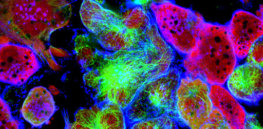
Video infographic: Extraordinary 3-D view inside a cancer cell
Even something as tiny as a cell is thick enough for specialized cameras to examine in detail. In a process ...

How low meat diets change your body and may help you live healthier and longer
High-protein diets are having a moment. In any grocery store you can now buy a protein bowl, pick up a ...
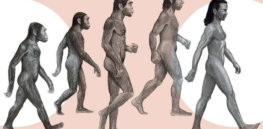
We were never alone: How many human species have existed?
When it comes to figuring out exactly how many distinct species of humans existed, it gets complicated pretty quickly, especially ...

Morbid curiosity? This study records what some people’s last moments alive were like
There’s no shortage of morbid curiosity surrounding death. But according to the researchers behind this project, known as the Death ...

In a blink of an evolutionary eye, this African island developed resistance to malaria. Here’s how
[R]esearchers have uncovered recent traces of adaptation to malaria in the DNA of people from Cabo Verde, an island nation ...

Did magic mushrooms and other hallucinogens fuel human evolution?
Did psychedelics stimulate human consciousness? First proposed by 20th century ethnobotanist Terence McKenna (1946-2000) in his 1992 book "Food of ...
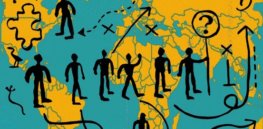
What sparked the exodus of early humans from Africa?
Why, exactly, did our ancestors leave their homeland? Short of catching a time machine back some 60,000 years and witnessing ...

There are 400 children worldwide with progeria, a rapid-aging disease. Now there’s a potential treatment
The prevalence of [Hutchinson-Gilford progeria syndrome, or] HGPS is approximately 1 in 20 million, so at any given time, there ...
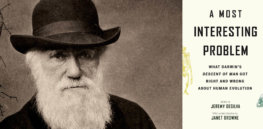
On the 150th anniversary of Darwin’s The Descent of Man, scientists break down his theories on race and sex
To mark the 150th anniversary of The Descent of Man, paleoanthropologist Jeremy DeSilva has gathered a team of experts, mostly ...

Understanding the ‘post-truth’ world: Is cognitive bias hard-wired?
One of the deepest roots of post-truth has been with us the longest, for it has been wired into our ...

Electrical brain stimulation appears to relieve OCD symptoms
Researchers found that brain stimulation, delivered over five days, reduced obsessive-compulsive tendencies for three months, though in people who did ...

Genetic genealogy leader 23andMe going public. What will that mean for your data?
California-based 23andMe will merge with Virgin Group’s VG Acquisition Corp and raise a further $250 million from new investors, [British ...
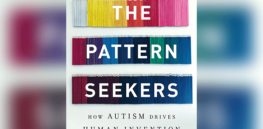
‘The Pattern Seekers’: How has autism driven human evolution?
Unfortunately, “The Pattern Seekers: How Autism Drives Human Invention” by Cambridge University professor Simon Baron-Cohen never really lives up to ...

Could a low-carbohydrate diet send Type 2 diabetes into remission?
[An] analysis of 23 small trials found that low-carb diets worked better than other eating plans in helping people lose ...
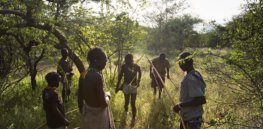
Human behavioral ecology: The tight ‘evolutionary embrace’ of culture and genes
[Research by Toman Barsbai and colleagues shows] that adaptation to local ecological conditions is an important determinant of variation in human ...
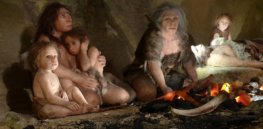
What was life like for Neanderthal women?
Neanderthal women very likely did hunt some or much of the smaller game we find in sites, such as tortoise, ...
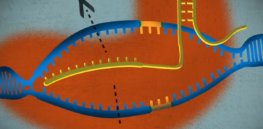
3 new ways CRISPR is revolutionizing biomedicine
In this article, we outline three recent studies that have advanced the potential uses of CRISPR in the biomedical field ...
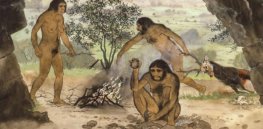
Why the theory of human evolution needs a tweak, once again
Recent archaeological digs in Africa found evidence of Middle Stone Age tools dating to just 11,000 years ago, about 20,000 ...
Gene transfer therapies are the ‘next big thing’ in medicine. Here’s how gene editing works and the companies behind it
The breakthroughs made possible by gene editing were shown in the Jan. 6 news that base editing had repaired a ...

Are we headed toward developing a super-intelligent AI…that could spin out of control?
The idea of artificial intelligence overthrowing humankind has been talked about for many decades, and scientists have just delivered their ...
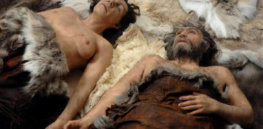
Sex and love in the time of Neanderthals
[T]he evidence that sex between early modern humans and Neanderthals was not a rare event has been mounting up. Hidden ...

‘Hello World!’ Bacterial DNA combines CRISPR and electricity to store data. Here’s what that means
A study published on January 11 in the journal Nature Chemical Biology details how the researchers led by Columbia University ...
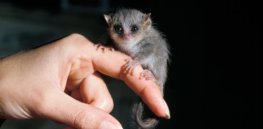
How this tiny lemur offers unique insight into the evolution of human vision
Recent research comparing the visual processing system of the gray mouse lemur with that of much larger and more recently ...
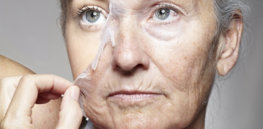
Delay aging and extend our lifespans? Gene therapy might be able to do that
How many aging-promoting genes are there in the human genome? What are the molecular mechanisms by which these genes regulate ...
