


Daily Human Digest
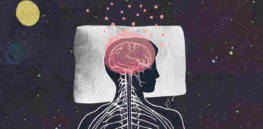
Understanding brain states: How your mind functions when tired, versus wired on caffeine
Ever wonder what happens in your brain to make the switch between down-and-out tired, and borderline over-caffeinated? As it turns ...
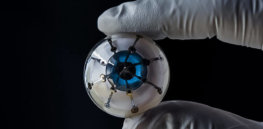
World’s first bionic eye could be better than the real thing
The world's first 3D artificial eyeball -- capable of outperforming the human eye in some ways -- may help droves ...

Obesity gene? Suppressing this variant could be key to weight loss
More than five years ago, a group of researchers from Norway and several other countries found an important clue in ...

Autistic children struggle with emotional control. It’s even harder for girls, study says
Emotion control eludes more girls than boys with autism, according to a new study of young people hospitalized for psychiatric ...

Tracking down the evolution of an essential human skill: self-control
Human self-control evolved in our early ancestors, becoming particularly evident around 500,000 years ago when they developed the skills to ...

Gene therapy could restore color vision for people who see the world in shades of gray
In a small trial in Germany, an experimental gene therapy improved the vision of nine people with total color blindness, ...

How the stigma surrounding addiction keeps people from seeking treatment
Stigma is a problem with health conditions ranging from cancer and HIV to many mental illnesses. Some gains have been ...

Do you miss or spot Hollywood movie ‘continuity errors’? Here’s how ‘change blindness’ works
Gaze at the top image of Ben Franklin’s famous kite study. Now, the one below it. See the changes? You ...

Ultimate fitness hack: Imagine being able to build muscles with a gene therapy
Trying to hack fitness is a multi-million-dollar industry; we’ve all seen at least one ad featuring a purported miracle product ...

Viewpoint: Did this philosopher disprove evolutionary psychology? ‘No—certainly not’
Subrena Smith, an assistant professor of philosophy at The University of New Hampshire, has made a bold claim in the ...

Even one can of soda a day could increase risk of heart disease, study says
Even one serving daily of a sugary soft drink is associated with higher risk of cardiovascular disease. That's according to ...

Genetic analysis unravels East Asia’s history, highlighting migration of early farmers
Ancient genomics is starting to unravel the history of East Asia. The first large-scale studies of ancient human genomes from ...
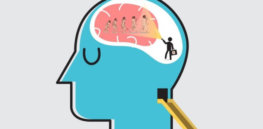
Challenging evolutionary psychology: Philosopher attacks the field’s underlying scientific foundation
It’s not often that a paper attempts to take down an entire field. Yet, this past January, that’s precisely what ...

How long is sex supposed to last? ‘Normal’ might be shorter than you think it should be
In a Norwegian study published in the Journal of Public Health in 2009, 27 percent of men reported having premature ...

Drinking and smoking ‘of any level’ while pregnant may harm baby’s development, study says
If you're stressed or wanting to enjoy virtual happy hour with friends while pregnant, having a glass of wine every ...

‘AI in archeology’ pinpointing new excavation sites at an ‘unimaginable’ pace
Archaeologists have uncovered scores of long-abandoned settlements along coastal Madagascar that reveal environmental connections to modern-day communities. They have detected ...
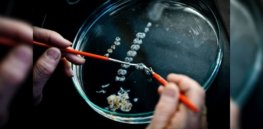
‘This is what it feels like to be normal’: Experimental stem cell treatment shows promise against Parkinson’s
[Researchers planned] to carry out an experimental transplant surgery unprecedented in the annals of medicine: replacing the dysfunctional brain cells ...
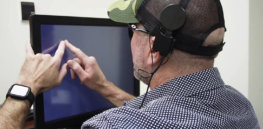
Zapping the brain with electrical pulses allows blind patients to ‘see’ letters
Scientists sent patterns of electricity coursing across people’s brains, coaxing their brains to see letters that weren’t there. The experiment ...

How do dogs focus on key odors, while tuning out the rest?
“The question that we sought out to study here is, ‘how does [a] dog suppress this uninformative signal [such as] ...

Feeling a bit stir crazy during the pandemic lockdown? Blame it on human evolution
Humans are intensely social creatures. We all need company and social contact. But for many of us, being at home ...

A CRISPR fix for diabetes? Success using stem cells in mice offers promise for humans
[Researchers] recently used the gene-editing technology CRISPR to correct stem cells from diabetic patients and turn them into fully functioning ...

Video: What makes opioids so addictive
In the 1980s and 90s, pharmaceutical companies began to market opioid painkillers aggressively, while actively downplaying their addictive potential. The ...

False memories: Why marijuana users may not be the best eye witnesses
When Lilian Kloft stumbled across a 2015 study showing a connection between cannabis use and susceptibility to false memories, she ...

‘From pipsqueaks to titans’: The complicated evolution of dinosaurs
For tens of millions of years, even as other dinosaur species grew to huge sizes, 40-foot carnivores weren't around. How, ...
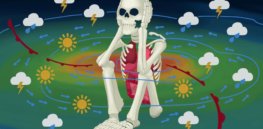
Climate change won’t ‘invariably’ cause social collapse—it’s a lot more complicated than that
Currently, global planning bodies are working on their responses to climate and environmental change and public health concerns. Unfortunately, these ...

What’s holding up gene therapy? Making drugs on a large scale
As interest in gene therapy grows, manufacturers face physical, biological, and engineering challenges to developing and producing drugs on a ...
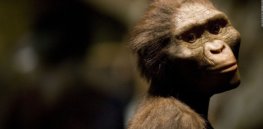
We’re still searching for a key piece of our evolutionary tree—our most recent ancestor
Humans’ most recent ancestor, the species that predated our kind, remains shrouded in mystery. Anthropologists still don’t know what species ...
