


Science Literacy Project Daily Digest

Viewpoint: GM vs organic crops — How to feed the world without destroying it
There are more and more people in the world who are getting richer and are therefore eating more and more ...

Viewpoint: Why the COVID-19 lab leak theory refuses to die
Ever since the coronavirus now known as SARS-CoV-2 was first identified as the cause of an outbreak of a mysterious ...
Could the universe be an elaborate game constructed by bored aliens?
Elon Musk thinks you don’t exist. But it’s nothing personal: he thinks he doesn’t exist either. At least, not in ...

Safety of muscular dystrophy gene therapy in spotlight after two deaths connected to Novartis Zolgensma treatments
Novartis has recorded two deaths after treatment with its spinal muscular atrophy gene therapy Zolgensma, once again bringing gene therapy’s ...

Are monkeypox vaccines easy to get? Debunking 11 common myths
To help provide accurate information about monkeypox, Healthline spoke with medical experts to debunk 11 troubling myths currently circulating about ...

Viewpoint: Ordinary African farmers should not be blocked from technologically-advanced agricultural solutions helping the rest of the world
Besides the long drought making food production difficult there are crop pests and diseases that are steadily wiping out staple ...
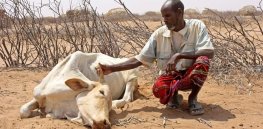
Kenyan farming experts urge permanent lift of GM ban to address animal feed shortage
Punitive local tax regimes, technical restrictions, challenges in access to foreign currency and logistics disruptions — most of these exacerbated ...

Viewpoint: ‘We need to reduce imports’ — Colombian food security proponents urge expanding GMO crops to reach food sovereignity goal
During his inaugural speech, President Gustavo Petro stated that “Colombia is a country that must and can enjoy food sovereignty ...

Dutch farmer viewpoint: ‘Green activists want to destroy the ability of farms to produce high-quality, abundant, clean, and inexpensive food’
Over the past few months, thousands of Dutch farmers have blocked highways and staged protests. Hundreds have been arrested, and ...

New insomnia treatments on the horizon? Different areas of the brain have unique sleep schedules, paving the way for new therapies
Dolphins can swim with one hemisphere asleep while the other is alert, and some neurons in sleep-deprived rats can “switch ...

Lactose tolerance: Early humans couldn’t easily process milk and cheese. How, why and when did that change?
Just 5,000 years ago, even though it was a part of their diet, virtually no adult humans could properly digest ...

How might biotechnology revolutionize America’s national defense?
The Biotechnology Community of Interest released a study on the future of biotechnology in April, titled “Bio-Futures 2050: Defense Impacts ...

Neuroplasticity and epilepsy: Why our ever-adapting brain cells are a blessing and sometimes a curse
Brain plasticity is often touted as a miracle cure, but it does have a dark side. Addiction, for example, occurs ...
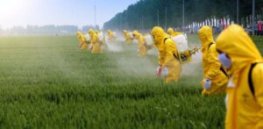
Viewpoint: How anti-crop chemical activists are weaponizing the Endangered Species Act to block use of safe and effective pesticides
The EPA is supposed to perform so-called biological evaluations for each and every pesticide registered under FIFRA. Practically speaking, the ...

Nigeria: Learn from our experience with GMO crops
Nigerian leaders are urging other West African nations to adopt genetically modified cowpea given their own success with the crop ...
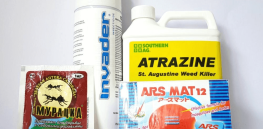
Viewpoint: EU hypocrisy — Europe bans atrazine weedkiller, but continues to produce and market it to Africa
Atrazine is a toxic herbicide banned on the European market, but paradoxically produced by European industries and intended for the ...

Facing low corn and soybean yields, Vietnam looks to genetic engineering to increase food security
Vietnam is dependent on imported feed materials because our corn and soybean yield is low, production costs are high, and ...

Could alien life survive harsh environments? Green slime dug up in lava caves offers an intriguing theory
Deep within the lava caves of Hawaii, microbial life thrives. In fact, a recent study has found that the life ...

‘It has to happen’: Tech titans pour billions into anti-aging research — yet overlook promising metformin trial
Beating back the diseases of aging has become something of a pet project for many of Silicon Valley’s tech titans ...

Are there evolutionary benefits to celibacy?
Evolution is often perceived as an individual affair: Traits that are helpful to the individual get passed on and eventually ...

‘Risks, pitfalls, and challenges’: Synchron’s brain-computer interfaces are on the horizon, but future embrace is murky
Thomas Oxley is the founder and CEO of Synchron, a company creating a brain-computer interface, or BCI. These devices work ...
Glyphosate re-approved for Sri Lanka import as country attempts to recover from failed organic-only experiment
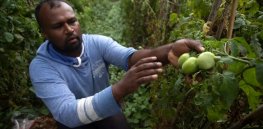
The Finance Ministry has lifted the import ban on the popular weedicide glyphosate with effect from August 5 while allowing ...

GMO Golden Rice tale of two countries: Philippines on track for fall sales while Bangladesh falters
A year after regulatory approval, the Philippines has started transplanting Golden Rice this wet season, becoming the first country in ...

Study: No link found between parental exposure to pesticides and childhood cancer
Maternal or paternal exposure to pesticides does not appear to be associated with increased risks for childhood cancer, according to ...

Viewpoint: ‘Precipice of a food security catastrophe’ — Re-shaping agriculture to fit the prejudices of urban perspectives could have dire global consequence
For many Canadians, crop production is an unknown concept. Because of this, it’s relatively easy to use fear to influence ...

‘Mind after midnight’: How our brains evolved to hyperfocus on the negative after dark
Plenty of evidence suggests the human mind functions differently if it is awake at nighttime. Past midnight, negative emotions tend ...
A ‘cotton candy machine’ that prints cardiac fibers brings us one step closer to easily repairing heart injuries
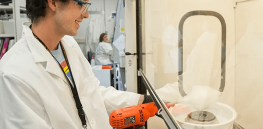
Researchers at Harvard’s John A. Paulson School of Engineering and Applied Sciences (SEAS) believe they have taken a step towards ...
