


Science Literacy Project Daily Digest

Wheat, nuts and shellfish trigger allergic reactions for many people. Why don’t other foods?
One of the adaptive immune system’s primary jobs is recognizing foreign substances in our bodies and unceremoniously rejecting them by ...

Viewpoint: What are key environmental trade-offs and advantages in transitioning to organic farming?
Producing enough food to provide adequate nutrition for the growing global population without wrecking the planet in the process is ...

How AI ‘robot bumblebees’ might dramatically improve pollination
Is AI taking over the jobs of bumblebees? Well, not exactly. Bumblebees are typically used to pollinate plants in glasshouses all ...

Life on Earth is carbon-based — but on other planets, could life be built out on other chemical building blocks, like silicon?
When we search for life on other planets, what we usually mean is that we are looking for life as ...

If Artificial Intelligence bots reflect the biases of their creators, will some turn out to be racist?
In a new study, a robot operating on CLIP was asked to sort blocks with human faces on them and ...

‘They are perfect’: Why cats have remained virtually unchanged through centuries of domestication
The biggest-ever genetic analysis of cats is in, and it’s official: they are cats. After two centuries of breeding, cats ...

Viewpoint: Why commercializing GMOs would help Ghana and the rest of Africa address food shortages
A research scientist, Dr. Richard Ampadu-Ameyaw, has indicated that genetically modified organisms (GMOs) have played major roles in addressing challenges ...

Making sunshine for crops obsolete? Food of the future will be grown 18 times more efficiently with the help of artificial photosynthesis
Scientists are creating food which will become independent of sunlight by using artificial photosynthesis technology, with only about 1% of ...

Viewpoint: Don’t believe fear-mongering — Here’s why trace pesticide residues in food pose no risk to to humans
Everyone, including me, would like food products to be free from pesticide residues. However, the question is, would the world be ...

Viewpoint: Are reports that organic farming led to Sri Lanka’s economic collapse overblown?
Sri Lanka is now in the worst economic crisis they have seen in decades, schools are closed, fuel is in ...

‘AI muscle shirt’: Sensors used to create ‘wearable muscles’ to help those with upper limb impairments
Swiss researchers have developed “wearable muscles” that use sensors and AI to help people with upper-limb impairments use their arms ...

Viewpoint: Groupthink — How the COVID pandemic made scientists into politicians, with equally loyal followers
Now that we are returning to political and social normalcy, we must recognize how we succumbed to an unseemly creeping ...

Are anxious parents unconsciously ‘teaching’ their kids to be stressed out?
Children were more likely to be diagnosed with an anxiety disorder when a parent of the same sex, rather than ...

British Medical Journal: Sri Lanka’s organic extremism led to an economic collapse and ‘devastating health consequences’
On 20 May 2022, Sri Lanka failed to make £63m ($77m, €73m) of foreign debt repayments. The default has made ...

Viewpoint: Another science review challenges activist claim that glyphosate in urine poses heath dangers
CBS News recently reported on a new government study that found glyphosate in more than 80% of urine tested from a representative ...

Lab-grown oysters? Here’s why seafood of the future will be cell-based and sustainable
Pearlita Foods has set out to make the first cultivated oyster meat. Its mission is to “harvest the ocean's finest ...

By 2050, there will be 10 billion people to feed. To meet the challenge, we need all technologies on deck — including molecular biology and genetic engineering
30 years of scientific progress on gene editing, countless studies involving dialogue with society, thousands of forums and debates for ...
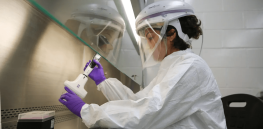
Viewpoint: Shining future promised by gene therapy blocked by researchers who refuse to share data
Transparency in gene therapy research — which can be accomplished without compromising commercial prospects — is vital to success. One ...

Hungry after spending time in the summer sun? Male hormones could be the cause
Summer sunshine can leave us feeling hot, sweaty and a bit burnt – but it may also make men hungrier, ...
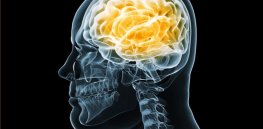
How fatty diets wreak havoc on body, brain and heart
An international study led by UniSA neuroscientists Professor Xin-Fu Zhou and Associate Professor Larisa Bobrovskaya has established a clear link ...

Humans live well beyond the reproductive phase of life — unlike many other animals. Why?
According to long-standing canon in evolutionary biology, natural selection is cruelly selfish, favoring traits that help promote reproductive success. This ...

Viewpoint: Green groups urge ending biofuel use to address global food shortages
Biofuel is derived from food crops, including wheat, maize and edible oils. The World Food Programme has warned that the rising prices ...

Food out of thin air: How this startup transforms carbon dioxide into protein
A few years ago, Dr. Peter Rowe began to explore ways to produce single-cell protein from carbon dioxide (CO2). Rowe ...

Powering plants with solar panels instead of photosynthesis might increase crop efficiency. But are companies overhyping potential?
The researchers used solar panels to run a machine that converts carbon dioxide, electricity, and water into acetate—a molecule that ...

Viewpoint: Sri Lankan organic farming disaster foreshadows what could unfold if Europe moves ahead with Green Deal Farm to Fork plan
Sri Lanka adopted the first 100% organic farming program and imposed a national ban on chemical fertilizers and pesticides. The consequence ...

Natural solution for litter? Maybe worms can solve our Styrofoam problem
Don’t toss out that Styrofoam takeout container quite yet: what’s trash for you could be food for plastic-gobbling “superworms”. Researchers ...

3-D printed breast implants? This alternative to silicon regrows breast tissue and degrades without a trace
Every year, 2 million people worldwide are diagnosed with breast cancer. Most choose not to have their breasts reconstructed; in ...
