


Science Literacy Project Daily Digest

Communicating in the age of disinformation: Four patterns of anti-science thinking and how to challenge them
The same four factors that explain how people change their beliefs on a variety of issues can account for the ...
Sri Lanka’s pro organic/no pesticide policy fiasco brings woes to country’s once-flourishing tea industry
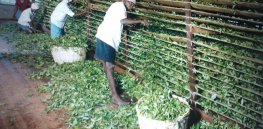
With Sri Lanka in the throes of its worst ever economic crisis, its prosperous tea industry has taken a hit, ...
‘70% of human eggs have the wrong number of chromosomes’: Here’s why so many people struggle with fertility
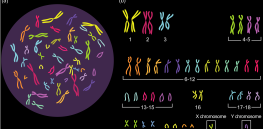
About half of fertilised eggs die very early on, before a mother even knows she is pregnant. Tragically, many of ...

The gene-edited CRISPR twins are growing up — raising questions about the ethics of continuing to study them
More than a billion people live in China, but researchers in the country have proposed the creation of a healthcare ...

Wuhan market COVID-19 origins theory reaffirmed in two new papers; lab leak viewed as ‘possible’ but not ‘plausible’
The coronavirus pandemic began in separate viral spillovers — at least two but perhaps as many as two dozen — ...

Synthetic biology is more than just cruelty-free meat. Here’s how it could address biodiversity concerns and pollution
Advances in synthetic biology will be just a part of the solution to some of the most severe threats to ...

Viewpoint: ‘20-years late’ — Why we need to confront agricultural biotechnology innovation regulatory roadblocks
A recent study contracted by CropLife International found that the current time for a new GM trait to go from R&D to ...
Viewpoint — Agriculture without labels: It’s time to end the false dichotomy between organic and conventional farming
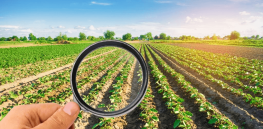
The debate on methods and techniques of agricultural production is usually fought between two extremes: large-scale agriculture, made in a ...

With global smallpox vaccine supplies in short supply, monkeypox may no longer be containable
It has been a mere nine weeks since the United Kingdom announced it had detected four cases of monkeypox, a ...

CRISPR may not always be safe: Study finds gene editing can damage genome and in extreme cases cause cancer
Scientists at Tel Aviv University (TAU) warn that while the CRISPR genome-editing method is very effective, it is not always safe and ...

Vitamin B6 shown effective in treating depression and anxiety
Taking high-dose Vitamin B6 tablets has been shown to reduce feelings of anxiety and depression by new research. Scientists at ...
Viewpoint: Algerian newspaper makes case for agricultural biotechnology as key to limit climate change impacts
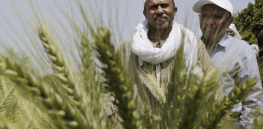
Genetic engineering has already been successfully applied to plants and animals in research to address the effects of climate change ...
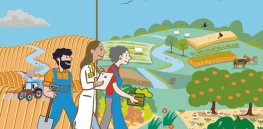
Viewpoint: ‘Agroecology has better marks for biodiversity and soil health’ – UN panel urges communities to consider adoption
“Some might say agroecology is catching on in the world, and it is true that the momentum is undeniable,” says ...
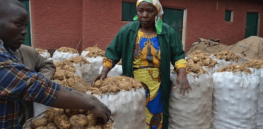
Rwanda uses biotech potato variety to fight same blight that caused Irish Potato Famine — saving 80% of potatoes
Late blight, a potentially devastating disease affecting potatoes and tomatoes, infecting leaves, stems, potato tubers and tomato fruits, spreads quickly ...

Barriers to take-off of lab grown meat market: Producing cultured food at scale
The problems are daunting. The cells of living organisms are evolved to live as part of a body — a ...

How one CRISPR-tweaked gene could permanently lower cholesterol
A volunteer in New Zealand has become the first person to undergo DNA editing in order to lower their blood ...

‘Electric hearing’: This alternative to cochlear implants literally shines a light on malfunctioning neurons that cause deafness
For 15 years, my team at the University of Göttingen, in Germany, has been collaborating with colleagues at the University ...
Updating the ‘serotonin hypothesis’: Mental illness is way more complex than a chemical imbalance
Almost as soon as it was floated in 1965 by Harvard psychiatrist Joseph Schildkraut, the serotonin hypothesis of depression—reduced and ...
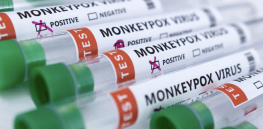
With monkeypox now an international public health emergency, what do you need to know?
The World Health Organization has declared the monkeypox outbreak a public health emergency of international concern, but it's not a disease ...

What’s holding back the plant-based meat revolution?
Advocates of plant-based proteins hope that higher meat prices may eventually convince consumers to switch to meat alternatives if environmental ...
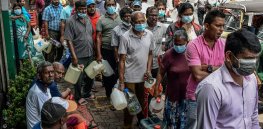
Viewpoint: Here’s the backstory on Sri Lanka’s organic experiment gone wrong
In an attempt to boost soil health and halt the progression of a kidney disease killing local farmers that was linked by ...

What is ‘Big Data’ in agriculture and why does it matter?
We should pay close attention. Agricultural big data is likely to have far-reaching detrimental environmental and social impacts ...
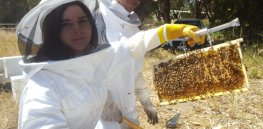
‘Unstoppable’ Varroa mites killing bees in Australia. Molecular keys may provide a way to protect the vulnerable honeybee
A University of the Sunshine Coast researcher is investigating whether spider and scorpion venoms have the potential to save Australia’s ...

Humans are mutts: New discoveries upend long-held views of evolution
Among human species, analysis of alternative types has been confined to Neanderthals and Denisovans, so far. And we have discovered ...

What are the genetic origins of the 5 senses?
Researchers from the University of Innsbruck have determined the genetic origin of our senses. The findings reveal that vertebrate cranial ...

Managing grief: How science can help guide end of life discussions with children
Children may not ask questions indicative of an existential crisis. They often ask very practical questions: What happens after we ...

Giving away free trees to address climate change? This company has plans to suck up CO2 with gene-edited forests
Living Carbon has developed a technique to genetically modify trees that can grow faster, and store more carbon. According to a ...
