


Science Literacy Project Daily Digest

‘Critical Race Theory’ critics set sights on suicide prevention programs, claiming they ‘indoctrinate’ students
At a September school board meeting in Southlake, Texas, a parent named Tara Eddins strode to the lectern during the ...

Viewpoint: ‘Embracing pseudoscience’ — Who is Joe Rogan, and why are so many people tuning in for his disinformation?
“A lot of times, we’re drinking or we’re high, you know, and I say stupid shit.” Coming from a teenager, ...
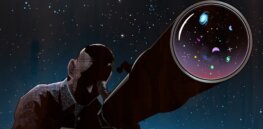
Could humans have evolved on other planets, too?
Could it be that our species is the principal indigenous race in the Universe – that Homo sapiens, or something ...

Animal-free real dairy products are beginning to roll out
General Mills moves into the emerging ‘animal-free’ dairy category with a brand called Bold Cultr – a lactose-free cream cheese ...

Synthetic biology in Africa: ‘Golden opportunity’ once regulations are in place
Synthetic biology can solve some of Africa’s pressing challenges related to poverty, food insecurity and climate change, scientists say, but ...

Viewpoint: By blocking CRISPR gene editing, Europe is rejecting a proven tool to address climate change and food insecurity
CRISPR technology is not the same as GMO technology; it does not introduce DNA from other species into plants. Yet ...

Taiwan Ironman project: Exoskeleton gives soldiers superstrength
Taiwan says it’s created a battery-powered exoskeleton suit that can allow its soldiers to run faster and carry heavy objects ...
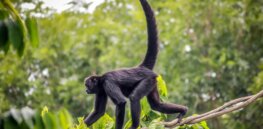
Why don’t humans have tails?
Why did some primates keep their tails, while humans and apes didn't? Tail loss is thought to be part of ...

Cancer might soon be detectable by a simple blood test
Every year, thousands of Americans undergo routine screening to catch cancer in its early stages, while it’s still treatable. But ...

Has Scientific American strayed too far from science?
I’ve written about a dozen posts calling out Scientific American for its fulminating wokeness (give me another word if you ...

Could eating cheese and other dairy products cause disturbing dreams?
Eating cheese late at night, the rumour goes, will give you strange dreams. As far back as 1964, a researcher ...

UK mulls break from EU’s restrictive crop biotechnology rules to gain an edge in international trade
With a few helpful tweaks to its regulations on crop biotechnology, the European Union could easily spawn an avalanche of ...

Republican Senate candidate Dr. Oz has long history of promoting pseudoscience, including anti-GMO disinformation
Among Dr. Mehmet Oz's achievements are ten Emmy awards, a syndicated television show, an Ivy-League medical degree, and a rapport ...

Supreme Court set to consider addressing lower court ruling that found Bayer’s Roundup herbicide caused applicator’s cancer
Bayer AG’s effort to get the U.S. Supreme Court to review a key trial loss in the nationwide Roundup litigation ...

This story is crap: A history of human excrement
If there’s one thing we have in common with our ancestors, it’s that they were just as dismayed with their ...

Lab-grown fats may be key ingredient in diets of the future
“Lab-grown fat.” It sounds like a nightmare for marketing teams, but for scientists, it’s a key ingredient for the future of food ...

Evolution doesn’t stop: Hundreds of new traits have developed in humans in recent centuries
A new study from Europe has identified 755 traits that have changed in the past 2-3,000 years of human evolution ...

Viewpoint: Here’s how to respond to anti-biotech activist groups that disguise themselves as food experts
Activist groups and groups disguised as “authorities” on agricultural issues often use manipulative persuasive fear appeals in ways that impacts ...
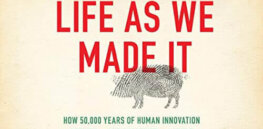
‘Life as we made it’ book review: Why ‘intervening in nature’ is not new and should not be feared
Life as We Made It by Beth Shapiro, an exploration of biotechnology, human evolution and our significant and often unwelcome impact ...
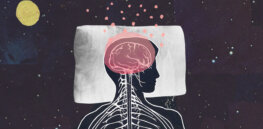
Avoiding cognitive decline: What is considered a ‘good night’s sleep’?
A good night’s sleep is important for many reasons. It helps our body repair itself and function as it should, ...
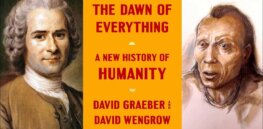
Will ‘The Dawn of Everything’ rewrite human history, as the book’s authors (modestly) claim?
“The Dawn of Everything” — which weighs in at a whopping 704 pages, including a 63-page bibliography — aims to ...

Cognitive resilience: MEF2 genes likely play role in protecting some people from age-related dementia
Cognitive resilience — the absence of dementia despite extensive amyloid and tau pathology — was linked to the myocyte enhancer ...

Could CRISPR gene editing be a solution to antibiotic-resistant superbugs?
The fast rise in antibiotic resistance is one of the world's most concerning health issues. Antibiotic-resistant infections kill about 700,000 ...

Viewpoint: Why Thailand should rethink its opposition to biotechnology
Thailand needs a "new mindset" to adopt controversial genetically modified organism (GMO) technology to increase agricultural productivity and serve the ...

Video: World Settlement Footprint offers unique perspective on human urbanization and ecological danger spots
Urban areas are already home to 55% of the world's population and that figure is expected to grow to 68% ...

Viewpoint: ‘Time is of the essence’ — Climate-resilient crop varieties can take over a decade to come to market
Researchers are experimenting with engineering crops to better manage higher temperatures. “Continuously improving seeds to grow more resilient and high-yielding ...
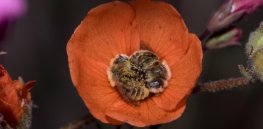
Glyphosate does not kill bumble bees and is unlikely to cause health problems, latest comprehensive study finds
Glyphosate is the most commonly used herbicide in the world, and is widely used in agriculture. While glyphosate has been ...
