Republican Senate candidate Dr. Oz has long history of promoting pseudoscience, including anti-GMO disinformation

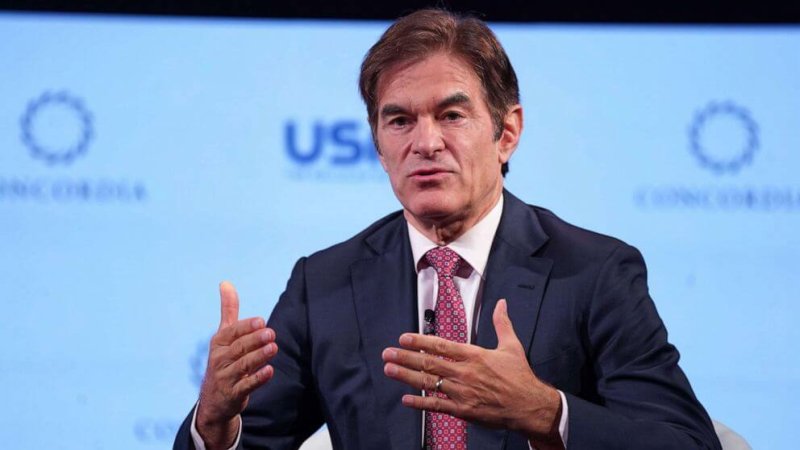
Dr. Mehmet Oz. Credit: Leigh Vogel/Getty Images

Among Dr. Mehmet Oz’s achievements are ten Emmy awards, a syndicated television show, an Ivy-League medical degree, and a rapport with Donald Trump, who appeared on his show in 2016.

Oz, like Trump, is seeking to follow his success on television with a career in Washington, D.C. The celebrity doctor announced on [November 30] that he’s running for US Senate in Pennsylvania as a Republican.

Follow the latest news and policy debates on sustainable agriculture, biomedicine, and other ‘disruptive’ innovations. Subscribe to our newsletter.

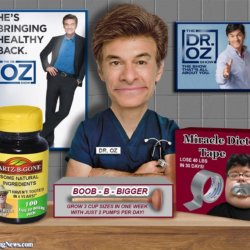
Though Oz has received some plaudits, he’s also garnered plenty of controversy in the medical community for pushing unproven medical treatments and diets.screen shot at am

In a 2015 letter to Columbia University, where Oz is a professor, 10 doctors said he promoted “quack treatments and cures in the interest of personal financial gain.” A 2014 study in the peer-reviewed British Medical Journal found that of 40 randomly selected episodes from Oz’s television show, his health recommendations were based on evidence just 46% of the time.

screen shot at am

Oz has expressed concerns about genetically modified foods, though scientific studies agree that they’re safe.

“I do not claim that GMO foods are dangerous, but believe that they should be labeled like they are in most countries around the world,” he wrote in a Facebook post.

But a majority of countries do not require labels, according to the Genetic Literacy Project.

More importantly, the Food and Drug Administration says foods should only be labeled if they threaten health or the environment. Legally mandating labeling, according to the American Association for the Advancement of Science (AAAS), “can only serve to mislead and falsely alarm consumers.”


This is an excerpt. Read the original post here.

{{ reviewsTotal }}{{ options.labels.singularReviewCountLabel }}
{{ reviewsTotal }}{{ options.labels.pluralReviewCountLabel }}
{{ options.labels.noReviewsLabel }}
{{ options.labels.newReviewButton }}
{{ userData.canReview.message }}

Related Articles

Infographic: Global regulatory and health research agencies on whether glyphosate causes cancer

Infographic: Global regulatory and health research agencies on whether glyphosate causes cancer

Does glyphosate—the world's most heavily-used herbicide—pose serious harm to humans? Is it carcinogenic? Those issues are of both legal and ...

Most Popular

ChatGPT-Image-Mar-10-2026-01_39_01-PM
Viewpoint—“Miracle molecule” debunked: Why acemannan supplements don’t work
Picture1
Hiroshima at 81: America’s new nuclear bomb, a buried Iranian target, and a question no one wants to ask
Screenshot-2026-07-09-at-1.09.25-PM
Anti-vaccine myths rattle health care
ChatGPT Image Jul 29, 2026, 06_26_01 PM 2
Facts & Fallacies podcast: Organic food myths make a comeback on Instagram, with Dr. Kevin Folta
ChatGPT-Image-Jul-10-2026-12_21_03-PM
Viewpoint: Is there new evidence that the animal deworming drug ivermectin decreases the risk of Covid and cancer? Don’t waste your money.
ChatGPT-Image-Jul-10-2026-09_42_12-AM-1
Peptides, patient autonomy, and the limits of medical freedom
ChatGPT-Image-Jun-25-2026-12_23_17-PM
No, Bill Gates did not secretly engineer ticks to promote veganism
ChatGPT-Image-Jul-22-2026-09_13_07-AM
Viewpoint—The Strategic Litigation boom: Understanding the tightening coalition among NGOs, foundations, journalists, and tort lawyers
leeteam
How Kennedy and his family could pocket millions from Merck’s $50 million vaccine injury settlement that he oversaw
organic scaled
Facts & Fallacies podcast: Organic food cuts pesticide exposure? A response to Dr. Rhonda Patrick

Sorry. No data so far.

glp menu logo outlined

Get news on human & agricultural genetics and biotechnology delivered to your inbox.