


Science Literacy Project Daily Digest

Funding for USDA’s National Organic Program tripled under Obama. What will Trump do with it?
[Editor's note: Mischa Popoff is a policy advisor at The Heartland Institute, and is the author of Is it Organic? Jay Lehr ...
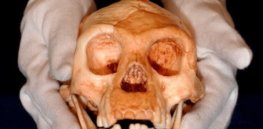
‘Hobbit’ origins? It’s unlikely that tiny species evolved from ancestor of modern humans
Researchers who studied the bones of Homo floresiensis, a species of tiny human discovered on the Indonesian island of Flores ...
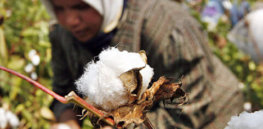
Indian farmers return to GM insect-resistant Bt cotton after failure of non-GMO variety
After the experiment with the desi cotton failed to bear fruits, farmers are returning to the BT cotton in the ...

Spider silk from plants? GMO tobacco could provide new generation of tough, lightweight clothing
Scientists have revealed they can generate the fine but strong threads used by spiders to make their webs by growing ...

When genetics has no answer: Heart disorder patients gain knowledge, but no help
Getting a better understanding of a disease can open all sorts of possibilities for better treatments, even ones tailored to ...

After months without a secretary of agriculture, former Georgia governor Sonny Perdue confirmed to post
After months without a secretary of agriculture, the Senate voted Monday evening [April 24, 2017] to confirm former Georgia Gov ...

Shocking: Electrical zaps to your brain may improve memory
Zapping the brain with just a bit of electricity at the right time may help to improve memory function in ...

Sweet success: Genes identified that could lead to sucrose-boosting GM sugarcane
Scientists in Brazil are taking steps towards genetically modifying sugarcane so it produces more sucrose naturally, looking to eventually boost ...
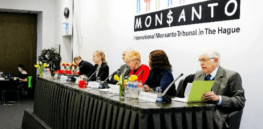
International Monsanto Tribunal: Fake trial distracts from real food, farming problems
[Editor's note: Kavin Senapathy is an author, public speaker and science advocate.] The verdict I predicted has landed—agri-giant Monsanto has ...
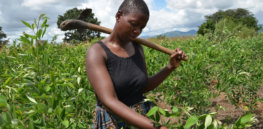
Malawi moves towards commercialization of GM cotton, cowpeas and bananas
[Editor's note: Katherine Chaweza is a 2016 Alliance for Science Global Leadership Fellow and the communication and outreach coordinator for the Programme ...

Anti-GMO activist attacks Monsanto research center in Italy with ‘bottle bombs’
[I]n the middle of Easter night in Olmeneta, Italy, an unknown person attacked the Monsanto Research Center with several “bottle ...

Cargill under fire: ‘We don’t agree’ GMOs unhealthy; biotech crops ‘key tool for sustainability’
Cargill is attempting to satisfy both ends of the spectrum by acknowledging the growing group of people against genetically-modified organisms ...

Why you can tell the difference between fake laughter and the real thing
Most of us will laugh at a good joke, but we also laugh when we are not actually amused. Fake ...
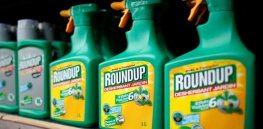
EU food safety chief: Critics of glyphosate safety finding are ‘playing politics’, undermining science
Politicians who attack the EU agency that ruled the weedkiller glyphosate probably does not cause cancer are in danger of ...
Two halves better than one: Why our brain evolved to be symmetrical
The human brain evolved to have two halves — and a new review of previous research suggests that this dual ...

Wide range, high levels of pesticides found in apple orchard honeybee colonies
Honeybees - employed to pollinate crops during the blooming season - encounter danger due to lingering and wandering pesticides, according ...
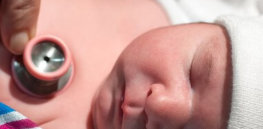
Babies might avoid deadly infections by receiving gut microbe transfers
In research published in Science, an international team of researchers found that a bacterium known as Clostridia helped mouse pups ...

Does gene editing change who we are as ‘humans’?
DNA-based technology’s entry into the mainstream has been picking up lately.... But rapid advances mean it is becoming increasingly feasible ...

Could it be possible to slow, or even rewind, our body’s aging clock?
Ageing in humans (and animals) can be seen as either an inevitable process of wear and tear or as an ...

Have patients been forgotten in the quest to build private BRCA variant databases?
Databases on life-threatening genetic mutations -- including the BRCA variants linked to breast cancer -- are maintained by corporations for ...

Cracking da Vinci’s DNA code: 2 discovered bones open possibilities
Italian researchers say that they have found two “relics” belonging to Leonardo da Vinci, which may help in sourcing the ...

Why I changed my mind about the need to feed my kids organic food
[Editor's note: Jenny Splitter is a writer, storyteller and mother of two.] A few years ago I learned that most ...
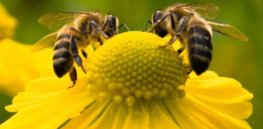
‘Wouldn’t help much’: What would a ban on neonicotinoid insecticides do for bee health?
“Everyone knows insecticides can kill bees,” says honeybee biologist Francis Ratnieks at the University of Sussex in Brighton, UK. “The ...

Why does pancreatic cancer often hit so hard and usually kill its victims so quickly?
Pancreatic cancer. When news of this type of diagnosis is mentioned, those two words strike fear and dread in most ...

Epigenetics Around the Web: Evolution of instincts — How ‘real’ is behavioral plasticity?
A researcher's decision to broadcast his controversial hypothesis about the evolution of instincts is irresponsible, and a study throws cold ...

Why so many biotechnology start-ups, like Theranos, fail
Two years after the $9 billion start-up “unicorn” Theranos crumbled, Silicon Valley still appears to be struggling to learn its ...

Fake science news: Rise of ‘predatory journals’ makes it easier to publish, spread ‘advocacy research’
[Editor's note: Robert Fraley is Executive Vice President and Chief Technology Officer at Monsanto. He has Ph.D. degrees in microbiology ...
